Flute or clarinet for a first band instrument
These two are the choice most band-room families are genuinely torn between, and they differ in almost every way that matters except price.
By Stephen V. · Writes Reed & Rosin · last verified
The short answer
The clarinet produces a sound within minutes and a good sound much later. The flute may produce no sound at all for a week or more, then becomes the cheapest band instrument to run because it has no reeds. Neither is harder overall; the difficulty simply arrives at a different time.
Some links on this page earn us a commission at no extra cost to you. It does not change which instrument we recommend, and it does not change the order. We also earn nothing when the honest answer is “rent it” — and we still say so. Full disclosure.
Quick picks
| # | Product | Best for | Score | Price |
|---|---|---|---|---|
| 1 | 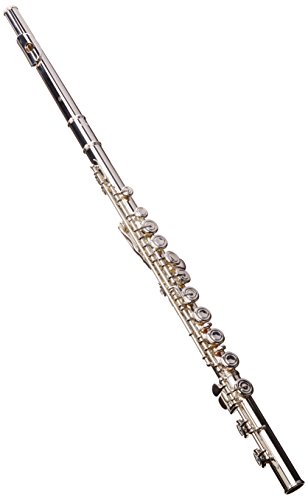 Yamaha YFL-222 Student Flute The student flute most band programs are built around. Pad seating and key alignment are the two things that decide whether a beginner flute plays, and this is where Yamaha earns the premium. | The flute a band director expects | 9.3/10 | $579.00View on Amazon #ad · price as of September 17, 2026 · how this is funded |
| 2 |  Gemeinhardt 2SP Student Flute The other name band rooms accept, and often cheaper than the Yamaha. A straight headjoint and silver-plated body: conventional, serviceable and easy to get repaired anywhere in the US. | A band-accepted flute at a lower price | 9.0/10 | $468.50View on Amazon #ad · price as of September 17, 2026 · how this is funded |
| 3 |  Yamaha YCL-255 Student Clarinet The default school clarinet. An ABS resin body ignores humidity and cracking entirely, and the key work holds adjustment through the abuse a middle-school case takes. | The clarinet school programs expect | 9.4/10 | $779.00View on Amazon #ad · price as of September 17, 2026 · how this is funded |
| 4 | 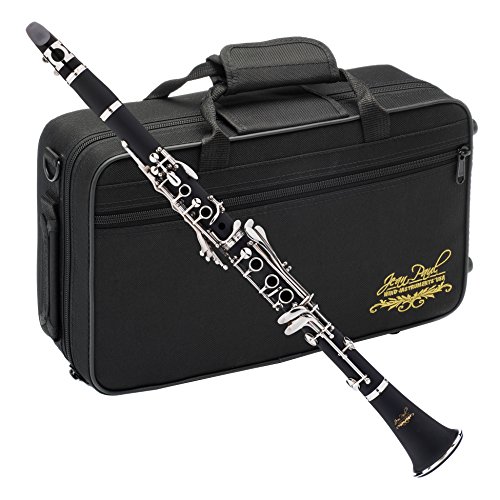 Jean Paul CL-300 Student Bb Clarinet The value clarinet that most band rooms will still accept: resin body, nickel keys, US warranty. Ask the director first, because clarinet is the instrument where brand policies are strictest. | Band-usable clarinet at a lower price | 8.7/10 | $279.99View on Amazon #ad · price as of September 17, 2026 · how this is funded |
Scores are our own editorial fit rating from published specifications — the rubric is on our methodology page. They are not test results; we have not played these instruments.
The difference in one paragraph
A clarinet has a reed. Blow through the mouthpiece with a reasonable seal and the reed vibrates, so almost every student makes a note in the first lesson. A flute has no reed and no mouthpiece to buzz into: the player shapes their own air across an open hole, and until they find that shape, nothing happens at all. Some children find it in three days. Some take a month, and some of those quit before they get there.
After that first hill the order reverses. The clarinet’s hard part is in the middle of the first year, and the flute’s running costs are the lowest of any band instrument. Which one is “easier” depends entirely on where you are standing.
The first six weeks are not the same shape
| Flute | Clarinet | |
|---|---|---|
| First controlled note | Days to several weeks; the single steepest start in the band room | Usually within the first lesson |
| The first-year wall | Getting a sound at all, then the higher octave | Crossing the break, where fingering jumps and the sound can vanish for lessons |
| What can be practiced without the instrument | Blowing across a bottle top trains the same air shape | Nothing equivalent |
| Weight and posture | Light, but held out to the right with both arms raised | Heavier, held in front of the body with arms low |
| What the parent hears in month one | Air, then a thin whistle, then a note | A note immediately, and a squeak whenever the reed slips |
'First controlled note' means a repeatable sound the student can produce on request, not the first noise the instrument makes. The gap between those two is the biggest predictor of first-term frustration on either instrument.
Over three years, cost is where they really diverge
Purchase and rental prices are close. The published rental chart we re-read for this page lists a plastic clarinet and a standard flute at the same monthly rate, so the rental decision does not separate them either.
Consumables do. A clarinet runs on reeds, and a beginner works through them steadily: reeds chip, warp, and eventually stop responding. Over three years that is a small recurring cost that never stops. A flute has no consumables at all beyond a cleaning cloth and the occasional pad-care item. If a household is comparing the true cost of the two, that is the whole difference, and it is the reason flute is the cheapest band instrument to run.
The other cost most families do not anticipate is the mouthpiece. The one supplied with a budget clarinet is almost always the weakest part of the instrument, and replacing it is the most reliable cheap upgrade in school music. Both parts are covered on reed strength and the clarinet mouthpiece guide; the flute’s equivalent is simply keeping the pads dry, which the flute cleaning kit page covers, and the clarinet’s swab routine is on the clarinet care kit page.
Physical fit: reach, teeth and hand size
The flute is the easier instrument for a physically small student to hold, but the hardest to reach. It is held out to the right with both arms raised, and a child with short arms cannot get their right hand to the keys without twisting. The fix is a curved headjoint, which shortens the reach and is a standard option on student flutes — but not on every model, which is worth checking before ordering. An offset-G key layout also helps smaller left hands, and it is standard on the student flutes we recommend.
The clarinet is heavier and is held in front of the body with the arms low, which suits a smaller frame. Its physical obstacle is different: the right thumb carries the entire weight of the instrument on one thumb rest, and that is genuinely uncomfortable for a beginner until a neck strap or a padded rest is added.
On braces, both are affected and neither is ruled out. The clarinet puts the mouthpiece against the top teeth and the reed on the lower lip, so new braces make the top-teeth contact sore for a week or two. The flute touches the lower lip only, which is why it is often the instrument suggested for students getting braces. Orthodontic wax and a fortnight of adjustment is the standard answer on either, and the band director will have seen it dozens of times.
Noise at home
Both are moderate and both carry, and neither has a usable mute. The clarinet is the quieter of the two at beginner volume, and the flute’s upper register is the more piercing sound in a small flat. Neither is in the same category as a trumpet. If the household has genuine noise constraints, our apartment instruments page is honest about the fact that woodwind is a scheduling problem rather than an equipment one.
Which section does the director want filled?
Ask, because it changes the answer. Flute and clarinet sections are both usually well subscribed, and clarinet is the section that most often needs students moved into bass clarinet later — which is a genuine opportunity for a student who takes to it. A director will also tell you whether the program has a brand list, which decides which instrument to buy far more than any specification does: the four questions to ask.
Switching later
The clarinet is the better starting point if a student might want to move. Clarinet to saxophone is the most common switch in school music and most of the embouchure and fingering transfers, which is why directors often start a saxophone-hopeful on clarinet. Clarinet also leads naturally to bass clarinet.
The flute switches less easily to anything, because nothing else uses that air shape. It does have a clear upgrade path within itself — open holes, a B foot, a solid silver headjoint — and the step-up guide explains which of those are worth paying for and when. If the student has come from a recorder in general music, our recorder versus flute page covers what transfers and what does not.
What we would buy for each
On flute, the Yamaha is the instrument most programs are built around, and Gemeinhardt is the other name band rooms accept, often for less. Both are closed-hole and offset-G, which is the standard student layout. The fuller comparison, including the value option with a US warranty, is on the beginner flute roundup and in Jean Paul versus Yamaha.
On clarinet, both picks above use a resin body, which is correct for a school instrument because resin ignores the humidity swings that crack wood. The Yamaha holds its key adjustment longer under school use; the Jean Paul is the value option where the program has no brand list. The wider field is on the beginner clarinet roundup.
Whichever you choose, the method book will usually be specified by the program — the standard series for each are on flute method books and clarinet method books. And for a first year, the arithmetic on renting a flute and renting a clarinet still says rent more often than it says buy.
The picks, in full
Every card below is written from the published specification and the manufacturer’s own documentation. We have not played these instruments — see how we work for exactly what that means and what we do instead.
Our top pick · The flute a band director expects
Yamaha YFL-222 Student Flute
The student flute most band programs are built around. Pad seating and key alignment are the two things that decide whether a beginner flute plays, and this is where Yamaha earns the premium.
What works
- Consistent pad seating from new, so notes speak without over-blowing
- Offset G is standard, which suits smaller hands
- Every school repair tech knows the instrument
What to know
- Significantly more expensive than the import competition
- Closed-hole only — an advancing student will want open holes eventually
- Key
- C
- Holes
- Closed (plateau)
- G key
- Offset
- Foot
- C foot
#ad · price as of September 17, 2026 · how this is funded
Specs read from the manufacturer or retailer listing on 2026-09-07. Our fit score: 9.3/10.
Pick 2 · A band-accepted flute at a lower price
Gemeinhardt 2SP Student Flute
The other name band rooms accept, and often cheaper than the Yamaha. A straight headjoint and silver-plated body: conventional, serviceable and easy to get repaired anywhere in the US.
What works
- Long-established US brand with a wide service network
- Silver-plated head, body and foot
- Frequently the cheapest flute a school program will still accept
What to know
- Straight headjoint only — a young child may need a curved head to reach
- Case is basic
- Key
- C
- Headjoint
- Straight
- Plating
- Silver-plated
- Holes
- Closed (plateau)
#ad · price as of September 17, 2026 · how this is funded
Specs read from the manufacturer or retailer listing on 2026-09-07. Our fit score: 9.0/10.
Pick 3 · The clarinet school programs expect
Yamaha YCL-255 Student Clarinet
The default school clarinet. An ABS resin body ignores humidity and cracking entirely, and the key work holds adjustment through the abuse a middle-school case takes.
What works
- ABS resin body will not crack the way grenadilla wood does in a dry classroom
- Adjustment holds through a school year of handling
- Best resale value of any student clarinet
What to know
- Resin does not develop the warmth of a wooden body
- The supplied mouthpiece is the first thing worth upgrading
- Key
- Bb
- Body
- ABS resin
- Keys
- Nickel-plated
- Bore
- Cylindrical, 14.95 mm
#ad · price as of September 17, 2026 · how this is funded
Specs read from the manufacturer or retailer listing on 2026-09-07. Our fit score: 9.4/10.
Pick 4 · Band-usable clarinet at a lower price
Jean Paul CL-300 Student Bb Clarinet
The value clarinet that most band rooms will still accept: resin body, nickel keys, US warranty. Ask the director first, because clarinet is the instrument where brand policies are strictest.
What works
- US-based warranty and service network
- Resin body handles a school environment without cracking
- Substantially cheaper than the Yamaha
What to know
- Key adjustment drifts sooner than a Yamaha under the same use
- Supplied mouthpiece and reeds should be replaced immediately
- Key
- Bb
- Body
- Resin
- Keys
- Nickel-plated
#ad · price as of September 17, 2026 · how this is funded
Specs read from the manufacturer or retailer listing on 2026-09-07. Our fit score: 8.7/10.
Questions people actually ask
Is flute or clarinet easier for a beginner?
The clarinet is easier to start, because the reed produces a sound almost immediately. The flute is harder for the first week or two and then becomes simpler, with no reeds to manage and nothing to replace.
Which is cheaper to own, a flute or a clarinet?
The flute. Purchase and rental costs are similar, but a clarinet needs a steady supply of reeds for as long as it is played, and its supplied mouthpiece is usually worth replacing. A flute has no consumables beyond a cleaning cloth.
Which is better for a small child?
The clarinet is easier to hold, because it sits in front of the body with the arms low. The flute is lighter but needs more reach, and a curved headjoint is the standard fix for a student whose arms are still short.
Can you play flute or clarinet with braces?
Both, and neither is ruled out. The clarinet mouthpiece rests against the top teeth, so new braces make it sore for a week or two. The flute touches only the lower lip, which is why it is often suggested for students about to get braces.
Sources
We have not played these instruments, so citation is our evidence. Everything above traces back to one of these, on the date shown.