Two specifications decide almost everything here: how many keys, and whether they are weighted. Everything else is preference.
Keyboard shopping is confusing for a specific and fixable reason: the same word covers three quite different instruments. A portable “keyboard” with hundreds of sounds, a “digital piano” designed to imitate one instrument well, and a “stage piano” or controller for performance and recording are sold in the same aisle and compared on the same spec sheets. They suit different students.
Decision one: how many keys
A full piano has 88 keys. Portable keyboards commonly have 61, and some have 49 or fewer. The honest answer is that 61 keys covers every piece in a first-year method book and a good deal beyond it, and that a student heading toward classical piano will eventually need 88.
The practical version: buy 61 keys if the student is young, the budget is tight, or the instrument has to be moved and stored. Buy 88 if there is a piano teacher involved, because a teacher will assign repertoire that runs off the end of a 61-key board within the first couple of years, and because the student will sit at an acoustic piano in lessons and exams. Our key-count page works through the branches.
Decision two: weighted keys
On an acoustic piano, pressing a key throws a felt hammer at a string, and the key pushes back. Weighted digital pianos reproduce that resistance mechanically. Unweighted keyboards do not: the key is essentially a switch with a spring.
This matters because finger strength and control are physical skills. A student who practices for a year on unweighted keys and then sits at an acoustic piano will find it heavy and unresponsive, and the dynamics they had learned to produce will not come out. It is not catastrophic and it is not permanent, but it is a real setback, and it is entirely avoidable if there is a teacher in the picture. The weighted-keys page covers the middle ground, which is where most of the confusion lives.
Which instrument suits which student
Student
Keys
Action
Why
Young child, no teacher yet
61
Touch-sensitive, unweighted
Light keys suit small fingers; touch sensitivity still teaches dynamics
Child or adult with a piano teacher
88
Weighted hammer action
The teacher will assign repertoire that needs both the range and the resistance
Adult returning to piano
88
Weighted hammer action
The hands already expect resistance; an unweighted board feels wrong immediately
Songwriting, worship band, production
61 or 76
Semi-weighted
Portability and sound variety matter more than an authentic piano feel
The things people forget to budget for
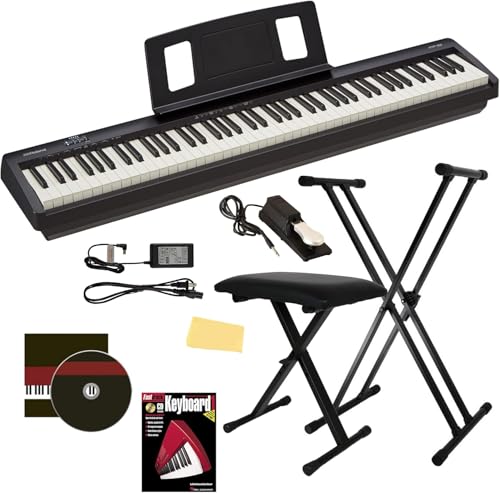
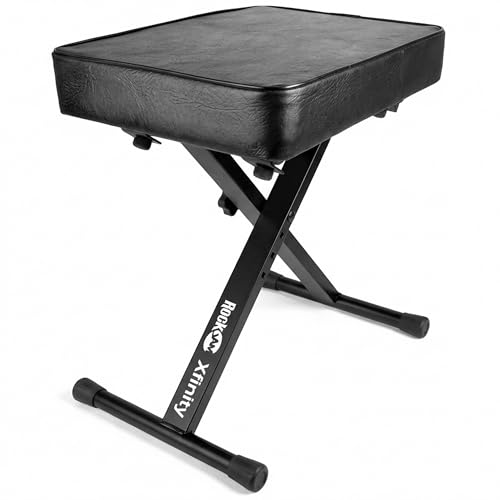
A keyboard on a dining table is a keyboard nobody practices at. The three items that turn an instrument into a practice setup are a stand at the right height, an adjustable bench, and a sustain pedal that is not the small plastic footswitch bundled in the box. Headphones come fourth and matter enormously in an apartment. Our starter kit page lists what a bundle typically includes and, more usefully, what it leaves out.
Bench height is worth more attention than it usually gets. A child sitting too low drops their wrists below the keys, and a dropped wrist is a technique problem a teacher then spends months undoing. An adjustable bench is a cheap fix for an expensive habit.
61 keys is enough for the whole of a first-year method book and most of a second. Move to 88 when a piano teacher is involved, because the repertoire they assign will run off the end of a 61-key board and the student will be sitting at a full piano in lessons anyway.
Do beginners need weighted keys?+
Not to start, but yes if the goal is playing the piano. Weighted keys build the finger strength and control an acoustic piano requires, and a student who practices for a year on unweighted keys will find a real piano heavy and unresponsive. If there is a teacher, buy weighted.
What is the difference between a keyboard and a digital piano?+
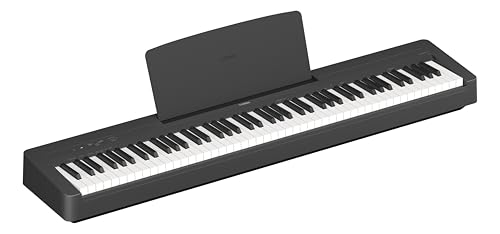
A keyboard prioritizes variety and portability: many sounds, usually 61 unweighted keys, often battery powered. A digital piano prioritizes imitating one instrument well: 88 weighted keys, a small number of excellent piano voices, and a cabinet or stand designed to be played sitting down.