Keyboard or digital piano?
The two words are used interchangeably in shops and mean genuinely different instruments. The difference decides which student each one suits.
By Stephen V. · Writes Reed & Rosin · last verified
The short answer
A portable keyboard prioritizes variety and portability: many sounds, usually 61 unweighted keys, often battery powered. A digital piano prioritizes imitating one instrument well: 88 weighted keys, a few excellent piano voices, and a design meant to be played sitting down.
Some links on this page earn us a commission at no extra cost to you. It does not change which instrument we recommend, and it does not change the order. We also earn nothing when the honest answer is “rent it” — and we still say so. Full disclosure.
Quick picks
| # | Product | Best for | Score | Price |
|---|---|---|---|---|
| 1 |  Yamaha 61-Key Touch-Sensitive Portable Keyboard Touch sensitivity is the spec that matters at this price: without it, pressing harder does nothing, and a child learning dynamics on a non-sensitive keyboard is learning a habit they will have to unlearn. | A first keyboard that teaches dynamics | 9.0/10 | $199.99View on Amazon #ad · price as of October 27, 2026 · how this is funded |
| 2 |  Casio Casiotone CT-S1 A deliberately stripped-back 61-key board with a serious grand piano voice and no menu-diving. Fewer sounds than its rivals, and the ones it has are better. | Beginners who want a good piano sound, not 700 sounds | 8.8/10 | $219.99View on Amazon #ad · price as of October 27, 2026 · how this is funded |
| 3 | 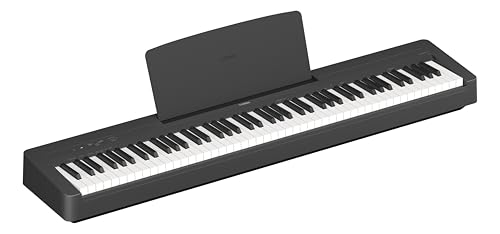 Yamaha P-145 88-Key Digital Piano Fully weighted hammer action in the smallest, lightest body Yamaha makes it in. If the student has a piano teacher, this is the point where the instrument stops being the limiting factor. | Students with a piano teacher | 9.2/10 | $529.99View on Amazon #ad · price as of October 27, 2026 · how this is funded |
| 4 | 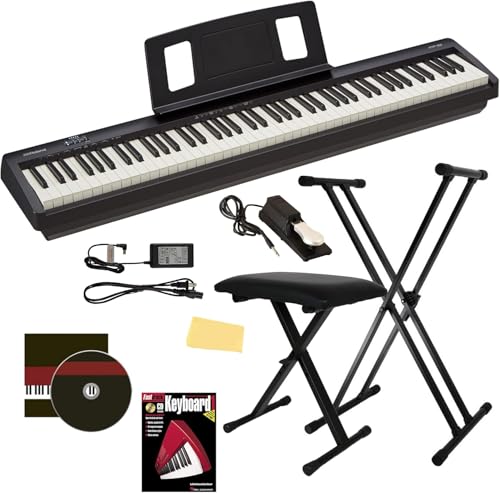 Roland FP-10 88-Key Bundle Roland's PHA-4 Standard action with escapement is the best key feel available near this price, and escapement is the subtle notch a real grand gives you at the bottom of a soft key press. | The most realistic key feel under the step-up tier | 9.3/10 | $599.99View on Amazon #ad · price as of October 27, 2026 · how this is funded |
Scores are our own editorial fit rating from published specifications — the rubric is on our methodology page. They are not test results; we have not played these instruments.
The distinction, in one line each
A portable keyboard is a versatile instrument that plays many sounds adequately and is designed to be carried, stored and used casually.
A digital piano is a specialized instrument that plays one sound extremely well and is designed to be sat at, like the instrument it imitates.
| Portable keyboard | Digital piano | |
|---|---|---|
| Keys | Usually 61, sometimes 76 | 88, essentially always |
| Action | Unweighted, touch sensitive if you choose well | Weighted hammer action |
| Sounds | Hundreds, of varying usefulness | A handful, all excellent |
| Rhythms and backing | Yes, extensively | Rarely, and minimally |
| Speakers | Small, adequate | Better, though still small on slim models |
| Power | Often battery capable | Mains, almost always |
| Size and weight | Portable, can be stored | Furniture — needs a permanent place |
| Suits | Exploring, songwriting, young children, tight space | Piano study with a teacher, adults returning to piano |
The stage piano, which confuses everything
A third category sits between the two and is sold in the same aisle. A stage piano has 88 weighted keys like a digital piano, no built-in speakers, and a large selection of sounds designed for performance. It is a professional tool.
For a student it is usually the wrong purchase, and specifically because of the speakers: a stage piano makes no sound at all without an amplifier or headphones plugged in, which is a friction point that quietly reduces how often a child sits down to practice.
Which one, by student
- Child with a piano teacher: digital piano. The teacher will assume both the range and the action.
- Child exploring, no lessons yet: keyboard. Cheaper, storable, and the variety of sounds genuinely encourages a young child to sit down at it.
- Adult returning to piano: digital piano, without hesitation. Hands that already expect resistance find an unweighted board immediately wrong.
- Adult starting from scratch, casually: either. Choose the digital piano if there is a permanent place for it, the keyboard if there is not.
- Songwriting, worship band, production: keyboard or a semi-weighted stage instrument. Portability and sound variety matter more than piano feel.
A permanent place beats every specification
An instrument that has to be assembled before it can be played gets played far less than one that is always there. If the household can give a digital piano a permanent spot with a stand and a bench, that is the better instrument for a student. If it would have to live in a cupboard and come out for practice, the keyboard that stays out will be played more.
This is not a small factor. It is probably the largest single predictor of how many hours the instrument gets used in year one.
Can a keyboard become a digital piano later?
Not through any upgrade — the action is mechanical and cannot be changed. What a keyboard can do is serve as a MIDI controller for software instruments, which extends its usefulness in a production context but does nothing about the key feel.
A student who starts on a keyboard and takes up formal lessons will need a second instrument. That is a real cost, and it is the argument for buying the digital piano first if lessons are already likely.
A different question wears almost the same words. If what you are actually weighing is a digital instrument against a real piano — an upright in the room, or the free one being offered by a relative — digital piano versus acoustic piano is that comparison, and it turns on tuning, moving and headphone practice rather than on key feel.
The picks, in full
Every card below is written from the published specification and the manufacturer’s own documentation. We have not played these instruments — see how we work for exactly what that means and what we do instead.
Our top pick · A first keyboard that teaches dynamics
Yamaha 61-Key Touch-Sensitive Portable Keyboard
Touch sensitivity is the spec that matters at this price: without it, pressing harder does nothing, and a child learning dynamics on a non-sensitive keyboard is learning a habit they will have to unlearn.
What works
- Touch-sensitive keys, so playing harder is actually louder
- 61 keys covers everything in a beginner method book
- Ships with the power adapter and music rest — both commonly missing at this price
What to know
- Keys are unweighted; a player heading toward classical piano will need weighted keys eventually
- 61 keys runs out of room in intermediate repertoire
- Keys
- 61
- Touch sensitive
- Yes
- Weighted action
- No
- Included
- Power adapter, music rest (per listing)
#ad · price as of October 27, 2026 · how this is funded
Specs read from the manufacturer or retailer listing on 2026-09-07. Our fit score: 9.0/10.
Pick 2 · Beginners who want a good piano sound, not 700 sounds
Casio Casiotone CT-S1
A deliberately stripped-back 61-key board with a serious grand piano voice and no menu-diving. Fewer sounds than its rivals, and the ones it has are better.
What works
- Front panel has almost no clutter — a child can turn it on and play
- The core piano and electric piano voices are a step above the category
- Runs on batteries and is light enough to move room to room
What to know
- Far fewer voices and rhythms than a similarly priced Yamaha
- Unweighted keys
- Keys
- 61
- Touch sensitive
- Yes
- Weighted action
- No
- Battery powered
- Yes
#ad · price as of October 27, 2026 · how this is funded
Specs read from the manufacturer or retailer listing on 2026-09-07. Our fit score: 8.8/10.
Pick 3 · Students with a piano teacher
Yamaha P-145 88-Key Digital Piano
Fully weighted hammer action in the smallest, lightest body Yamaha makes it in. If the student has a piano teacher, this is the point where the instrument stops being the limiting factor.
What works
- Graded hammer action — heavier in the bass, lighter in the treble, like an acoustic piano
- Genuinely compact and light for a full weighted 88
- Bluetooth and a headphone socket for silent practice
What to know
- Deliberately minimal control panel — most settings need a key combination
- Stand and bench are usually extra
- Keys
- 88
- Action
- Graded hammer standard (weighted)
- Bluetooth
- Yes (per listing)
#ad · price as of October 27, 2026 · how this is funded
Specs read from the manufacturer or retailer listing on 2026-09-07. Our fit score: 9.2/10.
Pick 4 · The most realistic key feel under the step-up tier
Roland FP-10 88-Key Bundle
Roland's PHA-4 Standard action with escapement is the best key feel available near this price, and escapement is the subtle notch a real grand gives you at the bottom of a soft key press.
What works
- PHA-4 Standard action with escapement and ivory-feel key tops
- Bundle includes stand, bench, sustain pedal and instructional material
- SuperNATURAL piano engine is a class above most rivals at this size
What to know
- Onboard speakers are small; the sound rewards headphones
- Heavier than the lightest 88-key boards
- Keys
- 88
- Action
- PHA-4 Standard with escapement
- Bundle
- Stand, bench, sustain pedal (per listing)
#ad · price as of October 27, 2026 · how this is funded
Specs read from the manufacturer or retailer listing on 2026-09-07. Our fit score: 9.3/10.
Questions people actually ask
What is the difference between a keyboard and a digital piano?
A keyboard prioritizes variety and portability: many sounds, usually 61 unweighted keys, often battery powered. A digital piano prioritizes imitating one instrument well: 88 weighted hammer-action keys and a small number of excellent piano voices.
Can you learn piano on a keyboard?
For the first year or two, yes, and many students do. The limits appear when repertoire needs the full range or when the student sits at an acoustic piano and finds the action heavy. If lessons are already planned, buying a digital piano first avoids buying twice.
Is a stage piano good for a beginner?
Usually not, mainly because most have no built-in speakers. Needing headphones or an amplifier before any sound appears is a friction point that quietly reduces how often a student sits down, and friction is what kills practice habits.
Should I buy a keyboard or digital piano for my child?
Digital piano if there is a teacher and a permanent place for it. Keyboard if lessons are not yet planned or space is tight — an instrument that stays set up gets played far more than one that has to be assembled first.
Sources
We have not played these instruments, so citation is our evidence. Everything above traces back to one of these, on the date shown.