Viola size chart
Violas are measured in inches of body length rather than in fractions, which confuses almost everyone coming from violin.
By Stephen V. · Writes Reed & Rosin · last verified
The short answer
Viola sizes are given as body length in inches, from about 12 in for a small child to 16 in and above for an adult. A 12-inch viola corresponds roughly to a 1/2 violin, 13 in to a 3/4, and 14 in to a full-size violin body — but the viola will feel heavier.
Some links on this page earn us a commission at no extra cost to you. It does not change which instrument we recommend, and it does not change the order. We also earn nothing when the honest answer is “rent it” — and we still say so. Full disclosure.
Quick picks
| # | Product | Best for | Score | Price |
|---|---|---|---|---|
| 1 |  Cecilio CVA-500 16-Inch Viola Solidwood with ebony fittings in a 16-inch body — a full adult viola size. Viola sizing is measured in inches of body length, not fractions, and 16 in is a large adult instrument. | Adult and older-teen violists | 8.0/10 | $219.99View on Amazon #ad · price as of October 27, 2026 · how this is funded |
| 2 |  Kun Original Shoulder Rest 4/4 The shoulder rest teachers name by default. Both height and angle adjust, which is the difference between a rest that fits the player and one the player fights. | The shoulder rest a teacher will recognize | 9.2/10 | $27.95View on Amazon #ad · price as of October 27, 2026 · how this is funded |
| 3 | 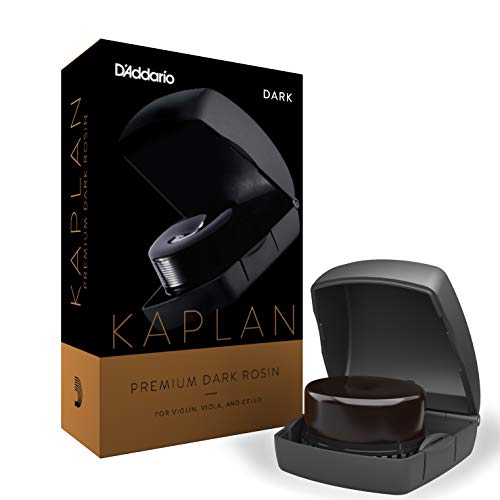 D'Addario Kaplan Premium Rosin, Dark Dark rosin is softer and grippier than light, which suits a beginner still learning bow pressure. The case is the underrated part: rosin that lives in a case survives a school bag. | Beginners still finding bow grip | 9.1/10 | $12.99View on Amazon #ad · price as of October 27, 2026 · how this is funded |
Scores are our own editorial fit rating from published specifications — the rubric is on our methodology page. They are not test results; we have not played these instruments.
Why viola sizing is different
Violins come in a standardized set of fractional sizes: 4/4, 3/4, 1/2 and downward, and a 4/4 violin is a 4/4 violin regardless of maker. Violas do not work that way. They are described by the length of the body in inches, and there is no single “full size” — adult violas range from around 15 to 17 inches and all of them are legitimate full-size instruments.
This exists for an acoustic reason. To sound properly in its range, a viola would need to be considerably larger than a player can hold under the chin. Every viola is therefore a compromise, and makers resolve it differently, which is why the range is so wide.
The size table
| Viola size | Arm length | Typical age | Roughly equivalent violin |
|---|---|---|---|
| 12 in | About 21 in / 53 cm | 6-8 | 1/2 |
| 13 in | About 22 in / 56 cm | 8-10 | 3/4 |
| 14 in | About 23 in / 58 cm | 10-12 | 4/4 |
| 15 in | About 24 in / 61 cm | 12-14 | Larger than a 4/4 violin |
| 15.5-16 in | 25 in / 63 cm and above | 14 and up, most adults | — |
| 16.5 in and above | Long arms and broad shoulders | Adults only | — |
Arm length is measured exactly as for violin: from the base of the neck to the middle of the left palm, with the arm straight out to the side. Corilon's published chart, read 7 September 2026, maps viola sizes against the same arm-length ranges used for violin, which is the basis for the equivalences above.
The same body length feels bigger
A 14-inch viola and a full-size violin have similar body lengths, and the viola will still feel meaningfully more demanding. Three reasons, all real:
- It is heavier. A viola has thicker plates, heavier strings and a larger volume of wood, so the left arm is holding more weight in the same position.
- The string spacing is wider. The left hand has to stretch further between notes, which matters most for smaller hands.
- The strings need more bow weight. Thicker strings need more pressure and a slower bow to speak properly, which is a genuine physical demand.
The practical consequence: size a viola slightly conservatively. A student comfortable on a 4/4 violin may still be better on a 14-inch viola than a 15-inch one.
For a violinist switching to viola
Try a size smaller than the equivalence table suggests, at first. The extra weight and wider spacing are the adjustments, not the body length, and a slightly smaller instrument makes the transition comfortable rather than discouraging.
Alto clef is the other adjustment, and it is a reading problem rather than a playing one. Most switching violinists find the clef takes a few weeks and the physical adaptation takes a few months.
The fit check
Same method as violin. The student holds the viola in playing position and reaches around the scroll with the left hand. The elbow should have a slight bend. A locked-straight arm or a lifted shoulder means the instrument is too large.
Add one viola-specific check: ask them to hold it in playing position for a full minute without support. Violas are heavy enough that a size which feels fine for ten seconds can be genuinely tiring over a rehearsal, and that is a distinction the standard reach test misses.
Finding fractional violas
Small violas are less commonly stocked than small violins, because fewer children start on viola. Rental programs generally carry them, which is another argument for renting a first viola; online availability is patchier and shipping a large instrument for an exchange is unpleasant.
Once the size is settled, the instruments that come in it are the next question. Our beginner viola roundup compares four sized student outfits and what each box actually includes.
The picks, in full
Every card below is written from the published specification and the manufacturer’s own documentation. We have not played these instruments — see how we work for exactly what that means and what we do instead.
Our top pick · Adult and older-teen violists
Cecilio CVA-500 16-Inch Viola
Solidwood with ebony fittings in a 16-inch body — a full adult viola size. Viola sizing is measured in inches of body length, not fractions, and 16 in is a large adult instrument.
What works
- Solidwood construction with ebony fittings
- Complete outfit, which matters because viola accessories are harder to find locally
What to know
- 16 in is a large viola — most middle-school players need 13 to 14 in
- Needs a setup before it plays properly
- Size
- 16 in body
- Body
- Solidwood
- Fittings
- Ebony
#ad · price as of October 27, 2026 · how this is funded
Specs read from the manufacturer or retailer listing on 2026-09-07. Our fit score: 8.0/10.
Pick 2 · The shoulder rest a teacher will recognize
Kun Original Shoulder Rest 4/4
The shoulder rest teachers name by default. Both height and angle adjust, which is the difference between a rest that fits the player and one the player fights.
What works
- Height and tilt both adjust, unlike the fixed foam block in budget outfits
- Spare parts are widely available
What to know
- Feet are fixed, not collapsible — Kun makes a separate Collapsible model for a slim case
- Feet can mark a soft violin varnish if left clamped for long periods
- Costs more than the generic clones it inspired
- Size
- 4/4
- Adjustable
- Height and tilt
#ad · price as of October 27, 2026 · how this is funded
Specs read from the manufacturer or retailer listing on 2026-09-16. Our fit score: 9.2/10.
Pick 3 · Beginners still finding bow grip
D'Addario Kaplan Premium Rosin, Dark
Dark rosin is softer and grippier than light, which suits a beginner still learning bow pressure. The case is the underrated part: rosin that lives in a case survives a school bag.
What works
- Dark formulation grips more readily, so early tone comes easier
- Protective case prevents the cracked-rosin problem
- Low dust compared with the cake that ships in budget outfits
What to know
- Dark rosin can feel sticky in a hot, humid room
- Costs several times what a bundled cake does
- Type
- Dark
- For
- Violin, viola, cello
- Case
- Included
#ad · price as of October 27, 2026 · how this is funded
Specs read from the manufacturer or retailer listing on 2026-09-07. Our fit score: 9.1/10.
Questions people actually ask
How are viola sizes measured?
By the length of the body in inches rather than in fractions. Adult violas range from about 15 to 17 inches, and all of them are legitimate full-size instruments — there is no single standard 'full size' the way there is for violin.
What size viola does a 10 year old need?
Usually a 13 or 14 inch viola, depending on arm length. Measure from the base of the neck to the middle of the left palm with the arm straight out, and size conservatively — a viola is heavier than a violin of comparable body length.
What size viola is equivalent to a full size violin?
About 14 inches of body length, though the viola will feel more demanding because it is heavier, the string spacing is wider and the strings need more bow weight to speak. A violinist switching over should try a size smaller than the equivalence suggests.
Why are violas not measured in fractions like violins?
Because there is no single correct full size. A viola acoustically 'should' be considerably larger than a player can hold under the chin, so every viola is a compromise, and makers resolve it differently — which is why adult sizes span two full inches.
Sources
We have not played these instruments, so citation is our evidence. Everything above traces back to one of these, on the date shown.