The best beginner saxophones
Alto is the beginner saxophone, and the decision that follows is which brand a school repair technician will actually service.
By Stephen V. · Writes Reed & Rosin · last verified
The short answer
Start on alto saxophone: it is sized for a school-age student and it is what every beginner method book is written for. The Yamaha YAS-26 is the student standard, with ergonomics designed around smaller hands; the Jean Paul AS-400 is the value alternative.
Some links on this page earn us a commission at no extra cost to you. It does not change which instrument we recommend, and it does not change the order. We also earn nothing when the honest answer is “rent it” — and we still say so. Full disclosure.
Quick picks
| # | Product | Best for | Score | Price |
|---|---|---|---|---|
| 1 |  Yamaha YAS-26 Alto Saxophone The student alto the industry benchmarks against. Key placement is designed around smaller hands, and the intonation is even enough that a beginner can hear when they are out of tune. | The alto a band director expects | 9.4/10 | $2,979.00View on Amazon #ad · price as of October 27, 2026 · how this is funded |
| 2 | 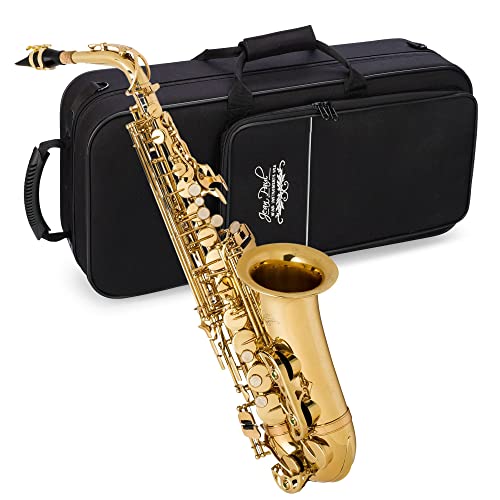 Jean Paul AS-400 Alto Saxophone The value alto with a genuine US warranty, and the one most often accepted when a program does not mandate a specific brand. Ask the band director before ordering. | Value, subject to the director's approval | 8.8/10 | $749.99View on Amazon #ad · price as of October 27, 2026 · how this is funded |
| 3 |  Eastar AS-II Alto Saxophone Kit Better finished than the cheapest imports, with a full kit and a vintage bronze look. Still an off-brand instrument — worth it for a curious adult, questionable for a band student. | Curious adults outside a band program | 7.4/10 | $319.99View on Amazon #ad · price as of October 27, 2026 · how this is funded |
Scores are our own editorial fit rating from published specifications — the rubric is on our methodology page. They are not test results; we have not played these instruments.
Buying this as a gift? Our gift guides re-explain these picks for the gifter. Wondering whether to wait for November? The Black Friday hub has the sourced record of what discounted last year and what did not.
Alto, not tenor
The alto saxophone is the beginner instrument, and this is not a matter of taste. It is physically smaller and lighter than a tenor, which matters on a neck strap for a school-age student, and it is the instrument every beginner method book and band arrangement is written for.
Tenor is a legitimate destination and usually a second instrument rather than a first. The full comparison is on the alto versus tenor page.
What matters on a student saxophone
A saxophone has more moving parts than any other beginner band instrument — a long chain of keys, rods and springs, all of which must stay in adjustment for the pads to seal. That complexity is where the quality differences show.
| Budget import | Value student | School standard | |
|---|---|---|---|
| Key ergonomics | Scaled down from an adult layout | Reasonable | Designed around a young player's hand span |
| Pad seating from new | Frequently needs shop work | Usually usable, worth checking | Consistently correct |
| Intonation across the range | Uneven — some notes noticeably out | Good | Even enough that a student can trust their ear |
| Springs and rods | Softer metal, goes out of adjustment | Blue steel springs | Blue steel, ribbed construction |
| Serviceability | Often refused by school techs | US warranty and service | Universal |
| Resale | Effectively none | Modest | The strongest in the category |
Even intonation is the specification that most affects a beginner, because a student cannot develop their ear on an instrument that is out of tune with itself. It is also the hardest thing to assess from a listing.
The saxophone section is usually full
Worth knowing before the sign-up form goes back. Saxophone is the most-requested instrument in most band rooms, sections are oversubscribed, and directors frequently steer students to other instruments to balance the ensemble.
That is not a rejection and it is worth taking seriously: a student in a thin section gets more attention and more interesting parts. Ask the director which sections need players before committing.
What the horn needs on day one
Reeds in strength 2 or 2.5 — a saxophone cannot make a sound without one.
A neck strap that fits. An alto is heavy on a child’s neck and the thin strip supplied with budget horns concentrates all that weight in one place. A padded or harness strap is inexpensive and prevents a genuine comfort problem that shortens practice sessions.
Cork grease and a swab. The neck cork needs lubrication or the mouthpiece tears it, and the body needs swabbing after every session.
What we would skip
The cheapest complete kits. The recurring problems are pad and key regulation that needs shop work out of the box, technicians who decline to service the brand, and no resale value.
For a first-year band student the alternative is renting, and the saxophone is the instrument where the rent-versus-buy arithmetic is most interesting: the monthly rate is high enough that buying reaches break-even faster than on any other band instrument.
The upgrade that comes first
Not the instrument — the mouthpiece. A Yamaha 4C is the most commonly specified first upgrade in school music, costs very little next to the horn, and makes a student saxophone sound like a different instrument. Which one.
One accessory decision comes with the instrument rather than after it. The saxophone hangs entirely from its neck strap, and straps are sold in lengths — an adult-length strap on a fifth grader cannot be adjusted short enough, so the horn sits too low for their hands. The lengths and materials are compared on our saxophone neck strap page.
Years later, when the question becomes whether to upgrade, the answer is usually the mouthpiece rather than the saxophone. The order to spend in is on our step-up saxophone guide.
The picks, in full
Every card below is written from the published specification and the manufacturer’s own documentation. We have not played these instruments — see how we work for exactly what that means and what we do instead.
Our top pick · The alto a band director expects
Yamaha YAS-26 Alto Saxophone
The student alto the industry benchmarks against. Key placement is designed around smaller hands, and the intonation is even enough that a beginner can hear when they are out of tune.
What works
- Ergonomics built around a young player's hand span
- Even intonation across the range, so the player can trust their ear
- Strongest resale of any student saxophone
What to know
- The most expensive student alto in common use
- Supplied mouthpiece is adequate rather than good
- Key
- Eb alto
- Finish
- Gold lacquer
- Range
- Low Bb to high F#
#ad · price as of October 27, 2026 · how this is funded
Specs read from the manufacturer or retailer listing on 2026-09-07. Our fit score: 9.4/10.
Pick 2 · Value, subject to the director's approval
Jean Paul AS-400 Alto Saxophone
The value alto with a genuine US warranty, and the one most often accepted when a program does not mandate a specific brand. Ask the band director before ordering.
What works
- Lacquered golden brass body at well under the Yamaha price
- US-based warranty and service
- Ribbed construction and blue-steel springs, not the cheapest possible build
What to know
- Pad seating needs checking on arrival
- Some programs specify Yamaha, Selmer or Jupiter by name
- Key
- Eb alto
- Body
- Golden brass, lacquered
- Range
- Low Bb to high F#
#ad · price as of October 27, 2026 · how this is funded
Specs read from the manufacturer or retailer listing on 2026-09-07. Our fit score: 8.8/10.
Pick 3 · Curious adults outside a band program
Eastar AS-II Alto Saxophone Kit
Better finished than the cheapest imports, with a full kit and a vintage bronze look. Still an off-brand instrument — worth it for a curious adult, questionable for a band student.
What works
- Better key finishing than the lowest-cost imports
- Complete kit with case, mouthpiece, reeds, strap and care items
What to know
- Not commonly accepted in school programs
- Long-term parts availability is uncertain
- Key
- Eb alto
- Finish
- Vintage bronze
- Kit
- Case, mouthpiece, reeds, strap, care kit
#ad · price as of October 27, 2026 · how this is funded
Specs read from the manufacturer or retailer listing on 2026-09-07. Our fit score: 7.4/10.

We would skip this one
Mendini MAS-L Eb Alto Saxophone Kit
Complete kit, lowest price, and the most likely instrument in this guide to need a repair before the first concert. Read the rent-vs-buy page before this becomes a band student's horn.
What works
- Everything in the box including case, mouthpiece, reeds, strap and stand
- Very low entry cost
What to know
- Pad and key regulation frequently need shop work out of the box
- Repair techs often decline off-brand saxophones
- Negligible resale value
- Key
- Eb alto
- Kit
- Case, mouthpiece, reeds, strap, stand
- Pads
- Not published
#ad · price as of October 27, 2026 · how this is funded
Specs read from the manufacturer or retailer listing on 2026-09-07. Our fit score: 6.6/10.
Questions people actually ask
What is the best beginner saxophone?
An alto, and the Yamaha YAS-26 is the student standard: its key ergonomics are designed around a young player's hand span and its intonation is even enough for a student to trust their ear. The Jean Paul AS-400 is the value alternative.
Should a beginner start on alto or tenor saxophone?
Alto. It is smaller and lighter on a neck strap, and every beginner method book and band arrangement is written for it. Tenor is a legitimate destination and almost always a second instrument rather than a first.
What does a beginner saxophone need besides the instrument?
Reeds in strength 2 or 2.5, a neck strap that actually fits, cork grease for the neck cork, and a swab. The neck strap matters more than it sounds — an alto is heavy on a child's neck and a thin strap concentrates that weight painfully.
Are cheap saxophone kits any good?
They play, and the pad and key regulation frequently needs shop work out of the box, many school technicians will not service them, and resale value is negligible. Renting is usually the better first-year option for a band student.
Sources
We have not played these instruments, so citation is our evidence. Everything above traces back to one of these, on the date shown.