Clarinet or saxophone for a first band instrument
Almost every band program will tell a family to start on clarinet and switch to saxophone later, and that advice is right far more often than it sounds — but not always, and the reasons are worth knowing before you argue with it.
By Stephen V. · Writes Reed & Rosin · last verified
The short answer
Both make a sound in the first lesson. The clarinet is lighter, cheaper, and its fingering transfers to saxophone later; the saxophone is heavier, louder, costs two to three times as much, and is the one most students want. Starting on clarinet keeps both doors open. Starting on saxophone closes one.
Some links on this page earn us a commission at no extra cost to you. It does not change which instrument we recommend, and it does not change the order. We also earn nothing when the honest answer is “rent it” — and we still say so. Full disclosure.
Quick picks
| # | Product | Best for | Score | Price |
|---|---|---|---|---|
| 1 |  Yamaha YCL-255 Student Clarinet The default school clarinet. An ABS resin body ignores humidity and cracking entirely, and the key work holds adjustment through the abuse a middle-school case takes. | The clarinet school programs expect | 9.4/10 | |
| 2 | 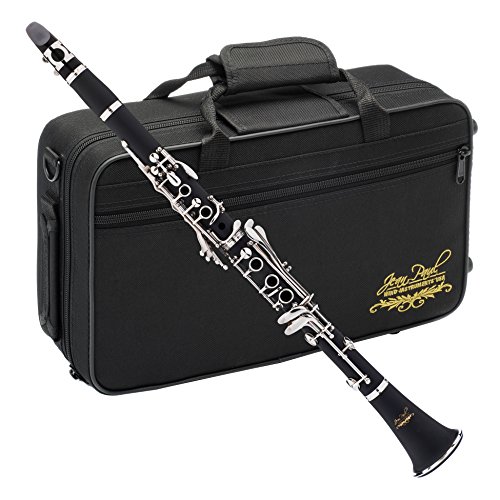 Jean Paul CL-300 Student Bb Clarinet The value clarinet that most band rooms will still accept: resin body, nickel keys, US warranty. Ask the director first, because clarinet is the instrument where brand policies are strictest. | Band-usable clarinet at a lower price | 8.7/10 | $279.99View on Amazon #ad · price as of October 27, 2026 · how this is funded |
| 3 |  Yamaha YAS-26 Alto Saxophone The student alto the industry benchmarks against. Key placement is designed around smaller hands, and the intonation is even enough that a beginner can hear when they are out of tune. | The alto a band director expects | 9.4/10 | $2,979.00View on Amazon #ad · price as of October 27, 2026 · how this is funded |
| 4 | 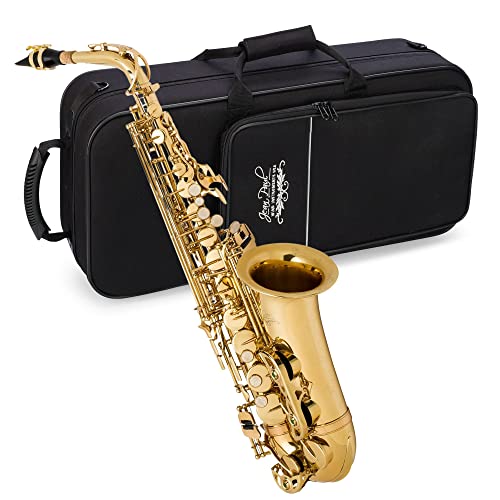 Jean Paul AS-400 Alto Saxophone The value alto with a genuine US warranty, and the one most often accepted when a program does not mandate a specific brand. Ask the band director before ordering. | Value, subject to the director's approval | 8.8/10 | $749.99View on Amazon #ad · price as of October 27, 2026 · how this is funded |
Scores are our own editorial fit rating from published specifications — the rubric is on our methodology page. They are not test results; we have not played these instruments.
The difference in one paragraph
Both instruments are single-reed woodwinds, and both will produce a note in the first lesson — that is the one way they are genuinely alike. After that they diverge on almost every practical axis a family cares about. The clarinet is a slim cylindrical tube, light enough for a small child, cheap to buy and the cheapest reed instrument to run. The saxophone is a heavy conical brass instrument that costs two to three times as much, louder in a house, and the one with the cultural pull. And critically, the skills move in one direction: a clarinet player picks up a saxophone quickly, while a saxophone player learning clarinet finds a genuinely harder instrument waiting.
Why band directors say clarinet first
This is not snobbery and it is not a conspiracy to keep kids off the fun instrument. There are four concrete reasons, and three of them are about the student rather than the band.
| Reason | What it means | When it does not apply |
|---|---|---|
| Fingering transfers upward | Clarinet and saxophone share most of the basic fingering pattern. A clarinet student who switches in a few years already reads and fingers; a sax student switching down does not have the clarinet's register break in their hands | Rarely. This one holds almost universally and is the strongest argument |
| Size and weight | A clarinet is light and held in front of the body with the arms low. An alto sax is heavier and hangs from a neck strap on a growing spine | A physically large eleven- or twelve-year-old, or an adult beginner |
| Cost | A student clarinet costs a fraction of a comparable student alto - commonly a half to a third of it at the same brand level - and reeds are cheaper too. Starting on clarinet cuts the exposure sharply if the student quits by March | A household where the budget is genuinely not the constraint |
| Band balance | Programs need clarinets and are flooded with sax volunteers, so the clarinet seat is easier to get and often comes with more playing time | This one is about the band, not your child — but more playing time is a real benefit to the student too |
Which of these the director actually means is worth asking, because the answer changes the decision. Our ask-the-band-director page has the specific questions to put.
The honest summary: clarinet first is good advice, and the transfer argument is the one that matters most. But if the only reason your child agreed to play an instrument at all is that they want to play saxophone, a clarinet they resent is not a stepping stone. It is a clarinet in a closet. Motivation is a real variable and directors know it — this is why the answer is a conversation and not a rule.
The first year is a different shape on each
| Clarinet | Alto saxophone | |
|---|---|---|
| First controlled note | Usually within the first lesson — the reed does the work | Also within the first lesson, and often a fuller sound sooner because the mouthpiece is more forgiving |
| The first-year wall | Crossing the break into the upper register, where the fingering jumps and the sound can vanish for lessons at a time | No equivalent cliff. The octave key works much more intuitively, which is the sax's genuine beginner advantage |
| Tone in month three | Thin and reedy until the embouchure firms up; a squeak whenever the reed slips | Loud and recognizably saxophone early, which is enormously motivating |
| What the parent hears at home | Quieter. Noticeably livable in an apartment | Loud. There is no quiet way to practice an alto sax |
| Weight and posture | Light, arms low, no strap | Hangs from a neck strap; posture problems are common and a bad strap makes them worse |
| Assembly risk | Cork joints and a bridge key that is easy to bend if the joints are twisted wrong | Fewer joints, but the neck and mouthpiece are easy to knock out of alignment |
'First controlled note' means a repeatable sound the student can produce on request. On both instruments that arrives early; the difference is what comes next.
If the family is choosing between all three common woodwinds rather than these two, the flute is the genuine outlier — it can take weeks to produce any note at all, and it is also the cheapest of the three to run. We compare that case directly in flute or clarinet for a first band instrument.
Over three years, cost is where they really separate
The purchase gap is the obvious one, and it is large: at the same brand level a student alto saxophone commonly costs two to three times what a student clarinet does, and the gap holds whether you buy or rent. We are not going to publish a fixed multiplier, because single-unit marketplace listings on student horns swing wildly and the ratio moves with them. The product cards further down this page carry live prices checked today, so compare the two pairs directly rather than taking a number from us.
The running costs separate too, in the same direction. Both instruments eat reeds, and a beginner works through them steadily — reeds chip, warp and stop responding. But saxophone reeds are physically larger and cost more per reed than clarinet reeds of the same brand and strength, so the recurring cost is higher on the instrument that already cost more. Over three years it is not a dramatic difference, but it runs the same way as everything else here.
Two costs families underestimate on both instruments. The first is the mouthpiece: the one supplied with a budget clarinet or sax is almost always the weakest part of the instrument, and replacing it is the most reliable cheap upgrade in school band — we cover that on the clarinet mouthpiece guide and the saxophone mouthpiece guide. The second is reed strength, which is the single most common reason a beginner sounds bad on either instrument, and the fix costs nothing but knowing the number — see the clarinet reed guide.
Reeds decide how either one sounds
This is the part that surprises families, and it applies equally to both instruments: most of the difference between a beginner who sounds bad and the same beginner sounding fine is the reed, not the horn. A reed that is too hard for an undeveloped embouchure produces an airy, strained, unstable sound no amount of practice fixes, and a reed that is too soft buzzes and squeaks.
Reed strength is printed on the box as a number, and it is the single most useful thing a parent can learn about either instrument. A beginner starts soft and moves up as the embouchure firms. The numbers are not interchangeable between instruments — a clarinet reed and an alto sax reed of the same stated strength are different cuts on different-sized blanks, and a clarinet reed will not play on a saxophone at all. Our clarinet reed guide and saxophone reed guide both give the strength ladder and the signs a student has outgrown one.
The second thing to know is that reeds are consumable on both instruments and the supply has to be continuous. A student with one reed is a student who misses a lesson when it chips, and chipping is not a question of carelessness — it is what reeds do. Three or four in rotation is the normal working arrangement, and that is a recurring cost on either instrument that rental quotes rarely mention.
Does renting change the decision?
Slightly, and in the clarinet’s favor less than you would expect. Rental rates for a student clarinet and a student alto are both monthly figures that scale roughly with the instrument’s value, so renting compresses the purchase gap into a smaller monthly one — which makes the saxophone look more affordable than it is over three years.
Run the break-even rather than the monthly rate. Our per-instrument math is at rent vs buy: clarinet and rent vs buy: saxophone, and the pattern is the same on both: renting wins for the first year or so and loses badly after the point where the accumulated payments pass the purchase price. The instrument that costs twice as much to buy also costs more in total to rent for three years. Renting does not change which instrument is cheaper; it changes when you notice.
One genuine rental advantage that does favor the saxophone: if the family is unsure the student will stick with the louder, heavier, more expensive instrument, renting it for a term is a cheap way to find out without owning the answer.
Who each one genuinely suits
| If this is the student | Lean | Why |
|---|---|---|
| A smaller nine- or ten-year-old | Clarinet | Weight and reach decide it. An alto sax on a small frame is a posture problem before it is a music problem |
| Living in an apartment or a shared house | Clarinet | An alto sax has no quiet setting. The clarinet is genuinely more livable through a wall |
| On a tight budget, or unsure the student will stick with it | Clarinet | A fraction of the purchase price at the same brand level, and cheaper reeds. Far less exposure if the instrument is in a closet by March |
| Set on saxophone and not really interested in anything else | Saxophone | A resented clarinet is not a stepping stone. Motivation is the variable that actually predicts whether a student continues |
| A physically large twelve-year-old, or an adult beginner | Either, honestly | The size and weight argument evaporates, and the sax's easier upper register becomes a real advantage |
| Planning to play in jazz band as well as concert band | Saxophone, eventually | Both, really — plenty of students play clarinet in band and sax in jazz. But that path usually starts on clarinet |
If you start on clarinet, what does switching actually look like?
Easier than most families expect, which is the whole point of the advice. The fingering pattern largely carries over, the student already reads music and already has an embouchure and air support. The genuinely new things are the octave key instead of the register key, a looser embouchure, a larger reed, and getting used to the weight on a strap. Most students who switch after two or three years are playing band parts on the saxophone within a term.
The reverse switch is the hard one. A saxophone player taking up clarinet meets the register break, a tighter embouchure and far less forgiving intonation all at once, with none of it prepared for. That asymmetry — not cost and not band balance — is the real reason the conventional order exists.
Ask the band director first
Before you commit either way, ask the program three things: which instruments they are short of this year, whether they have a preferred rental supplier, and whether they want a specific mouthpiece. Those three answers will change your shopping list more than anything on this page, and the question costs an email. Ours are written out here.
What to buy, once you have decided
The cards below are the student clarinets and student altos we would put a beginner on, with live prices. For the full ladders, including the budget options we think are a false economy and the brands worth paying for, see best beginner clarinet and best beginner saxophone. Whichever way it goes, a stand belongs in the same order — a put-down instrument is how most student horns get damaged, and band instrument stands costs about what a box of reeds does.
The picks, in full
Every card below is written from the published specification and the manufacturer’s own documentation. We have not played these instruments — see how we work for exactly what that means and what we do instead.
Our top pick · The clarinet school programs expect
Yamaha YCL-255 Student Clarinet
The default school clarinet. An ABS resin body ignores humidity and cracking entirely, and the key work holds adjustment through the abuse a middle-school case takes.
What works
- ABS resin body will not crack the way grenadilla wood does in a dry classroom
- Adjustment holds through a school year of handling
- Best resale value of any student clarinet
What to know
- Resin does not develop the warmth of a wooden body
- The supplied mouthpiece is the first thing worth upgrading
- Key
- Bb
- Body
- ABS resin
- Keys
- Nickel-plated
- Bore
- Cylindrical, 14.95 mm
Specs read from the manufacturer or retailer listing on 2026-09-07. Our fit score: 9.4/10.
Pick 2 · Band-usable clarinet at a lower price
Jean Paul CL-300 Student Bb Clarinet
The value clarinet that most band rooms will still accept: resin body, nickel keys, US warranty. Ask the director first, because clarinet is the instrument where brand policies are strictest.
What works
- US-based warranty and service network
- Resin body handles a school environment without cracking
- Substantially cheaper than the Yamaha
What to know
- Key adjustment drifts sooner than a Yamaha under the same use
- Supplied mouthpiece and reeds should be replaced immediately
- Key
- Bb
- Body
- Resin
- Keys
- Nickel-plated
#ad · price as of October 27, 2026 · how this is funded
Specs read from the manufacturer or retailer listing on 2026-09-07. Our fit score: 8.7/10.
Pick 3 · The alto a band director expects
Yamaha YAS-26 Alto Saxophone
The student alto the industry benchmarks against. Key placement is designed around smaller hands, and the intonation is even enough that a beginner can hear when they are out of tune.
What works
- Ergonomics built around a young player's hand span
- Even intonation across the range, so the player can trust their ear
- Strongest resale of any student saxophone
What to know
- The most expensive student alto in common use
- Supplied mouthpiece is adequate rather than good
- Key
- Eb alto
- Finish
- Gold lacquer
- Range
- Low Bb to high F#
#ad · price as of October 27, 2026 · how this is funded
Specs read from the manufacturer or retailer listing on 2026-09-07. Our fit score: 9.4/10.
Pick 4 · Value, subject to the director's approval
Jean Paul AS-400 Alto Saxophone
The value alto with a genuine US warranty, and the one most often accepted when a program does not mandate a specific brand. Ask the band director before ordering.
What works
- Lacquered golden brass body at well under the Yamaha price
- US-based warranty and service
- Ribbed construction and blue-steel springs, not the cheapest possible build
What to know
- Pad seating needs checking on arrival
- Some programs specify Yamaha, Selmer or Jupiter by name
- Key
- Eb alto
- Body
- Golden brass, lacquered
- Range
- Low Bb to high F#
#ad · price as of October 27, 2026 · how this is funded
Specs read from the manufacturer or retailer listing on 2026-09-07. Our fit score: 8.8/10.
Questions people actually ask
Is clarinet or saxophone easier for a beginner?
The saxophone is slightly easier for the first few months: the mouthpiece is more forgiving and the octave key is more intuitive than the clarinet's register break, which is the clarinet's real first-year wall. The clarinet is easier in every other practical respect — lighter, cheaper, quieter — and its fingering transfers to saxophone later.
Why do band directors want beginners on clarinet?
Four reasons: clarinet fingering transfers almost directly to saxophone later while the reverse is much harder, a clarinet is lighter and suits a smaller player, it costs far less to buy and to run, and programs are usually short of clarinets and oversubscribed on saxophone.
Can you switch from clarinet to saxophone?
Yes, and easily — it is the standard path. Most of the fingering carries over, and the student already reads music and has an embouchure and air support. The new parts are the octave key, a looser embouchure, a larger reed and the weight on a neck strap. A term is a realistic timeline for playing band parts.
Is a saxophone too heavy for a 10-year-old?
An alto saxophone is heavy enough that weight and posture are a real consideration for a smaller nine- or ten-year-old, and it hangs from a neck strap on a growing spine. A physically large eleven- or twelve-year-old is usually fine. If the student is small, the clarinet removes the problem entirely.
Which costs more to own, a clarinet or a saxophone?
The saxophone, on both counts. A student alto costs substantially more than a student clarinet from the same maker - commonly two to three times as much - and that gap holds whether you buy or rent. Saxophone reeds also cost more per reed than clarinet reeds of the same brand and strength, so the recurring cost runs the same way. Compare the live prices on our product cards rather than taking a multiplier from anyone.
Which is quieter at home?
The clarinet, clearly. An alto saxophone has no quiet setting and is genuinely loud through a wall, which matters in an apartment or a shared house. Neither instrument has a practical practice mute in the way a trumpet does.
Sources
We have not played these instruments, so citation is our evidence. Everything above traces back to one of these, on the date shown.