Clarinet mouthpieces for beginners
The mouthpiece is the cheapest thing you can change on a clarinet and the thing that changes the sound most. Nearly every student clarinet ships with a bad one.
By Stephen V. · Writes Reed & Rosin · last verified
The short answer
Replace the mouthpiece that comes with a student clarinet. A Yamaha 4C is the standard first upgrade: a medium facing with consistent tolerances that works with the 2 to 2.5 reeds a beginner uses, at a small fraction of the instrument's cost.
Some links on this page earn us a commission at no extra cost to you. It does not change which instrument we recommend, and it does not change the order. We also earn nothing when the honest answer is “rent it” — and we still say so. Full disclosure.
Quick picks
| # | Product | Best for | Score | Price |
|---|---|---|---|---|
| 1 | 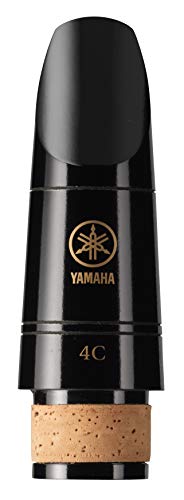 Yamaha 4C Clarinet Mouthpiece The cheapest upgrade that makes a real difference to a student clarinet. A medium facing with consistent tolerances, and it costs a fraction of what the instrument does. | Replacing the mouthpiece a student clarinet ships with | 9.2/10 | $49.95View on Amazon #ad · price as of October 27, 2026 · how this is funded |
| 2 |  Vandoren B45 Clarinet Mouthpiece A wider tip opening than a 4C, which gives more volume and flexibility to a player who already has an embouchure. It is a step-up mouthpiece, not a beginner's first change. | Players past their first year | 8.5/10 | $127.26View on Amazon #ad · price as of October 27, 2026 · how this is funded |
| 3 |  Vandoren Traditional Bb Clarinet Reeds 2.5 Strength 2.5 is the standard step up from a first box of 2s, usually after three to six months. Blue-box Vandoren is the reed most band directors assume when they say 'get proper reeds'. | The second box, after strength 2 | 9.1/10 | $31.00View on Amazon #ad · price as of October 27, 2026 · how this is funded |
Scores are our own editorial fit rating from published specifications — the rubric is on our methodology page. They are not test results; we have not played these instruments.
Why the bundled one holds a student back
The mouthpiece is where the reed vibrates, which makes it the single most acoustically important part of a clarinet. It is also the cheapest part to produce badly, and manufacturers hitting a student price point economize exactly there.
A poorly made mouthpiece has an inconsistent facing — the curve the reed lies against — and a table that is not quite flat. The reed then seals unevenly, and the result is an instrument that is harder to sound, squeakier, and less stable in the upper register than it should be. A student experiences all of that as their own failure.
The two specifications
| Spec | What it is | Effect |
|---|---|---|
| Tip opening | The gap between the reed tip and the mouthpiece tip | Wider opening gives more volume and flexibility, and needs a softer reed and more control |
| Facing length | How far back along the reed the curve extends before it meets the table | Longer facing gives a warmer, less immediate response; shorter is brighter and more direct |
Makers do not use a common scale, so a Yamaha 4C and a Vandoren B45 cannot be compared by their names alone. Published specifications exist, and for a beginner the practical answer is that 4C is the medium standard.
Which one, and when
First upgrade: a Yamaha 4C. Medium tip opening, medium facing, consistently manufactured, and it works with the strength 2 to 2.5 reeds a beginner is using. It is the mouthpiece most directors name when asked, which also means advice given to the student will be calibrated to it.
Later: something wider, such as a Vandoren B45. A wider tip opening allows more dynamic range and tonal color, and it demands a developed embouchure and softer reeds to control. Giving one to a first-year student makes the clarinet harder to play, not easier.
Not yet: hand-finished professional mouthpieces. They are genuinely better and the difference is only accessible to a player whose embouchure is stable enough to exploit it.
Change the mouthpiece or the reed, not both
A new mouthpiece with a different tip opening changes which reed strength works. Changing both at once means you cannot tell what caused any improvement or problem, and students frequently conclude the new mouthpiece is bad when the reed was simply mismatched.
Fit the new mouthpiece, keep the reeds the same for a fortnight, then adjust strength if the response is consistently too easy or too resistant.
The ligature question
The ligature is the band that clamps the reed to the mouthpiece. Ligature marketing claims large tonal differences; the honest position is that the effect is small compared with the mouthpiece and the reed, and it is not where a beginner should spend money.
What does matter is that it holds the reed securely without needing to be over-tightened, and that the screws are not so worn that it slips. The standard metal ligature supplied with a mouthpiece is fine for years.
Care
Rinse the mouthpiece in lukewarm water weekly — never hot, which can distort the material or discolour it. Swab it out after playing. Store it with the cap on, which protects the delicate tip from chips.
A chipped mouthpiece tip is not repairable. It is also the most common way a mouthpiece dies, and almost always happens because it was left uncapped in a case or on a music stand.
Do not leave the reed clamped to the mouthpiece between sessions. It warps the reed, traps moisture, and encourages mold on both parts.
The picks, in full
Every card below is written from the published specification and the manufacturer’s own documentation. We have not played these instruments — see how we work for exactly what that means and what we do instead.
Our top pick · Replacing the mouthpiece a student clarinet ships with
Yamaha 4C Clarinet Mouthpiece
The cheapest upgrade that makes a real difference to a student clarinet. A medium facing with consistent tolerances, and it costs a fraction of what the instrument does.
What works
- Consistent facing and tip opening, unlike the bundled mouthpieces it replaces
- Medium facing works with the standard 2 to 2.5 student reeds
- The most common director-recommended first mouthpiece upgrade
What to know
- Advanced players will move to a hand-finished mouthpiece
- Ligature and cap are not always included — check the listing
- Facing
- 4C (medium)
- For
- Bb clarinet
- Suits reeds
- Roughly 2 to 3
#ad · price as of October 27, 2026 · how this is funded
Specs read from the manufacturer or retailer listing on 2026-09-07. Our fit score: 9.2/10.
Pick 2 · Players past their first year
Vandoren B45 Clarinet Mouthpiece
A wider tip opening than a 4C, which gives more volume and flexibility to a player who already has an embouchure. It is a step-up mouthpiece, not a beginner's first change.
What works
- Wider tip opening allows more dynamic range and color
- The most widely used intermediate clarinet mouthpiece
What to know
- The wide opening requires softer reeds and more embouchure control
- A true beginner will find it harder to play, not easier
- Facing
- B45 (wide tip)
- For
- Bb clarinet
- Suits reeds
- Softer strengths for the opening
#ad · price as of October 27, 2026 · how this is funded
Specs read from the manufacturer or retailer listing on 2026-09-07. Our fit score: 8.5/10.
Pick 3 · The second box, after strength 2
Vandoren Traditional Bb Clarinet Reeds 2.5
Strength 2.5 is the standard step up from a first box of 2s, usually after three to six months. Blue-box Vandoren is the reed most band directors assume when they say 'get proper reeds'.
What works
- The reference clarinet reed — consistent thickness profile box to box
- Ten to a box, which is roughly a term of playing
- 2.5 is the right strength once tone stops being airy on 2s
What to know
- A strong 2.5 is too resistant for a beginner in month one; start on 2
- Cane reeds are inconsistent by nature — expect two or three duds per box
- Strength
- 2.5
- For
- Bb clarinet
- Quantity
- 10 per box
#ad · price as of October 27, 2026 · how this is funded
Specs read from the manufacturer or retailer listing on 2026-09-07. Our fit score: 9.1/10.
Questions people actually ask
What is the best clarinet mouthpiece for a beginner?
A Yamaha 4C. It has a medium tip opening and facing, consistent manufacturing, and it works with the strength 2 to 2.5 reeds a beginner uses. It is also the mouthpiece most band directors assume, so their advice will be calibrated to it.
Why should I replace the mouthpiece on a student clarinet?
Because it is the acoustically most important part of the instrument and the cheapest place a maker can economize. A poorly finished facing makes the clarinet harder to sound, squeakier and less stable, and a student experiences all of that as their own failure.
Is a Vandoren B45 good for beginners?
Not really. Its wider tip opening allows more dynamic range and demands a developed embouchure and softer reeds to control. Given to a first-year student it makes the instrument harder to play rather than easier.
Does the ligature matter on a clarinet?
Far less than the mouthpiece or the reed. What matters is that it holds the reed securely without needing over-tightening and that the screws do not slip. The standard metal ligature supplied with a mouthpiece is fine for years.
Sources
We have not played these instruments, so citation is our evidence. Everything above traces back to one of these, on the date shown.