Saxophone mouthpieces for beginners
The most-recommended cheap upgrade in school music, and it costs a small fraction of the horn.
By Stephen V. · Writes Reed & Rosin · last verified
The short answer
Replace the mouthpiece that comes with a student saxophone. A Yamaha 4C is the standard first upgrade: a consistent chamber and facing that works with the strength 2 to 2.5 reeds a beginner uses, and the mouthpiece directors most commonly specify.
Some links on this page earn us a commission at no extra cost to you. It does not change which instrument we recommend, and it does not change the order. We also earn nothing when the honest answer is “rent it” — and we still say so. Full disclosure.
Quick picks
| # | Product | Best for | Score | Price |
|---|---|---|---|---|
| 1 |  Yamaha 4C Alto Sax Mouthpiece The most-recommended first mouthpiece upgrade in school music, and it costs very little next to the horn. A student saxophone with a 4C sounds like a different instrument. | The single best cheap saxophone upgrade | 9.3/10 | $39.61View on Amazon #ad · price as of October 27, 2026 · how this is funded |
| 2 | 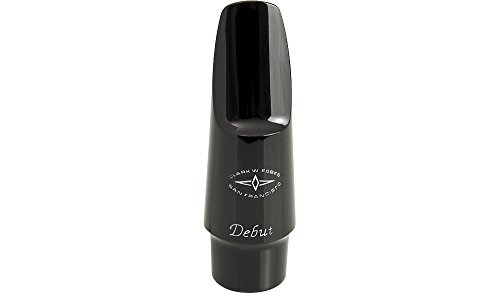 Clark W Fobes Debut Alto Sax Mouthpiece Designed by a professional mouthpiece maker specifically for students, and finished to closer tolerances than the mass-market equivalents. The alternative when a 4C is not clicking. | A step beyond the standard 4C | 8.7/10 | $39.46View on Amazon #ad · price as of October 27, 2026 · how this is funded |
| 3 |  Rico Organic Alto Sax Reeds 2.5 The standard beginner alto reed. Alto players usually start on 2 or 2.5 rather than the 2 a clarinettist starts on, because the larger mouthpiece needs a little more reed to control. | The first or second box for alto | 9.0/10 | $30.49View on Amazon #ad · price as of October 27, 2026 · how this is funded |
Scores are our own editorial fit rating from published specifications — the rubric is on our methodology page. They are not test results; we have not played these instruments.
Why this is the upgrade to make first
The mouthpiece is where the reed vibrates, which makes it the most acoustically significant part of a saxophone. It is also cheap to produce badly, and manufacturers hitting a student price point economize there.
A poorly finished mouthpiece has an uneven facing and a table that is not flat, so the reed seals inconsistently. The horn is harder to sound, squeakier, and less stable in the upper register — and a student reads all of that as their own failure.
Buy your own mouthpiece even if the saxophone is rented. It is yours, it transfers to whatever instrument comes next, and at student level it changes the sound more than the horn does.
The specification that matters
Tip opening. The gap between the reed tip and the mouthpiece tip. A wider opening allows more volume and expressive flexibility, and requires a softer reed and more embouchure control. A narrower opening is more focused, easier to control, and less flexible.
A beginner wants a medium-close opening, which is what the standard student mouthpieces provide. Chasing a wide jazz opening early is the classic mistake: the instrument becomes harder to play and the student assumes their embouchure is at fault.
| Stage | Mouthpiece | Why |
|---|---|---|
| First upgrade, from the bundled piece | Yamaha 4C | Consistent chamber and facing, medium opening, works with 2 to 2.5 reeds, and the one directors specify |
| Alternative if the 4C is not clicking | A student-specific piece such as the Fobes Debut | Hand-checked facings and a design aimed at student embouchures rather than scaled down from a pro piece |
| Jazz band, second year onward | A more open jazz mouthpiece | Brighter and more flexible; needs a developed embouchure and softer reeds |
| Not yet | Hand-finished professional mouthpieces | Genuinely better and only accessible to a player whose embouchure is stable enough to exploit it |
Change the mouthpiece or the reed, not both
A new mouthpiece with a different tip opening changes which reed strength works. Changing both at once makes it impossible to tell what caused an improvement or a problem, and students routinely conclude a good mouthpiece is bad when the reed was simply mismatched.
Fit the new mouthpiece, keep the reeds the same for a fortnight, then adjust strength if the response is consistently too easy or too resistant.
Metal and hard rubber
Saxophone mouthpieces come in hard rubber (usually black) and metal. The material difference is far smaller than the marketing suggests — the tip opening and chamber shape dominate — and metal mouthpieces are generally made with wider openings for loud playing, which is what actually produces their brighter reputation.
For a student, hard rubber is the right answer. It is what every standard student mouthpiece is made from, and the question of material should not arise until a player is choosing a sound deliberately.
Care
Rinse in lukewarm water weekly — never hot, which can distort or discolour hard rubber. Swab it after playing. Store it with the cap on, because a chipped tip is not repairable and the tip is the most delicate part.
Grease the neck cork so the mouthpiece slides on without forcing. Forcing a dry mouthpiece onto a dry cork tears the cork, which then leaks air and needs replacing.
A mouthpiece is the first upgrade a saxophonist should make. Where it sits in the whole sequence, and when the horn is genuinely the limit, is on our step-up saxophone guide.
The picks, in full
Every card below is written from the published specification and the manufacturer’s own documentation. We have not played these instruments — see how we work for exactly what that means and what we do instead.
Our top pick · The single best cheap saxophone upgrade
Yamaha 4C Alto Sax Mouthpiece
The most-recommended first mouthpiece upgrade in school music, and it costs very little next to the horn. A student saxophone with a 4C sounds like a different instrument.
What works
- Consistent chamber and facing, unlike the mouthpiece bundled with budget horns
- Works with standard 2 to 2.5 student reeds
- Widely specified by directors, so it is never the wrong answer
What to know
- Conservative and blended — jazz players will want something more open
- Ligature quality varies by listing
- Facing
- 4C
- For
- Eb alto saxophone
- Suits reeds
- Roughly 2 to 3
#ad · price as of October 27, 2026 · how this is funded
Specs read from the manufacturer or retailer listing on 2026-09-07. Our fit score: 9.3/10.
Pick 2 · A step beyond the standard 4C
Clark W Fobes Debut Alto Sax Mouthpiece
Designed by a professional mouthpiece maker specifically for students, and finished to closer tolerances than the mass-market equivalents. The alternative when a 4C is not clicking.
What works
- Hand-checked facings rather than purely molded output
- Designed around student embouchures rather than scaled down from a pro piece
What to know
- Costs more than a 4C for a difference most first-year players will not hear
- Less familiar to directors, so it prompts questions
- For
- Eb alto saxophone
- Design intent
- Student-specific facing
#ad · price as of October 27, 2026 · how this is funded
Specs read from the manufacturer or retailer listing on 2026-09-07. Our fit score: 8.7/10.
Pick 3 · The first or second box for alto
Rico Organic Alto Sax Reeds 2.5
The standard beginner alto reed. Alto players usually start on 2 or 2.5 rather than the 2 a clarinettist starts on, because the larger mouthpiece needs a little more reed to control.
What works
- 2.5 is the most commonly recommended starting strength for alto
- Ten per box covers a term of school playing
- Cheaper per reed than the premium boxes
What to know
- Softer than a Vandoren of the same number, so numbers do not cross brands
- Expect a couple of unusable reeds per box — cane is inconsistent
- Strength
- 2.5
- For
- Eb alto saxophone
- Quantity
- 10 per box
#ad · price as of October 27, 2026 · how this is funded
Specs read from the manufacturer or retailer listing on 2026-09-07. Our fit score: 9.0/10.
Questions people actually ask
What is the best saxophone mouthpiece for a beginner?
A Yamaha 4C on alto. It has a consistent chamber and facing with a medium tip opening, works with the strength 2 to 2.5 reeds a beginner uses, and is the mouthpiece band directors most commonly specify.
Should I replace the mouthpiece on a student saxophone?
Yes, and it is the single highest-return purchase available. Bundled mouthpieces have uneven facings and tables that are not quite flat, so the reed seals inconsistently and the horn is harder to sound than it should be.
Are metal saxophone mouthpieces better?
Not inherently. Tip opening and chamber shape dominate over material, and metal mouthpieces tend to be made with wider openings for loud playing, which is where their brighter reputation comes from. Hard rubber is the right answer for a student.
Can I use a jazz mouthpiece as a beginner?
It will make the saxophone harder to play. Jazz mouthpieces have wider tip openings that need a softer reed and a developed embouchure to control, and a beginner using one usually concludes their embouchure is at fault.
Sources
We have not played these instruments, so citation is our evidence. Everything above traces back to one of these, on the date shown.