The best beginner flutes
Pad seating is what separates a flute that plays from one that makes a beginner sound worse than they are, and it is the thing you cannot see in a photograph.
By Stephen V. · Writes Reed & Rosin · last verified
The short answer
Buy a closed-hole, offset-G student flute from a brand your band program recognizes. The Yamaha YFL-222 and Gemeinhardt 2SP are the two most widely accepted, and both are specified that way. Pad seating is the quality that matters and it is why the established brands cost more.
Some links on this page earn us a commission at no extra cost to you. It does not change which instrument we recommend, and it does not change the order. We also earn nothing when the honest answer is “rent it” — and we still say so. Full disclosure.
Quick picks
| # | Product | Best for | Score | Price |
|---|---|---|---|---|
| 1 | 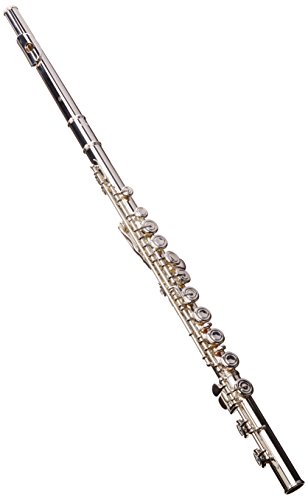 Yamaha YFL-222 Student Flute The student flute most band programs are built around. Pad seating and key alignment are the two things that decide whether a beginner flute plays, and this is where Yamaha earns the premium. | The flute a band director expects | 9.3/10 | $699.00View on Amazon #ad · price as of October 27, 2026 · how this is funded |
| 2 |  Gemeinhardt 2SP Student Flute The other name band rooms accept, and often cheaper than the Yamaha. A straight headjoint and silver-plated body: conventional, serviceable and easy to get repaired anywhere in the US. | A band-accepted flute at a lower price | 9.0/10 | |
| 3 | 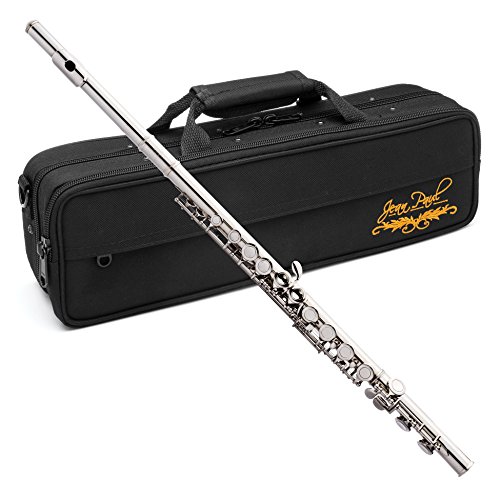 Jean Paul FL-220 Silver-Plated Flute The value pick with a US warranty behind it. Ask the band director first — some programs specify Yamaha or Gemeinhardt by name, and a rejected flute is an expensive lesson. | Value, with the director's approval first | 8.5/10 | $279.99View on Amazon #ad · price as of October 27, 2026 · how this is funded |
Scores are our own editorial fit rating from published specifications — the rubric is on our methodology page. They are not test results; we have not played these instruments.
Buying this as a gift? Our gift guides re-explain these picks for the gifter. Wondering whether to wait for November? The Black Friday hub has the sourced record of what discounted last year and what did not.
The specification a beginner needs
A student flute should be closed hole, offset G, with a straight headjoint and a C foot. Those four terms describe almost every beginner flute made, and knowing what they mean makes the listings readable.
| Term | What it means | Why a beginner wants it |
|---|---|---|
| Closed hole (plateau) | Solid keys with no hole in the middle | The finger only has to press the key, not seal a hole perfectly. Open-hole flutes leak air if a finger is slightly off |
| Offset G | The G key is set slightly out from the row | Puts the key where the ring finger naturally falls; inline G forces an awkward stretch |
| Straight headjoint | The standard, straight head | Correct for most students. A curved head is for children whose arms cannot reach |
| C foot | The foot joint goes down to middle C | Standard. A B foot adds one low note, weight and cost, and no beginner needs it |
Pads are the quality that matters
A flute plays by sealing air with felt or synthetic pads under each key. If a pad does not seat perfectly flat against its tone hole, air escapes and every note below it either fails to speak or requires overblowing.
This is exactly the kind of problem a beginner cannot diagnose. They blow harder, the tone gets worse, and they conclude they are bad at the flute. It is the single most common invisible cause of first-year discouragement on this instrument.
Pad seating is a function of manufacturing care and it is what the established student brands charge for. It is also why we are cautious about the very cheapest imports: not because they cannot play, but because their pad consistency out of the box is unreliable and the consequence lands on the student.
The curved headjoint question
A flute is held out sideways, so reaching the far keys is a function of arm length. A young student may simply not be long enough, and no amount of practice changes that.
A curved headjoint folds the instrument back on itself and solves it completely. Because a student outgrows the need within a year or two, this is a strong argument for renting a first flute — rental fleets swap the headjoint or the instrument as the child grows.
Silver plate, and what it does not mean
Student flutes are almost universally silver-plated nickel silver — a copper alloy with a thin silver coating. Solid silver flutes exist and cost several times as much.
The tonal difference is real and is a step-up consideration rather than a beginner one. A first-year student cannot produce a tone consistent enough for the material to matter, and paying for solid silver at that stage buys nothing they can use.
What we would skip
The cheapest complete flute kits. They play, and the two problems are consistent: pad seating varies unpredictably from unit to unit, and many school band programs will neither accept nor service them.
For a student outside a band program, experimenting at home, the risk calculus is different and the cost saving is real. For a band student, check with the director before ordering — an instrument the program refuses is a much more expensive mistake than the price difference.
What we would buy
For a band student: the Yamaha YFL-222 if the budget allows, and the Gemeinhardt 2SP if not. Both are recognized everywhere and both are serviceable by any school technician.
For value with a warranty: the Jean Paul FL-220, subject to the director’s approval. It has a US-based warranty and service network, which most direct imports do not.
If the brand itself is the sticking point — whose name is on the approval list, who has parts and repair behind them, and what each premium actually buys — student flute brands compared takes the five makers one at a time, including the school-list brand most parents have never heard of.
If the choice between flute and clarinet is still open, the difference is not really about the instruments — it is about when the difficulty arrives and what the instrument costs to run. Flute versus clarinet for beginners works through both.
One specification on these listings causes more confusion than any other, and every flute above shares the same answer: they are all closed hole, which is what a student flute is and what band programs expect. Open hole versus closed hole explains what the difference actually does to a beginner’s fingers, and when a flutist is ready to change.
The picks, in full
Every card below is written from the published specification and the manufacturer’s own documentation. We have not played these instruments — see how we work for exactly what that means and what we do instead.
Our top pick · The flute a band director expects
Yamaha YFL-222 Student Flute
The student flute most band programs are built around. Pad seating and key alignment are the two things that decide whether a beginner flute plays, and this is where Yamaha earns the premium.
What works
- Consistent pad seating from new, so notes speak without over-blowing
- Offset G is standard, which suits smaller hands
- Every school repair tech knows the instrument
What to know
- Significantly more expensive than the import competition
- Closed-hole only — an advancing student will want open holes eventually
- Key
- C
- Holes
- Closed (plateau)
- G key
- Offset
- Foot
- C foot
#ad · price as of October 27, 2026 · how this is funded
Specs read from the manufacturer or retailer listing on 2026-09-07. Our fit score: 9.3/10.
Pick 2 · A band-accepted flute at a lower price
Gemeinhardt 2SP Student Flute
The other name band rooms accept, and often cheaper than the Yamaha. A straight headjoint and silver-plated body: conventional, serviceable and easy to get repaired anywhere in the US.
What works
- Long-established US brand with a wide service network
- Silver-plated head, body and foot
- Frequently the cheapest flute a school program will still accept
What to know
- Straight headjoint only — a young child may need a curved head to reach
- Case is basic
- Key
- C
- Headjoint
- Straight
- Plating
- Silver-plated
- Holes
- Closed (plateau)
Specs read from the manufacturer or retailer listing on 2026-09-07. Our fit score: 9.0/10.
Pick 3 · Value, with the director's approval first
Jean Paul FL-220 Silver-Plated Flute
The value pick with a US warranty behind it. Ask the band director first — some programs specify Yamaha or Gemeinhardt by name, and a rejected flute is an expensive lesson.
What works
- Silver-plated body at well below the established brands
- US-based warranty and service, unusual at this price
- Offset G and closed holes, the standard student layout
What to know
- Some directors specify Yamaha or Gemeinhardt only
- Pad life is shorter than the premium student flutes
- Key
- C
- Plating
- Silver-plated
- Holes
- Closed (plateau)
- G key
- Offset
#ad · price as of October 27, 2026 · how this is funded
Specs read from the manufacturer or retailer listing on 2026-09-07. Our fit score: 8.5/10.
We would skip this one
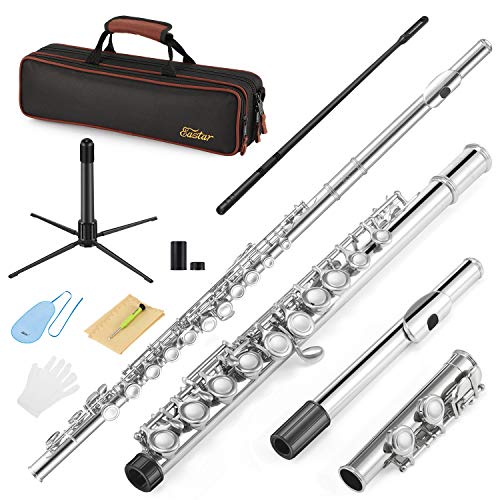
Eastar EFL-1 16-Key Closed Hole Flute
A complete kit at the bottom of the market. If band participation is the goal, check with the director before buying — many programs will not service or accept an unbranded import.
What works
- Full kit with case, cleaning rod, gloves and stand
- Low enough cost to test interest without commitment
What to know
- Pad seating is inconsistent from new, which makes a beginner sound worse than they are
- Frequently not accepted or serviced by school band programs
- Key
- C
- Keys
- 16, closed hole
- Kit
- Case, rod, gloves, stand (per listing)
Specs read from the manufacturer or retailer listing on 2026-09-07. Our fit score: 6.8/10.
Questions people actually ask
What is the best beginner flute?
The Yamaha YFL-222 or the Gemeinhardt 2SP. Both are closed-hole, offset-G student flutes that every school band program recognizes and every school repair technician can service, and both have consistent pad seating from new.
Should a beginner flute be open or closed hole?
Closed hole, always. Open-hole flutes require each finger to seal a hole perfectly, and a slightly misplaced finger means the note simply does not sound. Open holes are a step-up feature, typically several years in.
What does offset G mean on a flute?
The G key is set slightly out from the main row of keys, so it falls where the ring finger naturally sits. Inline G puts it in the row and forces an awkward stretch. Offset G is standard on student flutes and is what a beginner wants.
Does my child need a curved headjoint flute?
Only if their arms cannot reach the far keys on a straight-headed instrument, which is common in younger students. A curved head folds the flute back and solves it entirely, and since the need passes within a year or two, renting is usually the better route.
Sources
We have not played these instruments, so citation is our evidence. Everything above traces back to one of these, on the date shown.