Open hole versus closed hole flute
This is the first real fork in a flutist's equipment path, and it arrives years before most people are told about it. The answer for a beginner is not close.
By Stephen V. · Writes Reed & Rosin · last verified
The short answer
Start closed hole. On a closed-hole (plateau) flute the key seals the hole for you; on an open-hole (French) flute the fingertip has to seal it, so an imprecise finger makes the note fail. Every student flute band programs accept is closed hole, and that is the right first purchase.
Some links on this page earn us a commission at no extra cost to you. It does not change which instrument we recommend, and it does not change the order. We also earn nothing when the honest answer is “rent it” — and we still say so. Full disclosure.
Quick picks
| # | Product | Best for | Score | Price |
|---|---|---|---|---|
| 1 | 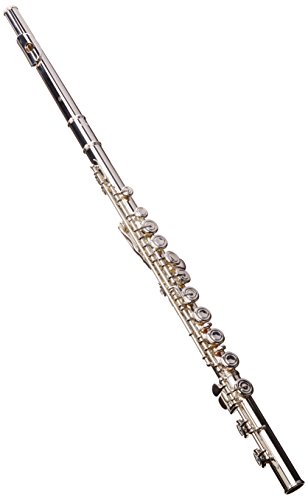 Yamaha YFL-222 Student Flute The student flute most band programs are built around. Pad seating and key alignment are the two things that decide whether a beginner flute plays, and this is where Yamaha earns the premium. | The flute a band director expects | 9.3/10 | $718.00View on Amazon #ad · price as of October 5, 2026 · how this is funded |
| 2 |  Gemeinhardt 2SP Student Flute The other name band rooms accept, and often cheaper than the Yamaha. A straight headjoint and silver-plated body: conventional, serviceable and easy to get repaired anywhere in the US. | A band-accepted flute at a lower price | 9.0/10 | $463.97View on Amazon #ad · price as of October 5, 2026 · how this is funded |
| 3 | 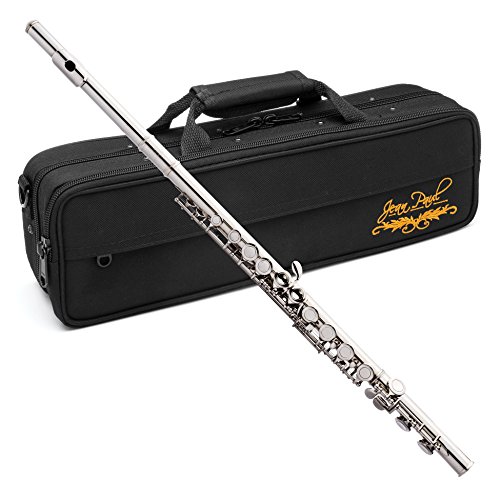 Jean Paul FL-220 Silver-Plated Flute The value pick with a US warranty behind it. Ask the band director first — some programs specify Yamaha or Gemeinhardt by name, and a rejected flute is an expensive lesson. | Value, with the director's approval first | 8.5/10 | $274.99View on Amazon #ad · price as of October 5, 2026 · how this is funded |
Scores are our own editorial fit rating from published specifications — the rubric is on our methodology page. They are not test results; we have not played these instruments.
The mechanical difference, in one paragraph
A closed-hole flute — also called a plateau flute — has solid keys that cover the tone holes. Press the key and the hole is sealed, every time, regardless of exactly where your finger lands on it. An open-hole flute — also called a French-model or ring-key flute — has a hole in the middle of five of those keys, and the player’s fingertip is what seals it. The key presses the rim down; the finger closes the centre.
That is the entire difference, and it has one immediate consequence: on an open-hole flute a finger that lands slightly off-centre leaks air, and the note either does not sound or sounds badly. On a closed-hole flute the same imprecise finger produces a perfect note. For a student whose attention is already fully occupied by breath, posture and reading music, that is not a small distinction.
| Closed hole (plateau) | Open hole (French) | |
|---|---|---|
| Who seals the tone hole | The key, mechanically | The player's fingertip, through the hole in the key |
| Effect of an imprecise finger | None — the note sounds | Air leaks; the note fails or sounds thin |
| Smaller hands | No reach penalty | Requires the fingertip to centre over each hole, which is harder with a short reach |
| Can it be made to behave like the other? | No | Yes — key plugs close the holes, and they are usually supplied with the instrument |
| Usual student recommendation | Yes, from beginners through the first years | Later, once technique and hand position are settled |
Read from two published flute retailer and dealer explainers on 5 October 2026, listed in the Sources block below. Where they agree — which is on everything in this table — we have said so; where sources make tone claims we could not verify, we have left those out of the table on purpose.
Why students start closed hole
Because it removes a variable at the exact point in a student’s development when they have too many. The published guidance we read is consistent: a closed-hole flute lets the player concentrate on producing a good sound without also worrying about finger placement, and it is recommended specifically for younger players and for smaller hands, where centring a fingertip over five holes is a reach problem as well as a precision problem.
There is a second, more practical reason, and it is the one that decides most purchases: school band programs recommend closed-hole flutes for first-time students, and the student flutes those programs are built around are closed hole. Every flute on our beginner flute roundup publishes closed holes, including the two brands directors name most often. This is not a compromise the market forced; it is what the student instrument is.
The person to ask is the band director
Programs publish approved-brand lists, and some specify the model. A flute bought against that list is an expensive lesson, and the conversation that prevents it takes four minutes — our questions to ask the band director settles brand, model, book and mouthpiece in one go. The published guidance we read says plainly that the teacher’s recommendation carries the most weight, and we agree with that over anything on this page.
What key plugs are, and why they matter to the decision
Open-hole flutes are normally supplied with a set of small silicone or plastic plugs that sit in the holes and close them. A plugged open-hole flute behaves, mechanically, like a closed-hole flute. This is how a student transitions: start with all five plugs in, then remove one plug at a time over weeks or months as hand position settles, until the flute is fully open.
That changes the shape of the purchase decision in one specific case. If you are buying a step-up instrument and the student is likely to be playing seriously for years, an open-hole flute bought with the plugs in is a flute that will not need replacing when the technique catches up. If you are buying a first flute for a beginner, plugs are not a reason to choose open hole — you would be paying more for a feature you are going to disable, on an instrument the student will probably outgrow anyway.
When to make the switch
The published guidance we read puts it at around two to three years of consistent, serious study, with the student’s teacher making the call. The signals in practice are the same ones that indicate any step-up: the student has a settled, repeatable hand position, their tone is consistent across registers, and they are being taught techniques — particularly the pitch-bending and quarter-tone effects that open holes make possible — that the instrument cannot produce.
Note what is not on that list: wanting a better sound. Sources sometimes claim an improved tone for open-hole flutes, and we are not going to repeat that as fact because we cannot verify it and the mechanism is contested among players. What open holes definitely add is a set of techniques and a more exact feedback loop on finger position. That is a real reason to move and it is a reason that belongs to an intermediate player, not a beginner.
The rest of the step-up conversation — headjoint material, a B foot joint, and whether the instrument or the player is the limiting factor — is on our step-up flute guide, which also covers the intermediate method books that usually arrive at the same time.
Two other spec words on the same listings
While you are reading a flute listing, two more terms decide more for a beginner than open holes do, and both appear on our picks below.
- Offset G. The G key is set slightly out of line with the others so the left hand does not have to stretch. It suits smaller hands, it is standard on student flutes, and both Yamaha and Jean Paul publish it on the models below. Inline G is the alternative and is a preference rather than an upgrade.
- Curved versus straight headjoint. A curved head brings the flute closer to a small child’s body so they can reach the keys at all. All three picks below publish or imply a straight head, so for a young child this is a question to settle with the director before ordering — it decides whether the instrument is playable, which open holes do not.
If flute itself is still an open question, our flute versus clarinet comparison covers what each section actually asks of a beginner, including the embouchure problem that makes flute harder in the first month and easier in the first year.
The picks, in full
Every card below is written from the published specification and the manufacturer’s own documentation. We have not played these instruments — see how we work for exactly what that means and what we do instead.
Our top pick · The flute a band director expects
Yamaha YFL-222 Student Flute
The student flute most band programs are built around. Pad seating and key alignment are the two things that decide whether a beginner flute plays, and this is where Yamaha earns the premium.
What works
- Consistent pad seating from new, so notes speak without over-blowing
- Offset G is standard, which suits smaller hands
- Every school repair tech knows the instrument
What to know
- Significantly more expensive than the import competition
- Closed-hole only — an advancing student will want open holes eventually
- Key
- C
- Holes
- Closed (plateau)
- G key
- Offset
- Foot
- C foot
#ad · price as of October 5, 2026 · how this is funded
Specs read from the manufacturer or retailer listing on 2026-09-07. Our fit score: 9.3/10.
Pick 2 · A band-accepted flute at a lower price
Gemeinhardt 2SP Student Flute
The other name band rooms accept, and often cheaper than the Yamaha. A straight headjoint and silver-plated body: conventional, serviceable and easy to get repaired anywhere in the US.
What works
- Long-established US brand with a wide service network
- Silver-plated head, body and foot
- Frequently the cheapest flute a school program will still accept
What to know
- Straight headjoint only — a young child may need a curved head to reach
- Case is basic
- Key
- C
- Headjoint
- Straight
- Plating
- Silver-plated
- Holes
- Closed (plateau)
#ad · price as of October 5, 2026 · how this is funded
Specs read from the manufacturer or retailer listing on 2026-09-07. Our fit score: 9.0/10.
Pick 3 · Value, with the director's approval first
Jean Paul FL-220 Silver-Plated Flute
The value pick with a US warranty behind it. Ask the band director first — some programs specify Yamaha or Gemeinhardt by name, and a rejected flute is an expensive lesson.
What works
- Silver-plated body at well below the established brands
- US-based warranty and service, unusual at this price
- Offset G and closed holes, the standard student layout
What to know
- Some directors specify Yamaha or Gemeinhardt only
- Pad life is shorter than the premium student flutes
- Key
- C
- Plating
- Silver-plated
- Holes
- Closed (plateau)
- G key
- Offset
#ad · price as of October 5, 2026 · how this is funded
Specs read from the manufacturer or retailer listing on 2026-09-07. Our fit score: 8.5/10.
Questions people actually ask
Should a beginner get an open hole or closed hole flute?
Closed hole. On a closed-hole flute the key seals the tone hole mechanically, so an imprecise finger still produces a good note; on an open-hole flute the fingertip must seal the hole itself. Published guidance and school band programs both recommend closed hole for first-time students.
What is the difference between an open hole and a closed hole flute?
A closed-hole, or plateau, flute has solid keys covering the tone holes. An open-hole, or French, flute has a hole in the centre of five keys, and the player's fingertip closes it. The key presses the rim; the finger seals the middle.
What are flute key plugs for?
They are small silicone or plastic inserts that close the open holes, making an open-hole flute behave like a closed-hole one. Students transitioning start with all five in and remove one at a time over weeks or months as hand position settles.
When should a flutist switch to an open hole flute?
Published guidance puts it at roughly two to three years of consistent serious study, with the teacher deciding. The real signals are a settled hand position, consistent tone across registers, and being taught techniques — such as pitch bending — that a closed-hole flute cannot produce.
Do open hole flutes sound better?
We cannot verify that. Some retailer explainers claim improved tone, the mechanism is contested among players, and we do not repeat unverifiable claims as fact. What open holes definitely add is a set of extended techniques and more exact feedback on finger placement.
Are student flutes open hole or closed hole?
Closed hole, almost without exception. Every student flute on our beginner roundup publishes closed (plateau) keys, including the two brands American band directors name most often, and programs recommend closed hole for first-year players.
Sources
We have not played these instruments, so citation is our evidence. Everything above traces back to one of these, on the date shown.
- Flute Center — open-hole versus closed-hole flutes: the mechanical difference, why closed hole is easier for beginners, and what key plugs do — read 2026-10-05
- K&M Music Company — which flute to buy first: closed hole for ages 8-12 and smaller hands, plugs removed one at a time, and the teacher's recommendation carrying the most weight — read 2026-10-05
- Amazon product listings for every pick on this page, read via the Amazon Creators API — read 2026-09-07