Rent or buy a clarinet
Clarinet has the same no-sizes advantage as trumpet and one extra cost nobody plans for: reeds are consumable, and no rental waiver covers them.
By Stephen V. · Writes Reed & Rosin · last verified
The short answer
At a published standard rate of $21.99 a month, renting a clarinet equals a $300 instrument in 14 months. Clarinets have no fractional sizes so they are never outgrown, but reeds are consumable and excluded from every damage waiver — that cost is yours either way.
Some links on this page earn us a commission at no extra cost to you. It does not change which instrument we recommend, and it does not change the order. We also earn nothing when the honest answer is “rent it” — and we still say so. Full disclosure.
Quick picks
| # | Product | Best for | Score | Price |
|---|---|---|---|---|
| 1 |  Yamaha YCL-255 Student Clarinet The default school clarinet. An ABS resin body ignores humidity and cracking entirely, and the key work holds adjustment through the abuse a middle-school case takes. | The clarinet school programs expect | 9.4/10 | |
| 2 | 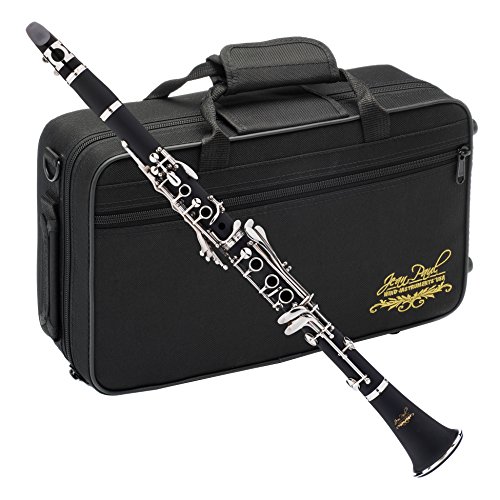 Jean Paul CL-300 Student Bb Clarinet The value clarinet that most band rooms will still accept: resin body, nickel keys, US warranty. Ask the director first, because clarinet is the instrument where brand policies are strictest. | Band-usable clarinet at a lower price | 8.7/10 | $279.99View on Amazon #ad · price as of October 27, 2026 · how this is funded |
Scores are our own editorial fit rating from published specifications — the rubric is on our methodology page. They are not test results; we have not played these instruments.
Clarinet economics look like trumpet economics with one addition. There are no fractional sizes, so nobody outgrows a clarinet. The instrument is inexpensive relative to other band instruments. And there is a recurring cost — reeds — that sits entirely outside the rent-or-buy decision because you pay it either way.
The break-even table
| If the clarinet costs | Renting equals it after | Which is roughly |
|---|---|---|
| $200 | 10 months | about 0.8 school years |
| $300 | 14 months | about 1.2 school years |
| $400 | 19 months | about 1.6 school years |
| $600 | 28 months | about 2.3 school years |
| $900 | 41 months | about 3.4 school years |
| $1200 | 55 months | about 4.6 school years |
Rates are the published standard monthly rental prices at Hickey’s Music Center, read on 7 September 2026 and effective from their chart dated 9 August 2025. Rental rates vary by region and by shop, so run your own local quote through the same arithmetic — the method does not change, only the input.
Student clarinets sit at the lower end of that range, which shortens the break-even considerably compared with a saxophone or a cello. Roughly a school year and a half of rent covers a solid resin student clarinet outright.
The cost that is yours whichever you choose
Reeds are consumable. They chip, they warp, they soften with use, and a beginner works through them steadily — roughly a box a term. Every damage waiver we have read explicitly excludes them: Music & Arts’ published exclusions name reeds directly, alongside cosmetic damage and string breakage.
Two consequences. First, do not let a rental quote make you think the instrument is fully covered; it is not, and reeds are the largest recurring line item on a clarinet. Second, the habit that most reduces this cost is rotating between several reeds rather than playing one until it dies — the reeds guide explains why rotation extends the life of every reed in the box.
The upgrade that beats the rent-or-buy decision entirely
Whether you rent or buy, the mouthpiece supplied with a budget or fleet clarinet is almost always the weakest part of it. Replacing it costs a small fraction of the instrument and produces a disproportionately large improvement in tone and ease of response. If you rent, buy your own mouthpiece anyway — it is yours, it moves with the student to whatever instrument comes next, and it is the highest-return purchase in this entire section. Which mouthpiece.
The resin advantage, and where it changes the answer
Student clarinets are made from ABS resin rather than grenadilla wood, and that is a genuine advantage rather than a compromise. Resin does not crack. Wooden clarinets do crack, particularly in dry winter classrooms, and a crack is a repair that a rental waiver may or may not cover depending on how it happened.
This matters at the step-up point rather than the beginner point. A resin student clarinet is a low-risk thing to own outright. A wooden step-up clarinet carries a real cracking risk in its first year, and that is one of the few cases where renting an intermediate instrument is worth considering.
Our recommendation, stated plainly
- First year in band: rent. Attrition risk plus repair risk, both concentrated in year one, both handed to the shop.
- Still playing at the end of year one: buy a resin student clarinet, or exercise a rent-to-own credit if the program offers one. Break-even is short and the instrument is never outgrown.
- Either way: buy your own mouthpiece and a reed guard. Both are yours, both are cheap, and both outlast the instrument decision.
We earn nothing when you rent and a commission when you buy. The recommendation above still starts with rent.
The picks, in full
Every card below is written from the published specification and the manufacturer’s own documentation. We have not played these instruments — see how we work for exactly what that means and what we do instead.
Our top pick · The clarinet school programs expect
Yamaha YCL-255 Student Clarinet
The default school clarinet. An ABS resin body ignores humidity and cracking entirely, and the key work holds adjustment through the abuse a middle-school case takes.
What works
- ABS resin body will not crack the way grenadilla wood does in a dry classroom
- Adjustment holds through a school year of handling
- Best resale value of any student clarinet
What to know
- Resin does not develop the warmth of a wooden body
- The supplied mouthpiece is the first thing worth upgrading
- Key
- Bb
- Body
- ABS resin
- Keys
- Nickel-plated
- Bore
- Cylindrical, 14.95 mm
Specs read from the manufacturer or retailer listing on 2026-09-07. Our fit score: 9.4/10.
Pick 2 · Band-usable clarinet at a lower price
Jean Paul CL-300 Student Bb Clarinet
The value clarinet that most band rooms will still accept: resin body, nickel keys, US warranty. Ask the director first, because clarinet is the instrument where brand policies are strictest.
What works
- US-based warranty and service network
- Resin body handles a school environment without cracking
- Substantially cheaper than the Yamaha
What to know
- Key adjustment drifts sooner than a Yamaha under the same use
- Supplied mouthpiece and reeds should be replaced immediately
- Key
- Bb
- Body
- Resin
- Keys
- Nickel-plated
#ad · price as of October 27, 2026 · how this is funded
Specs read from the manufacturer or retailer listing on 2026-09-07. Our fit score: 8.7/10.

We would skip this one
Mendini MCT-E Ebonite Bb Clarinet Kit
The cheapest complete clarinet kit sold. For a school band student, run the rent-vs-buy math first: rental at this level usually includes repairs, and repairs are what off-brand clarinets need.
What works
- Kit includes case, mouthpiece, reeds, stand and cleaning cloth
- Ebonite body rather than injection-molded plastic
What to know
- Key adjustment commonly needs work out of the box
- Many school repair techs will not service the brand
- Effectively no resale value
- Key
- Bb
- Body
- Ebonite
- Kit
- Case, mouthpiece, reeds, stand
#ad · price as of October 27, 2026 · how this is funded
Specs read from the manufacturer or retailer listing on 2026-09-07. Our fit score: 6.7/10.
Questions people actually ask
Is it better to rent or buy a clarinet?
Rent the first year, then buy if the student continues. Clarinets have no fractional sizes and student resin models are inexpensive, so break-even arrives quickly — roughly a school year and a half of rent at typical rates.
How much does it cost to rent a clarinet?
One shop's published standard rate was $21.99 a month for a plastic clarinet, with a deluxe tier at $31.99 and an optional damage waiver adding $8 to $12. Local rates vary, so get a quote and run it through the break-even table.
Do rental agreements cover clarinet reeds?
No. Every waiver we have read explicitly excludes reeds as consumables, alongside cosmetic damage. Reeds are the largest recurring cost of playing a clarinet and they are yours whether you rent or buy.
Should I buy a wooden or plastic clarinet for a beginner?
Plastic, meaning ABS resin, for a beginner without exception. Resin does not crack, survives a school locker, and needs no humidity management. Wood changes the tone and matters at the step-up point, typically several years in.
Sources
We have not played these instruments, so citation is our evidence. Everything above traces back to one of these, on the date shown.