Alto or tenor saxophone?
Almost every beginner should start on alto, and the reasons are physical and practical rather than musical.
By Stephen V. · Writes Reed & Rosin · last verified
The short answer
Start on alto. It is smaller and lighter on a neck strap, its keys are spaced for a school-age hand, and every beginner method book and band arrangement is written for it. Tenor is bigger, heavier, pitched lower, and almost always a second instrument.
Some links on this page earn us a commission at no extra cost to you. It does not change which instrument we recommend, and it does not change the order. We also earn nothing when the honest answer is “rent it” — and we still say so. Full disclosure.
Quick picks
| # | Product | Best for | Score | Price |
|---|---|---|---|---|
| 1 |  Yamaha YAS-26 Alto Saxophone The student alto the industry benchmarks against. Key placement is designed around smaller hands, and the intonation is even enough that a beginner can hear when they are out of tune. | The alto a band director expects | 9.4/10 | $2,979.00View on Amazon #ad · price as of October 27, 2026 · how this is funded |
| 2 | 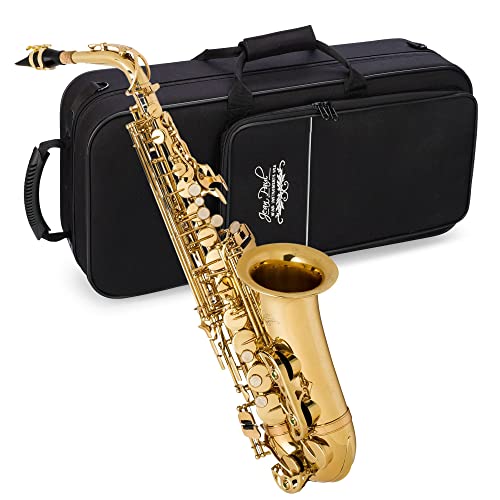 Jean Paul AS-400 Alto Saxophone The value alto with a genuine US warranty, and the one most often accepted when a program does not mandate a specific brand. Ask the band director before ordering. | Value, subject to the director's approval | 8.8/10 | $749.99View on Amazon #ad · price as of October 27, 2026 · how this is funded |
| 3 |  Essential Elements for Band Book 1 - Eb Alto Sax The alto saxophone part of the standard band method. Confirm the program's chosen method with the director first; everything else follows from that answer. | First-year band alto sax | 9.2/10 | $12.99View on Amazon #ad · price as of October 27, 2026 · how this is funded |
Scores are our own editorial fit rating from published specifications — the rubric is on our methodology page. They are not test results; we have not played these instruments.
Side by side
| Alto | Tenor | |
|---|---|---|
| Key | E flat | B flat |
| Size and weight | Smaller and lighter | Noticeably larger and heavier |
| Sound | Brighter, more focused, sits higher | Warmer, breathier, lower and fuller |
| Air required | Less | Considerably more |
| Key spacing | Suits a school-age hand | Wider stretches |
| Beginner method books | Written for alto | Available, far less common |
| Concert band parts | Every arrangement has alto parts | Fewer, and often one player |
| Jazz | Standard | Standard, and the more iconic voice |
Why alto is the beginner instrument
Weight on a neck strap. A saxophone hangs from the player’s neck for the whole session. An alto is manageable for a ten-year-old; a tenor is genuinely heavy, and the fatigue shortens practice long before boredom does.
Hand span. Tenor keys are further apart. A student whose fingers cannot comfortably reach the spread will develop tension rather than technique.
Air. A tenor has a longer, wider tube and needs more air to fill. A young player runs out of breath quickly, which reads as poor phrasing and is actually lung capacity.
Material. Every standard beginner method book — Essential Elements, Rubank, Standard of Excellence — is published in an Eb alto part. Tenor parts exist and are considerably less common in beginner material.
If they specifically want the tenor sound
This is a real and reasonable thing to want — the tenor is the iconic jazz saxophone voice and a student who has heard it may not be interested in anything else.
The honest answer is: start on alto anyway, and switch after a year or two. The switch is genuinely easy — the fingering is identical and only the transposition differs — so nothing is wasted, and the student arrives at the tenor with an embouchure and enough air to actually control it.
What transfers when they switch
Almost everything, and this is the fact that makes starting on alto a low-cost decision.
- Fingering is identical. The same finger pattern produces the same written note on both. A player switching does not relearn the instrument.
- Embouchure transfers, with a small adjustment for the larger mouthpiece.
- Reading transfers completely. Both are transposing instruments and both are written in treble clef.
- What differs: the transposition. An alto in Eb and a tenor in Bb sound different concert pitches from the same written note, which matters for playing with others and not at all for the physical act of playing.
Most saxophonists play both, and switching is a normal part of the instrument rather than a difficult transition.
Soprano and baritone
Soprano is straight, small and pitched highest, and is notoriously difficult to play in tune. It requires a very controlled embouchure and is a poor beginner instrument, whatever its size suggests.
Baritone is large, heavy and pitched lowest. School programs have them and typically move an existing alto player across rather than starting a beginner on one. Baritone players are in constant demand, which is a genuine advantage worth knowing about for a student a year or two in.
The section question
Saxophone sections are usually oversubscribed, and alto more than tenor. A student willing to play tenor may find a place in a full section, which is worth asking the director about — but only if they are physically big enough to carry it, which brings the decision back to where it started.
The picks, in full
Every card below is written from the published specification and the manufacturer’s own documentation. We have not played these instruments — see how we work for exactly what that means and what we do instead.
Our top pick · The alto a band director expects
Yamaha YAS-26 Alto Saxophone
The student alto the industry benchmarks against. Key placement is designed around smaller hands, and the intonation is even enough that a beginner can hear when they are out of tune.
What works
- Ergonomics built around a young player's hand span
- Even intonation across the range, so the player can trust their ear
- Strongest resale of any student saxophone
What to know
- The most expensive student alto in common use
- Supplied mouthpiece is adequate rather than good
- Key
- Eb alto
- Finish
- Gold lacquer
- Range
- Low Bb to high F#
#ad · price as of October 27, 2026 · how this is funded
Specs read from the manufacturer or retailer listing on 2026-09-07. Our fit score: 9.4/10.
Pick 2 · Value, subject to the director's approval
Jean Paul AS-400 Alto Saxophone
The value alto with a genuine US warranty, and the one most often accepted when a program does not mandate a specific brand. Ask the band director before ordering.
What works
- Lacquered golden brass body at well under the Yamaha price
- US-based warranty and service
- Ribbed construction and blue-steel springs, not the cheapest possible build
What to know
- Pad seating needs checking on arrival
- Some programs specify Yamaha, Selmer or Jupiter by name
- Key
- Eb alto
- Body
- Golden brass, lacquered
- Range
- Low Bb to high F#
#ad · price as of October 27, 2026 · how this is funded
Specs read from the manufacturer or retailer listing on 2026-09-07. Our fit score: 8.8/10.
Pick 3 · First-year band alto sax
Essential Elements for Band Book 1 - Eb Alto Sax
The alto saxophone part of the standard band method. Confirm the program's chosen method with the director first; everything else follows from that answer.
What works
- Aligned with the whole band across every instrument part
- Online audio and practice tools included
What to know
- Slow for a student taking private lessons in parallel
- Not universal — some programs use a different series
- Level
- Book 1
- Instrument
- Eb alto saxophone
- Online resources
- EEi access included
#ad · price as of October 27, 2026 · how this is funded
Specs read from the manufacturer or retailer listing on 2026-09-07. Our fit score: 9.2/10.
Questions people actually ask
Should a beginner play alto or tenor saxophone?
Alto. It is lighter on a neck strap, its keys are spaced for a school-age hand, it needs less air, and every beginner method book and band arrangement is written for it. Tenor is almost always a second instrument.
Is it hard to switch from alto to tenor saxophone?
No. The fingering is identical, so the same finger pattern produces the same written note on both. Reading transfers completely and the embouchure needs only a small adjustment for the larger mouthpiece. Most saxophonists play both.
What is the difference between alto and tenor saxophone?
Alto is pitched in E flat, tenor in B flat. Tenor is larger, heavier, needs more air and has wider key spacing, and its sound is warmer and lower. Alto is brighter and more focused, and sits higher in a band arrangement.
Is soprano saxophone good for beginners?
No, despite its small size. Soprano is notoriously difficult to play in tune and requires a very controlled embouchure. It is an instrument for players who already have one, not a lighter alternative to alto.
Sources
We have not played these instruments, so citation is our evidence. Everything above traces back to one of these, on the date shown.