The best saxophone method books
Confirm the band book with the director first. The saxophone-specific question is when to add jazz material, and the answer is later than students want.
By Stephen V. · Writes Reed & Rosin · last verified
The short answer
Essential Elements for Band Book 1 is the Eb alto saxophone part of the standard American band method. Rubank Elementary Method is the private-lesson counterpart, with systematic scale and articulation work no classroom book has room for.
Some links on this page earn us a commission at no extra cost to you. It does not change which instrument we recommend, and it does not change the order. We also earn nothing when the honest answer is “rent it” — and we still say so. Full disclosure.
Quick picks
| # | Product | Best for | Score | Price |
|---|---|---|---|---|
| 1 |  Essential Elements for Band Book 1 - Eb Alto Sax The alto saxophone part of the standard band method. Confirm the program's chosen method with the director first; everything else follows from that answer. | First-year band alto sax | 9.2/10 | $12.99View on Amazon #ad · price as of October 27, 2026 · how this is funded |
| 2 | 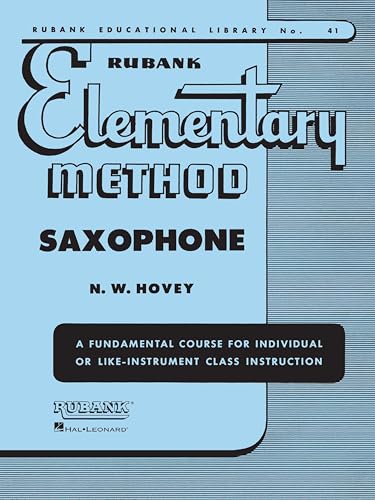 Rubank Elementary Method - Saxophone The private-lesson standard for saxophone, working through tone, scales and articulation more systematically than any classroom band book can. | Private saxophone lessons | 8.7/10 | $8.99View on Amazon #ad · price as of October 27, 2026 · how this is funded |
Scores are our own editorial fit rating from published specifications — the rubric is on our methodology page. They are not test results; we have not played these instruments.
The band book, and the exact part
Ask the director for the series, the edition, and the instrument part. The Eb alto saxophone book is a distinct object from the Bb tenor book, and both differ from the clarinet and trumpet parts. Ordering the wrong part costs a week and a return.
Essential Elements is the most widely adopted, with Standard of Excellence and Tradition of Excellence also common. There is no meaningful quality gap between them and matching the program is what matters.
Band methods versus lesson methods
| Band method (Essential Elements) | Lesson method (Rubank) | |
|---|---|---|
| Designed for | A classroom of mixed instruments | One student and a teacher |
| Parts | Aligned across the whole band | Saxophone only |
| Pacing | Set by the slowest reasonable rate across thirty beginners | Faster, denser |
| Content | Simplified band tunes and ensemble exercises | Scale studies, articulation work, etudes |
| Audio | Online audio and assessment tools | None |
These complement rather than replace each other. A student taking private lessons alongside band typically works from both.
The jazz question
Saxophone students want to play jazz sooner than any other section, and the honest answer is that jazz material is much more useful in the second year than the first.
Improvisation rests on hearing chord changes and having fingers that go where the ear asks without conscious thought. A first-year student has neither yet, and a jazz method handed to them too early produces frustration rather than swing.
What genuinely helps in year one is playing along with recordings — matching phrasing and articulation by ear, on material the student already knows. It builds the listening habit improvisation depends on and needs no book at all.
The reed check comes before the book
A large share of first-year saxophone difficulties — squeaking, notes that will not speak, a strangled tone in the upper register — are caused by a dead reed, the wrong strength, or a poor mouthpiece.
Before deciding a passage is too hard, fit a fresh reed. It resolves the problem often enough to be the first check rather than the last. The reeds guide.
What to add, and when
- Year one: the band book, and nothing else.
- If private lessons start: whatever the teacher specifies, frequently Rubank Elementary.
- Year two: a book of simple duets or solos. Playing with another person is the strongest motivator available at this stage.
- Year two or three, for jazz: a beginner jazz method with play-along tracks, once the student can play scales without thinking.
Commercial note
Amazon pays a higher commission on books than on instruments, so this page earns more per sale than a saxophone roundup does. We flag it because the advice here — buy one book, check the reed first, and wait on the jazz material — is deliberately not the profitable version. Full disclosure.
The picks, in full
Every card below is written from the published specification and the manufacturer’s own documentation. We have not played these instruments — see how we work for exactly what that means and what we do instead.
Our top pick · First-year band alto sax
Essential Elements for Band Book 1 - Eb Alto Sax
The alto saxophone part of the standard band method. Confirm the program's chosen method with the director first; everything else follows from that answer.
What works
- Aligned with the whole band across every instrument part
- Online audio and practice tools included
What to know
- Slow for a student taking private lessons in parallel
- Not universal — some programs use a different series
- Level
- Book 1
- Instrument
- Eb alto saxophone
- Online resources
- EEi access included
#ad · price as of October 27, 2026 · how this is funded
Specs read from the manufacturer or retailer listing on 2026-09-07. Our fit score: 9.2/10.
Pick 2 · Private saxophone lessons
Rubank Elementary Method - Saxophone
The private-lesson standard for saxophone, working through tone, scales and articulation more systematically than any classroom band book can.
What works
- Systematic scale and articulation work
- Long-established, so any teacher can pick it up mid-book
What to know
- Plain presentation with no audio support
- Supplements a band book rather than replacing it
- Level
- Elementary
- Setting
- Private lesson
#ad · price as of October 27, 2026 · how this is funded
Specs read from the manufacturer or retailer listing on 2026-09-07. Our fit score: 8.7/10.
Questions people actually ask
What saxophone book do beginners use?
Most American band programs use Essential Elements for Band Book 1 in the Eb alto saxophone part. Ask the director for the exact series, edition and instrument part — the alto book is a different object from the tenor, clarinet or trumpet books.
When should a saxophone student start learning jazz?
Usually the second year. Improvisation rests on hearing chord changes and on fingers that move without conscious thought, and a first-year student has neither. What helps in year one is playing along with recordings by ear, which needs no book.
What is the difference between Essential Elements and Rubank for saxophone?
Essential Elements is a band method whose parts align across the whole ensemble and is paced for a class. Rubank is a private-lesson method with systematic scale and articulation work that a classroom book has no room for.
My child's saxophone keeps squeaking — is it the book?
Almost certainly not. Squeaking is usually a dead reed, the wrong reed strength, or a poorly finished bundled mouthpiece. Fit a fresh reed before concluding anything about the student or the material.
Sources
We have not played these instruments, so citation is our evidence. Everything above traces back to one of these, on the date shown.