When to upgrade a digital piano, and what to buy next
Most students who think they need a better instrument need a better action. Those are not the same purchase, and one of them is far cheaper than the other.
By Stephen V. · Writes Reed & Rosin · last verified
The short answer
Upgrade when the student has run out of keys, run out of dynamic range, or is being taught touch their keyboard cannot reproduce. The step-up is the Roland FP-10 for key feel and the Casio PX-S1100 for a room that will not take a bigger instrument — and for many players the real fix is a pedal and headphones.
Some links on this page earn us a commission at no extra cost to you. It does not change which instrument we recommend, and it does not change the order. We also earn nothing when the honest answer is “rent it” — and we still say so. Full disclosure.
Quick picks
| # | Product | Best for | Score | Price |
|---|---|---|---|---|
| 1 | 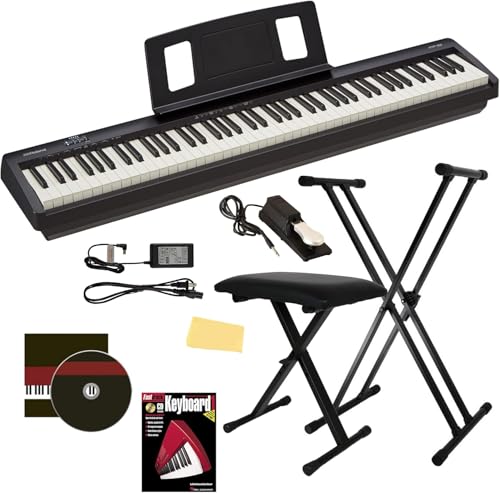 Roland FP-10 88-Key Bundle Roland's PHA-4 Standard action with escapement is the best key feel available near this price, and escapement is the subtle notch a real grand gives you at the bottom of a soft key press. | The most realistic key feel under the step-up tier | 9.3/10 | $599.99View on Amazon #ad · price as of October 5, 2026 · how this is funded |
| 2 |  Casio Privia PX-S1100 Bundle Casio's slimmest weighted 88, with a smart hammer action and simulated ebony and ivory key texture. Choose it when the piano has to live in a room that is also used for something else. | Weighted keys in a small apartment | 9.0/10 | $779.99View on Amazon #ad · price as of October 5, 2026 · how this is funded |
| 3 | 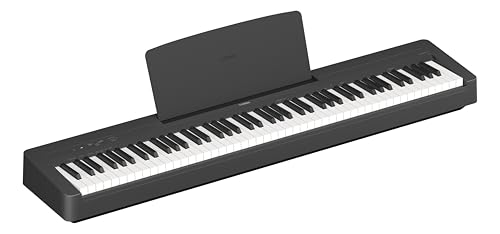 Yamaha P-145 88-Key Digital Piano Fully weighted hammer action in the smallest, lightest body Yamaha makes it in. If the student has a piano teacher, this is the point where the instrument stops being the limiting factor. | Students with a piano teacher | 9.2/10 | $529.99View on Amazon #ad · price as of October 5, 2026 · how this is funded |
| 4 |  M-Audio SP-2 Sustain Pedal A piano-style sustain pedal with a polarity switch, so it works with any keyboard. The plastic footswitch that ships with cheap keyboards slides across the floor and teaches bad pedal habits. | Replacing the plastic footswitch | 8.9/10 | $25.00View on Amazon #ad · price as of October 5, 2026 · how this is funded |
Scores are our own editorial fit rating from published specifications — the rubric is on our methodology page. They are not test results; we have not played these instruments.
The upgrade most people want is not the upgrade they need
A year or two in, a student plateaus and the instrument gets blamed. Sometimes that is right. More often the limiting factor is one of three cheap things — no pedal, no headphones, or a bench at the wrong height — and replacing a whole keyboard to fix a twenty-dollar problem is the most common waste in this hobby.
So this page is organised as a diagnosis rather than a shopping list. Four signals actually indicate that the instrument is the problem. If none of them is present, the money is better spent on the accessory layer or on lessons.
The four signals that the instrument is the limiting factor
- The student has run out of keys. The clearest and least arguable signal. A piece asks for notes the keyboard does not have, or the student has to transpose a passage to fit. 61 keys runs out in intermediate repertoire; our key-count guide explains where the line falls.
- Dynamics are being taught and cannot be produced. If the lesson is about playing a phrase quietly and then the same phrase loudly, and the keyboard produces one volume regardless, the instrument is now actively in the way. On a non-touch-sensitive keyboard this is a hard limit, not a skill gap.
- The student plays an acoustic at lessons and struggles. This is the semi-weighted problem showing up. A spring action is the same weight everywhere; a hammer action is heavier in the bass. A student who sounds fine at home and heavy-handed at the lesson is feeling that difference, not failing to practise.
- Keys have started to fail. Dead notes, keys that stick or a note that sounds at the wrong volume. At the budget end of the market this is where the economics turn: the repair is rarely worth it, and the instrument has told you its term is up.
Two upgrades that cost a fraction of a new instrument
A real sustain pedal. The plastic footswitch bundled with cheap keyboards slides across the floor and only works as an on/off switch under a foot that is chasing it. A piano-shaped pedal that stays put is the single cheapest thing that makes playing feel like playing — see the pedal guide.
Wired headphones. Not for the sound, for the practice frequency. A student who can play at any hour practises more, and more practice beats a better instrument every time. Our headphones page has three at different budgets, and all of them are wired for the same reason: Bluetooth latency makes a digital piano unplayable.
What the step-up actually buys
Moving from a 61-key touch-sensitive board to a weighted 88 is a real change in what the student can do. Moving from a semi-weighted 88 to a hammer-action 88 is a change in how it feels, which matters most to a student taking lessons on an acoustic. Moving from a hammer action to a hammer action with escapement is a refinement, and it is the point at which further spending stops buying ability and starts buying nuance.
| Step | Instrument | What is published |
|---|---|---|
| Weighted, cheapest honest version | Casio CDP-S160 (on the main roundup) | Scaled hammer action |
| Weighted, smallest footprint | Casio PX-S1100 | Smart Scaled Hammer Action, simulated ebony and ivory key tops |
| Weighted, graded by register | Yamaha P-145 | Graded hammer standard — heavier bass, lighter treble |
| Weighted with escapement | Roland FP-10 | PHA-4 Standard with escapement and ivory-feel key tops |
Read from each manufacturer's or retailer's published specification. We have not played these instruments; what is compared here is what each one states about its own action.
The practical reading: if the student is on a 61-key board, any of the weighted 88s below is a genuine step up and the cheapest one is not a compromise on the thing that matters. If they are already on a weighted 88 and playing well, the next instrument is a smaller improvement than lessons would be.
Where to put the old keyboard
Do not sell it immediately. A 61-key board that has been outgrown is a genuinely useful second instrument: it lives in a bedroom, it runs on batteries, it goes to a grandparent’s house, and a student who can reach a keyboard without walking into the main room practises more. If the household has a second child coming up behind the first, our keyboards for kids page explains why a touch-sensitive 61 is exactly the right first instrument for them.
If it is going, it is going as part of an outfit — the stand and the bench with it. And if the old board was one of the kits with a non-touch-sensitive action, say so plainly to whoever takes it. We flag that specification as a skip on the beginner keyboard roundup for the same reason.
The picks, in full
Every card below is written from the published specification and the manufacturer’s own documentation. We have not played these instruments — see how we work for exactly what that means and what we do instead.
Our top pick · The most realistic key feel under the step-up tier
Roland FP-10 88-Key Bundle
Roland's PHA-4 Standard action with escapement is the best key feel available near this price, and escapement is the subtle notch a real grand gives you at the bottom of a soft key press.
What works
- PHA-4 Standard action with escapement and ivory-feel key tops
- Bundle includes stand, bench, sustain pedal and instructional material
- SuperNATURAL piano engine is a class above most rivals at this size
What to know
- Onboard speakers are small; the sound rewards headphones
- Heavier than the lightest 88-key boards
- Keys
- 88
- Action
- PHA-4 Standard with escapement
- Bundle
- Stand, bench, sustain pedal (per listing)
#ad · price as of October 5, 2026 · how this is funded
Specs read from the manufacturer or retailer listing on 2026-09-07. Our fit score: 9.3/10.
Pick 2 · Weighted keys in a small apartment
Casio Privia PX-S1100 Bundle
Casio's slimmest weighted 88, with a smart hammer action and simulated ebony and ivory key texture. Choose it when the piano has to live in a room that is also used for something else.
What works
- Remarkably slim body for a fully weighted 88-key instrument
- Textured key tops give grip that plain plastic does not
- Battery operation is possible, which is rare in this class
What to know
- Touch-sensitive panel controls are easy to trigger by accident
- Costs more than the equivalent-feeling but bulkier competition
- Keys
- 88
- Action
- Smart Scaled Hammer Action
- Key tops
- Simulated ebony and ivory
#ad · price as of October 5, 2026 · how this is funded
Specs read from the manufacturer or retailer listing on 2026-09-07. Our fit score: 9.0/10.
Pick 3 · Students with a piano teacher
Yamaha P-145 88-Key Digital Piano
Fully weighted hammer action in the smallest, lightest body Yamaha makes it in. If the student has a piano teacher, this is the point where the instrument stops being the limiting factor.
What works
- Graded hammer action — heavier in the bass, lighter in the treble, like an acoustic piano
- Genuinely compact and light for a full weighted 88
- Bluetooth and a headphone socket for silent practice
What to know
- Deliberately minimal control panel — most settings need a key combination
- Stand and bench are usually extra
- Keys
- 88
- Action
- Graded hammer standard (weighted)
- Bluetooth
- Yes (per listing)
#ad · price as of October 5, 2026 · how this is funded
Specs read from the manufacturer or retailer listing on 2026-09-07. Our fit score: 9.2/10.
Pick 4 · Replacing the plastic footswitch
M-Audio SP-2 Sustain Pedal
A piano-style sustain pedal with a polarity switch, so it works with any keyboard. The plastic footswitch that ships with cheap keyboards slides across the floor and teaches bad pedal habits.
What works
- Piano-shaped and heavy enough to stay put under a foot
- Polarity switch means it behaves correctly with any brand
What to know
- On/off only — no half-pedaling, which advanced repertoire eventually wants
- Type
- Piano-style sustain pedal
- Polarity switch
- Yes
- Half-pedal support
- No
#ad · price as of October 5, 2026 · how this is funded
Specs read from the manufacturer or retailer listing on 2026-09-07. Our fit score: 8.9/10.
Questions people actually ask
When should a student upgrade from a beginner keyboard?
When one of four things is true: repertoire asks for keys the instrument does not have, the lesson is about dynamics the keyboard cannot produce, the student plays an acoustic at lessons and struggles with the different weight, or keys have begun to fail. Absent those, accessories and lessons buy more progress.
What is the best step-up digital piano?
The Roland FP-10 for key feel — it is the only instrument in this group that publishes an action with escapement — or the Casio PX-S1100 where the room will not take a bigger instrument. Both are fully weighted 88-key hammer actions.
Is it worth upgrading from semi-weighted to weighted keys?
For a student taking lessons on an acoustic piano, yes. A semi-weighted action uses springs and feels the same across the keyboard; a hammer action is heavier in the bass. A student who sounds fine at home and heavy-handed at the lesson is feeling that gap rather than failing to practise.
What should I upgrade before buying a new digital piano?
A real sustain pedal, wired headphones and a height-adjustable bench, in that order. All three together cost a fraction of a new instrument, and each removes a limit that is commonly mistaken for the keyboard being the problem.
Should I sell the old keyboard?
Not straight away. An outgrown 61-key board makes a useful second instrument in a bedroom or at a relative's house, and a keyboard the student can reach without walking into the main room gets played more. It is also the right first instrument for a younger sibling.
Sources
We have not played these instruments, so citation is our evidence. Everything above traces back to one of these, on the date shown.