Do you need a sustain pedal for a digital piano?
The pedal is the one control on a piano that a beginner can ignore for months and then cannot ignore at all. Knowing which month that is saves buying the wrong thing twice.
By Stephen V. · Writes Reed & Rosin · last verified
The short answer
Yes, within the first few months — piano method books introduce the pedal early in the first book. Buy a piano-style pedal with a polarity switch, like the M-Audio SP-2, rather than keeping the plastic footswitch bundled with most keyboards, which slides across the floor under a foot.
Some links on this page earn us a commission at no extra cost to you. It does not change which instrument we recommend, and it does not change the order. We also earn nothing when the honest answer is “rent it” — and we still say so. Full disclosure.
Quick picks
| # | Product | Best for | Score | Price |
|---|---|---|---|---|
| 1 |  M-Audio SP-2 Sustain Pedal A piano-style sustain pedal with a polarity switch, so it works with any keyboard. The plastic footswitch that ships with cheap keyboards slides across the floor and teaches bad pedal habits. | Replacing the plastic footswitch | 8.9/10 | $25.00View on Amazon #ad · price as of October 5, 2026 · how this is funded |
| 2 | 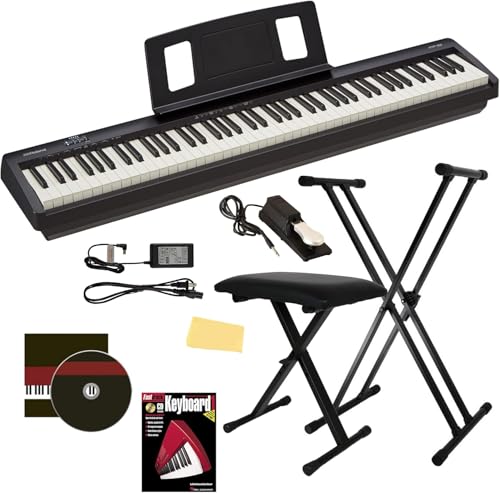 Roland FP-10 88-Key Bundle Roland's PHA-4 Standard action with escapement is the best key feel available near this price, and escapement is the subtle notch a real grand gives you at the bottom of a soft key press. | The most realistic key feel under the step-up tier | 9.3/10 | $599.99View on Amazon #ad · price as of October 5, 2026 · how this is funded |
| 3 |  Casio CDP-S160 Bundle Fully weighted scaled hammer action at the bottom of the weighted-piano market. Fewer voices and a plainer cabinet than the Privia, with the action that matters left intact. | The cheapest genuinely weighted 88 | 8.7/10 | $599.99View on Amazon #ad · price as of October 5, 2026 · how this is funded |
Scores are our own editorial fit rating from published specifications — the rubric is on our methodology page. They are not test results; we have not played these instruments.
What the pedal actually does
On an acoustic piano, a felt damper rests against every string and stops it sounding the moment the key comes up. The right-hand pedal — the sustain or damper pedal — lifts all of them at once. Notes keep ringing after your fingers have left the keys, and notes played in sequence overlap into a chord. That is the whole mechanism, and a digital piano reproduces it in software when you press a pedal into its pedal socket.
It matters more than it sounds like it should, because almost all piano music written in the last two hundred years assumes it. A phrase that needs a left-hand bass note to hold while the hand moves up to play a chord is physically impossible without a pedal. The first time a student meets that passage, the instrument is suddenly missing a part.
When a beginner actually needs one
Earlier than most people expect. The standard children’s method series introduce the pedal inside the first book, typically once both hands are playing together and legato phrasing is being taught. For an adult working through an adult method the point arrives faster still, because adult methods move to real repertoire sooner. In practice: not on day one, and almost certainly before the end of the first year.
Two situations change that timing. A student with a teacher should buy whatever the teacher asks for, when the teacher asks for it — some teach the pedal deliberately late to stop it being used to paper over messy fingers. And a student whose instrument shipped with a footswitch already in the box does not need to buy anything yet; they need to know what its limitations are, which is the next section.
If your keyboard came with a flat plastic footswitch
Most do, and it works electrically. The problem is physical: it is a lightweight plastic box on a smooth floor, and a foot pressing down on a sloped surface pushes it away. The student spends the piece chasing it, which is exactly the thing a pedal is supposed to let them stop doing. It also sits at the wrong height and has no felt, so the motion bears no relation to a real piano pedal. It is a placeholder, not a pedal.
The three specifications that decide the purchase
| Specification | What it means | Why it matters |
|---|---|---|
| Polarity switch | A small switch that reverses the pedal's electrical sense | Keyboard manufacturers do not agree on polarity. Without the switch, the wrong pedal on the wrong brand sustains when your foot is UP and stops when it is down. With it, one pedal fits everything you will ever own |
| Piano-style body and weight | A sloped metal or heavy plastic pedal with a rubber base, rather than a flat switch | It stays where you put it, and the foot motion resembles the instrument the student will eventually sit at |
| Half-pedal support | Whether the pedal reports a continuous position or just on/off | On/off is correct for a beginner and for several years after. Half-pedalling is advanced repertoire; the M-Audio SP-2 below is on/off only and we say so rather than implying otherwise |
Read from the published listings for the products below. Specifications are what the manufacturer states; we have not bench-tested these pedals.
The polarity switch is the one people get wrong. There is no industry standard, so a pedal hard-wired for one brand can behave backwards on another, and the symptom — everything ringing forever until the foot goes down — reads like a broken pedal rather than a mismatch. A switch makes the question disappear.
When the pedal is already in the box
Two of the instruments below ship as bundles that include a sustain pedal, and they are on this page for that reason: if you have not bought the piano yet, buying one of these is cheaper than buying the pedal separately afterwards. The Roland bundle lists a stand, bench and sustain pedal; the Casio bundle lists a stand, bench and pedal. Check the listing contents before you order, because bundle composition varies between listings of the same instrument — which is also why our starter kit page itemises what to buy when the bundle does not cover it.
How to set it up, and the one habit to teach early
The pedal goes under the right foot, with the heel on the floor and the ball of the foot on the pedal. The heel does not lift. That is the single habit worth getting right at the start, because a student who lifts the whole leg cannot pedal in time with their hands, and it is a hard thing to unlearn once it is automatic.
The bench height decides whether any of that is possible. Too high and the heel cannot reach the floor; too low and the knee fouls the keyboard. Our bench height page has the measurement and the reason an adjustable bench is worth the small premium for a growing child. Beyond that, one mechanical note: if the pedal buzzes or clicks audibly through the instrument’s speakers, the cable is usually in the wrong socket — the pedal input, not the expression or line input.
Which book introduces the pedal, and when, is set by the method rather than by the instrument. Our piano method books page compares the two series American teachers use most, including where in the sequence each one puts the pedal.
The picks, in full
Every card below is written from the published specification and the manufacturer’s own documentation. We have not played these instruments — see how we work for exactly what that means and what we do instead.
Our top pick · Replacing the plastic footswitch
M-Audio SP-2 Sustain Pedal
A piano-style sustain pedal with a polarity switch, so it works with any keyboard. The plastic footswitch that ships with cheap keyboards slides across the floor and teaches bad pedal habits.
What works
- Piano-shaped and heavy enough to stay put under a foot
- Polarity switch means it behaves correctly with any brand
What to know
- On/off only — no half-pedaling, which advanced repertoire eventually wants
- Type
- Piano-style sustain pedal
- Polarity switch
- Yes
- Half-pedal support
- No
#ad · price as of October 5, 2026 · how this is funded
Specs read from the manufacturer or retailer listing on 2026-09-07. Our fit score: 8.9/10.
Pick 2 · The most realistic key feel under the step-up tier
Roland FP-10 88-Key Bundle
Roland's PHA-4 Standard action with escapement is the best key feel available near this price, and escapement is the subtle notch a real grand gives you at the bottom of a soft key press.
What works
- PHA-4 Standard action with escapement and ivory-feel key tops
- Bundle includes stand, bench, sustain pedal and instructional material
- SuperNATURAL piano engine is a class above most rivals at this size
What to know
- Onboard speakers are small; the sound rewards headphones
- Heavier than the lightest 88-key boards
- Keys
- 88
- Action
- PHA-4 Standard with escapement
- Bundle
- Stand, bench, sustain pedal (per listing)
#ad · price as of October 5, 2026 · how this is funded
Specs read from the manufacturer or retailer listing on 2026-09-07. Our fit score: 9.3/10.
Pick 3 · The cheapest genuinely weighted 88
Casio CDP-S160 Bundle
Fully weighted scaled hammer action at the bottom of the weighted-piano market. Fewer voices and a plainer cabinet than the Privia, with the action that matters left intact.
What works
- Scaled hammer action rather than semi-weighted
- Compact and light enough to move for storage
- Bundle typically covers the stand, bench and pedal
What to know
- Small internal speakers
- Sparse voice list compared with its Yamaha counterpart
- Keys
- 88
- Action
- Scaled hammer action
- Bundle
- Stand, bench, pedal (per listing)
#ad · price as of October 5, 2026 · how this is funded
Specs read from the manufacturer or retailer listing on 2026-09-07. Our fit score: 8.7/10.
Questions people actually ask
Do you need a sustain pedal for a digital piano?
Yes, within the first year. Standard piano method books introduce the pedal inside the first book, usually once both hands are playing together, and most piano music written in the last two hundred years assumes a pedal is present. It is not a day-one purchase.
What does a sustain pedal do?
It lifts the dampers off every string at once, so notes keep ringing after the fingers leave the keys and notes played in sequence overlap into a chord. A digital piano reproduces the same effect in software when a pedal is connected to its pedal socket.
What is pedal polarity and why does it matter?
Keyboard manufacturers do not agree on the electrical sense of a pedal, so a pedal wired for one brand can behave backwards on another — sustaining when your foot is up. A pedal with a polarity switch works correctly with any brand, which is why we recommend buying one that has it.
Is the plastic footswitch that came with my keyboard good enough?
Electrically yes, practically no. It is a lightweight flat box that slides away from a foot pressing on a sloped surface, so the student spends the piece chasing it. It also sits at the wrong height with no felt, so the motion bears no relation to a real piano pedal.
Do beginners need half-pedalling?
No, and not for several years. Half-pedalling reports a continuous pedal position rather than on or off, and it belongs to advanced repertoire. An on/off pedal is the correct purchase for a beginner and for a long time afterwards.
Sources
We have not played these instruments, so citation is our evidence. Everything above traces back to one of these, on the date shown.