The best instruments to learn in an apartment
Choosing an instrument for a shared building is a different question from choosing one outright, and the answer is not simply the quietest thing in the shop.
By Stephen V. · Writes Reed & Rosin · last verified
The short answer
A digital piano with wired headphones is the best apartment instrument, because it is the only one with a genuine off switch for the sound. Ukulele is the quietest acoustic option. Drums work only as mesh-head electronic kits, and brass only with a practice mute.
Some links on this page earn us a commission at no extra cost to you. It does not change which instrument we recommend, and it does not change the order. We also earn nothing when the honest answer is “rent it” — and we still say so. Full disclosure.
Quick picks
| # | Product | Best for | Score | Price |
|---|---|---|---|---|
| 1 |  Casio Privia PX-S1100 Bundle Casio's slimmest weighted 88, with a smart hammer action and simulated ebony and ivory key texture. Choose it when the piano has to live in a room that is also used for something else. | Weighted keys in a small apartment | 9.0/10 | $779.99View on Amazon #ad · price as of September 17, 2026 · how this is funded |
| 2 |  Kala KA-15S Soprano Bundle The reference beginner soprano. Mahogany body, geared tuners that actually hold pitch, and a bundle that includes the tuner and bag most first buyers forget to order. | The default first ukulele | 9.3/10 | $99.99View on Amazon #ad · price as of September 17, 2026 · how this is funded |
| 3 | 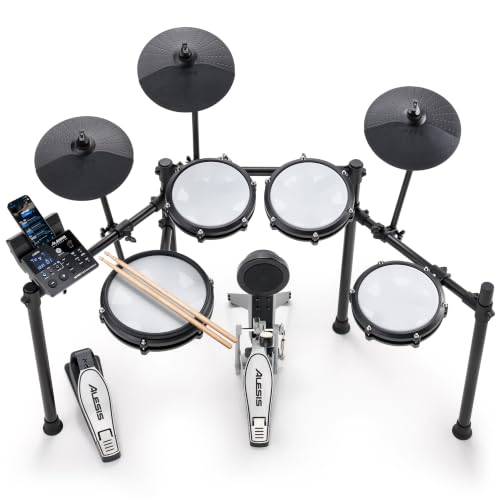 Alesis Nitro Max Electronic Kit Mesh heads on every pad at the bottom of the electronic market. Mesh is the spec that matters for apartments: rubber pads transmit a loud knock through the floor, mesh does not. | Apartments and shared walls | 9.1/10 | $449.00View on Amazon #ad · price as of September 17, 2026 · how this is funded |
| 4 |  Yamaha SILENT Brass SB7J for Trumpet A pickup mute plus a personal studio that feeds a processed, natural-sounding trumpet into headphones. It is the only practice mute that does not make the player feel like they are practicing into a pillow. | Serious practice in a shared building | 9.0/10 | |
| 5 |  Audio-Technica ATH-M20x Closed-back, wired, and flat enough that a student hears what they actually played rather than a flattered version of it. Wired matters: Bluetooth latency makes a digital piano unplayable. | Silent digital-piano practice | 9.0/10 | $58.00View on Amazon #ad · price as of September 17, 2026 · how this is funded |
| 6 |  Denis Wick 5526 Trumpet Practice Mute Hand-spun aluminum and a cork fit that stays put. It is the cheapest way to make apartment trumpet practice survivable, and it keeps the horn's response closer to normal than most practice mutes. | Apartment and late-night practice | 8.8/10 | $62.00View on Amazon #ad · price as of September 17, 2026 · how this is funded |
Scores are our own editorial fit rating from published specifications — the rubric is on our methodology page. They are not test results; we have not played these instruments.
Buying this as a gift? Our gift guides re-explain these picks for the gifter. Wondering whether to wait for November? The Black Friday hub has the sourced record of what discounted last year and what did not.
The question is not which instrument is quiet
It is which instrument has an off switch. That distinction decides the whole thing, and it is why the usual apartment advice — pick something quiet — sends people to the wrong answer.
A ukulele is quiet. A violin is not loud by orchestral standards. But neither can be made silent, so both are governed by the hours your building tolerates. A digital piano at full volume is louder than either, and it is still the better apartment instrument, because plugging in headphones takes it to zero. An instrument that can be played at eleven at night is an instrument that gets played.
So the useful ranking is not by decibels. It is by whether the sound can be routed into headphones, and by what that routing costs you in how the instrument feels to play.
Which instruments have a genuine silent mode
| Instrument | Unmuted at home | Silent option | What the silent option costs you |
|---|---|---|---|
| Digital piano or keyboard | As loud as you want it | Headphone jack, standard on every model | Nothing at all. The action is identical either way |
| Electric guitar or bass | Almost inaudible unplugged | Headphone amp, or an amp with a headphone out | Nothing. This is what electric instruments were built for |
| Ukulele | The quietest acoustic instrument here | None, and it rarely needs one | Not applicable |
| Drums | Unmanageable in an apartment | Mesh-head electronic kit on headphones | The kick pedal still travels through the floor |
| Trumpet and brass | The loudest thing on this page | Practice mute, or a pickup mute with headphones | Added back pressure and shifted intonation while muted |
| Flute, clarinet, saxophone | Moderate, and it carries | None that works | Not applicable. A scheduling problem, not a kit problem |
| Violin, viola, cello | Moderate, and it carries | A practice mute reduces it | A muted violin teaches the wrong bow pressure |
Silent here means the neighbours cannot hear it, not that the player cannot. Every option in the third column is fully audible to the person playing, which is the point of it.
Digital piano is the answer, and it is not close
Plug a pair of wired headphones into a digital piano and it produces exactly nothing outside the room. Nothing about the instrument changes: the keys weigh the same, the action responds the same, the practice counts the same. No other instrument on this list can say that.
Two specifications matter more than the rest in a small flat. Weighted keys, because an unweighted keyboard teaches a hand technique a teacher later has to undo — the reasoning is on the weighted versus semi-weighted page. And a slim body, because the instrument has to live in a room that is used for something else. The Casio above is the best combination of those two we can find; the full range of options is on the digital piano roundup.
The headphones are not optional and they should not be wireless. Bluetooth introduces a delay between pressing a key and hearing the note. It is small in absolute terms and completely unplayable in practice.
Ukulele, if you want something acoustic
The ukulele is the quietest instrument worth learning. Nylon strings on a small soft-wood box produce a fraction of the energy of a steel-strung guitar, and at normal playing volume it does not carry through a modern party wall. It is also the fastest instrument here to a first song, which matters when the alternative is an instrument you feel nervous about playing at all.
The one part that decides whether a cheap ukulele is usable is the tuners. Geared tuners hold pitch; the friction pegs on the cheapest instruments do not, and almost every “this ukulele is bad” verdict traces back to that single component. The ukulele roundup goes through it, and the size guide covers whether an adult should skip the soprano.
Drums are possible. Acoustic drums are not.
An acoustic kit in an apartment is not a scheduling problem to be negotiated; it is simply not on. An electronic kit with mesh heads is a different proposition, and the mesh part is the whole specification. Rubber pads transmit a hard knock straight into the floor even with the module on headphones. Mesh absorbs most of it.
One honest caveat: the kick pedal still sends vibration down through the floor structure, and low-frequency thumps are exactly what a downstairs neighbour notices. A rubber mat or a small riser under the kit is part of the purchase rather than an accessory. The options are compared on electronic drums for apartments, and the honest trade against a real kit is on acoustic versus electronic drums.
Brass and woodwind in a shared building
A trumpet is the loudest instrument a beginner is likely to bring home, and a beginner plays long single notes for the first several weeks, which is the least forgiving sound available. A straight practice mute solves most of it for very little money. The trade is real: a mute adds back pressure and shifts intonation, so a student who only ever plays muted builds air habits that have to be corrected later. Use it for the late sessions, not for all of them.
A pickup-mute system goes further. It feeds a processed signal into headphones, so the player hears something resembling a trumpet rather than a pillow — which is the difference between tolerable practice and abandoned practice. It also costs a large fraction of a student trumpet, so it only makes sense where the building genuinely leaves no other option. Both routes are compared on trumpet practice mutes.
Flute, clarinet and saxophone have no equivalent. There is no mute worth buying, and the honest position is that these are daytime instruments in a shared building. That is not a reason to refuse one the school has already assigned. It is a reason to agree hours with the household in the first week rather than after the first argument.
What actually generates a complaint
Three things, in this order, and none of them is average volume.
- Low frequencies and impact. A kick drum, a bass amp and a tapping foot all travel through structure rather than air. A wall stops airborne sound. It does not stop structure-borne sound.
- Repetition. Twenty minutes of the same scale at a moderate volume irritates people more than one loud piece played once. This is the specific reason headphones matter more than quietness.
- Time of day. Most buildings set quiet hours in the lease. Reading them before choosing the instrument is five minutes that can prevent a year of friction.
What we would buy, in order
If the budget covers one instrument and one accessory: a digital piano and a pair of wired closed-back headphones. That combination has no noise constraint at all, and it is the only answer on this page with no asterisk attached to it.
If the player has already chosen something else, buy the silencing kit at the same time as the instrument — the mute, the mat, the headphones. Bought later, it always arrives after the first complaint, and by then the practice habit has already been interrupted.
The two pieces of kit that make everything else work
Wired closed-back headphones, and a practice corner arranged so that starting is a five-second decision rather than a ten-minute setup. The second sounds soft and is not: an instrument in a case in a cupboard gets played a fraction as often as the same instrument on a stand. The practice space page works through the corner-of-a-room version, and the headphone guide explains why wired and closed-back are the two specifications that matter.
If you are an adult beginner weighing this alongside everything else, the easiest instrument to learn as an adult arrives at a similar shortlist from a completely different direction, and the gift guide for adult beginners covers the same kit framed for somebody buying it for you.
The picks, in full
Every card below is written from the published specification and the manufacturer’s own documentation. We have not played these instruments — see how we work for exactly what that means and what we do instead.
Our top pick · Weighted keys in a small apartment
Casio Privia PX-S1100 Bundle
Casio's slimmest weighted 88, with a smart hammer action and simulated ebony and ivory key texture. Choose it when the piano has to live in a room that is also used for something else.
What works
- Remarkably slim body for a fully weighted 88-key instrument
- Textured key tops give grip that plain plastic does not
- Battery operation is possible, which is rare in this class
What to know
- Touch-sensitive panel controls are easy to trigger by accident
- Costs more than the equivalent-feeling but bulkier competition
- Keys
- 88
- Action
- Smart Scaled Hammer Action
- Key tops
- Simulated ebony and ivory
#ad · price as of September 17, 2026 · how this is funded
Specs read from the manufacturer or retailer listing on 2026-09-07. Our fit score: 9.0/10.
Pick 2 · The default first ukulele
Kala KA-15S Soprano Bundle
The reference beginner soprano. Mahogany body, geared tuners that actually hold pitch, and a bundle that includes the tuner and bag most first buyers forget to order.
What works
- Geared tuners rather than friction pegs — the single biggest predictor of whether a cheap ukulele stays in tune
- Satin mahogany gives a warmer voice than the laminate-and-gloss competition
- Bundle covers the gig bag, tuner and strap
What to know
- Soprano is small: adult hands with wide fingers will crowd the frets
- Factory strings are worth replacing before the instrument is judged
- Size
- Soprano (approx. 21 in)
- Scale length
- 13.6 in (345 mm)
- Body
- Mahogany
- Tuners
- Geared
#ad · price as of September 17, 2026 · how this is funded
Specs read from the manufacturer or retailer listing on 2026-09-07. Our fit score: 9.3/10.
Pick 3 · Apartments and shared walls
Alesis Nitro Max Electronic Kit
Mesh heads on every pad at the bottom of the electronic market. Mesh is the spec that matters for apartments: rubber pads transmit a loud knock through the floor, mesh does not.
What works
- Mesh heads on all pads, including the snare and toms
- Bluetooth audio for playing along without extra cables
- Practice silently on headphones at any hour
What to know
- The kick pedal still transmits vibration through the floor — a riser or mat is needed
- Cymbal pads are the weakest part of the kit
- Pads
- Mesh heads throughout
- Kick
- Pedal-operated pad
- Bluetooth
- Yes
#ad · price as of September 17, 2026 · how this is funded
Specs read from the manufacturer or retailer listing on 2026-09-07. Our fit score: 9.1/10.
Pick 4 · Serious practice in a shared building
Yamaha SILENT Brass SB7J for Trumpet
A pickup mute plus a personal studio that feeds a processed, natural-sounding trumpet into headphones. It is the only practice mute that does not make the player feel like they are practicing into a pillow.
What works
- Headphone monitoring restores the resonance a plain practice mute removes
- Aux input allows practice against a recording
- Dramatic external volume reduction
What to know
- Costs a large fraction of a student trumpet
- Needs batteries and a headphone cable — more to carry and lose
- Type
- Pickup mute plus personal studio
- Headphone out
- Yes
- Aux in
- Yes
Specs read from the manufacturer or retailer listing on 2026-09-07. Our fit score: 9.0/10.
Pick 5 · Silent digital-piano practice
Audio-Technica ATH-M20x
Closed-back, wired, and flat enough that a student hears what they actually played rather than a flattered version of it. Wired matters: Bluetooth latency makes a digital piano unplayable.
What works
- Wired, so there is zero latency between key and sound
- Closed back keeps the practice inside the room
- Fairly neutral tuning — the piano sounds like the piano
What to know
- Fixed cable cannot be replaced when it fails
- Clamping force is firm for a small head at first
- Type
- Closed-back, over-ear
- Connection
- Wired, 3.5 mm with 6.3 mm adapter
- Detachable cable
- No
#ad · price as of September 17, 2026 · how this is funded
Specs read from the manufacturer or retailer listing on 2026-09-07. Our fit score: 9.0/10.
Pick 6 · Apartment and late-night practice
Denis Wick 5526 Trumpet Practice Mute
Hand-spun aluminum and a cork fit that stays put. It is the cheapest way to make apartment trumpet practice survivable, and it keeps the horn's response closer to normal than most practice mutes.
What works
- Large volume reduction without turning the horn into a brick wall
- Natural cork fit stays in place mid-phrase
- No power, no app, nothing to fail
What to know
- Adds real back pressure — long sessions on a mute can distort a beginner's air use
- Intonation shifts noticeably while muted
- Type
- Practice mute
- Material
- Hand-spun aluminum, natural cork
#ad · price as of September 17, 2026 · how this is funded
Specs read from the manufacturer or retailer listing on 2026-09-07. Our fit score: 8.8/10.
Questions people actually ask
What is the quietest instrument to learn in an apartment?
The ukulele, among acoustic instruments. But the better answer is a digital piano with headphones, because it produces no sound outside the room at all rather than a small amount. Quietness limits when you can practice; headphones remove the limit entirely.
Can you play electronic drums in an apartment?
Yes, with two conditions: mesh heads rather than rubber pads, and a mat or riser under the kit. Headphones handle the airborne sound, but the kick pedal sends vibration through the floor and that is what a downstairs neighbour hears.
Is a practice mute enough for a trumpet in a flat?
For occasional late practice, yes. As the only way a student ever plays, no. A mute adds back pressure and shifts intonation, so a beginner who practices exclusively muted builds air habits that have to be unlearned later.
Do I need special headphones for a digital piano?
They need to be wired and closed-back. Wired because Bluetooth delay makes a keyboard unplayable, and closed-back so the sound stays in the room. Beyond those two things, a modest pair is fine for practice.
Sources
We have not played these instruments, so citation is our evidence. Everything above traces back to one of these, on the date shown.