The easiest instrument to learn as an adult
Adults learn differently from children: faster at reading and understanding, slower at building physical habits. The instruments that suit adult beginners best are the ones that reward the first of those.
By Stephen V. · Writes Reed & Rosin · last verified
The short answer
For most adult beginners the ukulele is the easiest instrument to start: four soft nylon strings, chords that need one or two fingers, and a real song within an afternoon. Keyboard is the easiest to understand, since pitch is laid out visually. Both reward an adult's reading ability rather than punishing slower physical habit-building.
Some links on this page earn us a commission at no extra cost to you. It does not change which instrument we recommend, and it does not change the order. We also earn nothing when the honest answer is “rent it” — and we still say so. Full disclosure.
Quick picks
| # | Product | Best for | Score | Price |
|---|---|---|---|---|
| 1 |  Kala KA-15S Soprano Bundle The reference beginner soprano. Mahogany body, geared tuners that actually hold pitch, and a bundle that includes the tuner and bag most first buyers forget to order. | The default first ukulele | 9.3/10 | $99.99View on Amazon #ad · price as of October 27, 2026 · how this is funded |
| 2 | 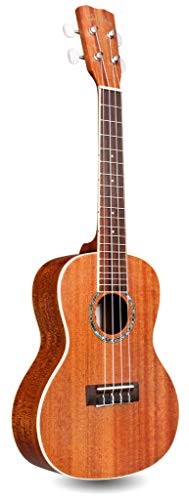 Cordoba 15CM Concert A concert body adds about two inches of scale over a soprano, which is exactly the difference between an adult crowding the frets and an adult playing comfortably. | Adult beginners and larger hands | 9.0/10 | $129.99View on Amazon #ad · price as of October 27, 2026 · how this is funded |
| 3 | 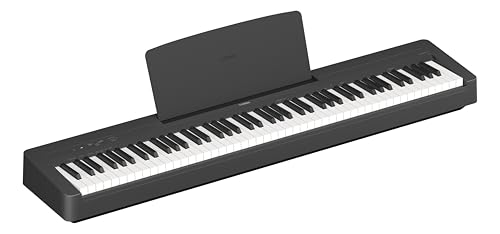 Yamaha P-145 88-Key Digital Piano Fully weighted hammer action in the smallest, lightest body Yamaha makes it in. If the student has a piano teacher, this is the point where the instrument stops being the limiting factor. | Students with a piano teacher | 9.2/10 | $529.99View on Amazon #ad · price as of October 27, 2026 · how this is funded |
| 4 |  Yamaha FG820 A solid Sitka spruce top over mahogany back and sides, which is the one spec set that actually changes how a guitar sounds as it ages. If an adult beginner asks for one recommendation and nothing else, this is it. | Adult beginners who want one guitar for years | 9.2/10 | $389.99View on Amazon #ad · price as of October 27, 2026 · how this is funded |
Scores are our own editorial fit rating from published specifications — the rubric is on our methodology page. They are not test results; we have not played these instruments.
Adults ask a different question from parents, and they usually ask it slightly apologetically. It is not really “which instrument is easiest”. It is “which instrument will make me feel like I am getting somewhere before I give up.” That is a much better question and it has a better answer.
What is different about learning as an adult
Adults have three genuine advantages over children and one genuine disadvantage, and knowing which is which changes the choice.
- Advantage: reading. An adult can learn to read music in weeks, where a seven-year-old takes a year. That matters, because reading unlocks the entire catalog of written music.
- Advantage: understanding. An adult can be told why a chord works and use that. A child has to absorb it by repetition.
- Advantage: self-direction. Nobody needs to make an adult practice, and an adult can choose material they actually want to play.
- Disadvantage: physical habit-building is slower. Fine motor patterns take longer to become automatic. This is real, and it is the whole reason some instruments favor starting young.
So the instruments that suit adults best are the ones where progress depends mostly on understanding and reading, and least on years of accumulated muscle memory before anything sounds acceptable.
| Instrument | Time to a recognisable song | Why | Honest catch |
|---|---|---|---|
| Ukulele | An afternoon | One-finger chords, soft nylon strings, four of them | Limited range; some adults treat it as not a real instrument, which it is |
| Keyboard / piano | A week or two | Press the key, get the note — no tone production to master first | Two hands doing different things is genuinely hard, and it arrives early |
| Guitar | Two to six weeks | Three chords cover an enormous amount of popular music | Fingertips hurt for a fortnight and the F chord defeats people |
| Alto saxophone | A few weeks | The large reed speaks readily and forgives an imprecise embouchure | Loud, and reeds are an ongoing cost |
| Violin | Months | Nothing in the design helps: no frets, and the bow is a skill of its own | The gap between 'playing notes' and 'sounding good' is the widest here |
'Recognisable song' means a listener in another room could name the tune. It is a deliberately low bar, and it is the bar that decides whether an adult beginner continues.
The honest case for the ukulele
It is the right recommendation more often than its reputation suggests. Nylon strings under low tension do not hurt. Four strings mean fewer things to get wrong. Several of the most common chords need one finger. An adult can play along with a song on the first day, and that experience is what converts an intention into a habit.
The chord shapes also transfer directly to guitar, so nothing learned is wasted if the ukulele turns out to be a stepping stone. It is a genuine destination and a genuine on-ramp at the same time, which is unusual.
The honest case for the keyboard
The piano is the only instrument where pitch is laid out visually and unambiguously. Left is lower, right is higher, and the pattern of black keys makes the layout readable at a glance. For an adult who wants to understand music rather than only produce it, nothing else comes close.
There is no tone production to master first: press the key and you get the note, correctly, every time. The difficulty is entirely coordination, and it arrives early — two hands doing genuinely different things is the first real wall, and it comes in month two rather than month twelve.
The instruments that genuinely favor starting young
Violin and the orchestral strings are the honest exception. There are no frets, so intonation is entirely the player’s ear and finger memory, and the bow is a separate physical skill that has to be developed alongside the left hand. The gap between playing the right notes and sounding good is wider here than anywhere else.
Adults absolutely do learn the violin and many play well. It simply requires more months before it sounds acceptable, and being told that in advance is a kindness. If the violin is what you want, our adult beginner violin page takes it seriously rather than talking you out of it.
The variable that outweighs the instrument
Twenty minutes a day beats two hours on Sunday, by a wide margin and on every instrument. Physical skills consolidate between sessions rather than during them, so frequency matters more than duration. An adult choosing between a “harder” instrument they will pick up daily and an “easier” one they will touch weekly should choose the one they will pick up daily, every time.
One group of adult beginners has a shorter list than the one above, because physical comfort does more of the deciding: string tension, scale length, instrument weight and whether volume can be turned down. The best instruments for seniors to learn compares the same field on those published specifications. If the answer is keys, our digital pianos for adult beginners page is the shortlist written for an adult rather than for a parent.
The picks, in full
Every card below is written from the published specification and the manufacturer’s own documentation. We have not played these instruments — see how we work for exactly what that means and what we do instead.
Our top pick · The default first ukulele
Kala KA-15S Soprano Bundle
The reference beginner soprano. Mahogany body, geared tuners that actually hold pitch, and a bundle that includes the tuner and bag most first buyers forget to order.
What works
- Geared tuners rather than friction pegs — the single biggest predictor of whether a cheap ukulele stays in tune
- Satin mahogany gives a warmer voice than the laminate-and-gloss competition
- Bundle covers the gig bag, tuner and strap
What to know
- Soprano is small: adult hands with wide fingers will crowd the frets
- Factory strings are worth replacing before the instrument is judged
- Size
- Soprano (approx. 21 in)
- Scale length
- 13.6 in (345 mm)
- Body
- Mahogany
- Tuners
- Geared
#ad · price as of October 27, 2026 · how this is funded
Specs read from the manufacturer or retailer listing on 2026-09-07. Our fit score: 9.3/10.
Pick 2 · Adult beginners and larger hands
Cordoba 15CM Concert
A concert body adds about two inches of scale over a soprano, which is exactly the difference between an adult crowding the frets and an adult playing comfortably.
What works
- Concert scale gives noticeably more room between frets than a soprano
- Mahogany top, back and sides for a warm, even voice
- Abalone rosette and cleaner finish work than the price implies
What to know
- Sold as an instrument alone on most listings — add a bag and a tuner
- Slightly louder and deeper than the classic bright soprano sound some people want
- Size
- Concert (approx. 23 in)
- Scale length
- 14.75 in (375 mm)
- Body
- Mahogany top, back and sides
#ad · price as of October 27, 2026 · how this is funded
Specs read from the manufacturer or retailer listing on 2026-09-07. Our fit score: 9.0/10.
Pick 3 · Students with a piano teacher
Yamaha P-145 88-Key Digital Piano
Fully weighted hammer action in the smallest, lightest body Yamaha makes it in. If the student has a piano teacher, this is the point where the instrument stops being the limiting factor.
What works
- Graded hammer action — heavier in the bass, lighter in the treble, like an acoustic piano
- Genuinely compact and light for a full weighted 88
- Bluetooth and a headphone socket for silent practice
What to know
- Deliberately minimal control panel — most settings need a key combination
- Stand and bench are usually extra
- Keys
- 88
- Action
- Graded hammer standard (weighted)
- Bluetooth
- Yes (per listing)
#ad · price as of October 27, 2026 · how this is funded
Specs read from the manufacturer or retailer listing on 2026-09-07. Our fit score: 9.2/10.
Pick 4 · Adult beginners who want one guitar for years
Yamaha FG820
A solid Sitka spruce top over mahogany back and sides, which is the one spec set that actually changes how a guitar sounds as it ages. If an adult beginner asks for one recommendation and nothing else, this is it.
What works
- Solid Sitka spruce top rather than laminate, so the tone opens up with playing time
- Mahogany back and sides and scalloped X bracing, both published rather than left blank
- Full-size dreadnought body projects enough to be satisfying unamplified
- Die-cast chrome tuners and an adjustable truss rod, so a setup is possible rather than permanent
What to know
- Full dreadnought is too big for most players under about 12
- Ships with no case, tuner or strap — budget for those separately
- Costs noticeably more than the FG800 it replaces here, which is no longer available on Amazon
- Body
- Traditional Western dreadnought, full size
- Top
- Solid Sitka spruce, scalloped X bracing
- Back and sides
- Mahogany
- Neck / fingerboard
- Nato neck, rosewood fingerboard and bridge
- Scale length
- 650 mm (25 9/16 in)
- Nut width
- 43 mm (1 11/16 in)
- Tuners
- Die-cast chrome
- Included accessories
- Not published
#ad · price as of October 27, 2026 · how this is funded
Specs read from the manufacturer or retailer listing on 2026-10-18. Our fit score: 9.2/10.
Questions people actually ask
What is the easiest instrument to learn for adults?
The ukulele, for most people. Four soft nylon strings, several common chords that need one or two fingers, and a playable song within an afternoon. Keyboard is a close second and is the easiest instrument to understand, because pitch is laid out visually.
Am I too old to learn an instrument?
No. Adults learn to read music far faster than children and can apply theory immediately. What takes longer is building automatic physical habits, which is why instruments with less demanding tone production suit adult beginners better.
What is the easiest brass instrument to learn as an adult?
Trombone or baritone, because the larger mouthpiece is more forgiving of an imprecise embouchure than a trumpet's. Trumpet is the most common brass starting point but the small mouthpiece demands more control before a stable note appears.
What is the easiest woodwind instrument for an adult?
Alto saxophone. The reed is large and speaks readily, so a first note usually arrives within a session. Flute is the hardest woodwind to start, because the player must shape their own airstream across an open hole before any note exists at all.
How long before an adult beginner sounds good?
On ukulele or keyboard, a few weeks of daily practice produces something a listener enjoys. On guitar, a couple of months. On violin or flute, closer to a year, because both require physical tone production that cannot be shortcut by understanding.