The best instruments for seniors to learn
Starting an instrument at seventy is a different purchase from starting one at seven, and almost none of the difference is about talent.
By Stephen V. · Writes Reed & Rosin · last verified
The short answer
Start with a concert-scale ukulele like the Cordoba 15CM: nylon strings at low tension, four strings instead of six, and a recognisable song in an afternoon. For anyone who has always wanted the piano, a weighted digital piano with a volume knob and a headphone socket is the better answer.
Some links on this page earn us a commission at no extra cost to you. It does not change which instrument we recommend, and it does not change the order. We also earn nothing when the honest answer is “rent it” — and we still say so. Full disclosure.
Quick picks
| # | Product | Best for | Score | Price |
|---|---|---|---|---|
| 1 | 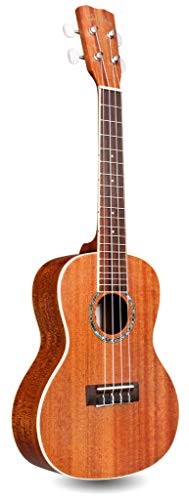 Cordoba 15CM Concert A concert body adds about two inches of scale over a soprano, which is exactly the difference between an adult crowding the frets and an adult playing comfortably. | Adult beginners and larger hands | 9.0/10 | $129.99View on Amazon #ad · price as of October 5, 2026 · how this is funded |
| 2 |  Kala KA-15S Soprano Bundle The reference beginner soprano. Mahogany body, geared tuners that actually hold pitch, and a bundle that includes the tuner and bag most first buyers forget to order. | The default first ukulele | 9.3/10 | $99.99View on Amazon #ad · price as of October 5, 2026 · how this is funded |
| 3 |  Casio Casiotone CT-S1 A deliberately stripped-back 61-key board with a serious grand piano voice and no menu-diving. Fewer sounds than its rivals, and the ones it has are better. | Beginners who want a good piano sound, not 700 sounds | 8.8/10 | $219.99View on Amazon #ad · price as of October 5, 2026 · how this is funded |
| 4 | 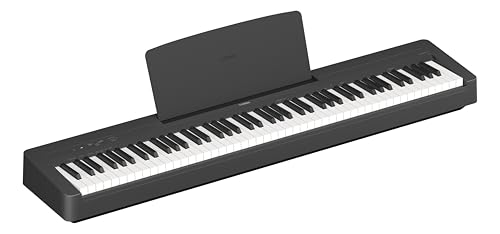 Yamaha P-145 88-Key Digital Piano Fully weighted hammer action in the smallest, lightest body Yamaha makes it in. If the student has a piano teacher, this is the point where the instrument stops being the limiting factor. | Students with a piano teacher | 9.2/10 | $529.99View on Amazon #ad · price as of October 5, 2026 · how this is funded |
| 5 |  Korg MA-2 Digital Metronome The metronome most band and orchestra teachers hand out. Long battery life, a headphone socket, and a display that shows the beat as well as sounding it. | The default student metronome | 9.2/10 | $18.99View on Amazon #ad · price as of October 5, 2026 · how this is funded |
Scores are our own editorial fit rating from published specifications — the rubric is on our methodology page. They are not test results; we have not played these instruments.
Buying this as a gift? Our gift guides re-explain these picks for the gifter. Wondering whether to wait for November? The Black Friday hub has the sourced record of what discounted last year and what did not.
What changes, and what does not
Learning capacity is not the variable here, and we are not going to pretend otherwise: adults who start late learn instruments perfectly well, and they typically practise more consistently than children because nobody is making them. What does change with age is physical comfort — hand strength, finger joints, reach, how long an instrument can be held up — and how much a household is willing to tolerate in the way of noise.
Those are specification questions, and that is useful, because specifications are published and can be compared. The four that decide almost everything on this page are string tension, scale length, the weight of the instrument, and whether volume can be controlled by something other than restraint.
One thing we are not qualified to advise on
If arthritis, a hand or wrist condition, a hearing condition or any other medical issue is part of the picture, the person to ask is the clinician treating it — not us, and not a product listing. We compare published specifications and nothing else. What we can say is which instruments ask least of the hands, and that is what the comparison below is.
The four specifications that matter
- String material and tension. Nylon strings are dramatically gentler on fingertips than steel. This is the single biggest comfort difference available in a stringed instrument, and it is why a ukulele and not a guitar is the recommendation at the top of this page. A steel-string acoustic guitar asks a beginner to press six relatively high-tension strings; a ukulele asks for four low-tension nylon ones.
- Scale length. The distance from nut to bridge, which sets how far apart the frets are and how much the strings have to be stretched. On a ukulele this is the difference between a soprano crowding adult fingers and a concert body giving them room — the published figures are in the table below.
- Weight, and whether it has to be held up. A keyboard rests on a stand and is held by nothing. A ukulele weighs very little. A violin is held under the chin with a raised left arm for the length of a practice session, which is why it is not on this page despite being a fine instrument.
- Volume control. A digital piano has a volume knob and a headphone socket, which means practice at any hour at any level. An acoustic instrument has neither. If hearing is a factor in either direction — wanting it louder, or not wanting to disturb anyone — this is the term that decides it.
| Instrument | Strings / keys | Scale or action | Held or rested |
|---|---|---|---|
| Cordoba 15CM concert ukulele | 4 nylon | 14.75 in (375 mm) scale | Held, very light |
| Kala KA-15S soprano ukulele | 4 nylon | 13.6 in (345 mm) scale | Held, very light |
| Casio CT-S1 (61 keys) | 61 keys | Touch sensitive, unweighted | Rested on a stand or table |
| Yamaha P-145 (88 keys) | 88 keys | Graded hammer standard (weighted) | Rested on a stand |
Read from each manufacturer's or retailer's published specification and listed in the Sources block below. The two ukulele scale lengths are the reason the concert body is ranked above the soprano for adult hands — just over an inch of extra scale is a noticeable amount of room between frets.
Why the ukulele is first
Not because it is a lesser instrument, but because of how quickly it pays back. Four nylon strings at low tension, a small number of chord shapes that each need one or two fingers, and a repertoire of recognisable songs available from the first week. The gap between starting and playing something that sounds like music is shorter on a ukulele than on anything else we would recommend, and for an adult starting a new thing, that gap is the whole risk.
Size is the one decision to get right, and the default answer is wrong for adults. A soprano ukulele is the classic shape and the cheapest, and its 13.6-inch scale crowds adult fingers. A concert body publishes a 14.75-inch scale — about an inch and an eighth more — and that is the difference between fumbling a chord and placing it. Our ukulele size guide has all four body sizes compared, and the beginner ukulele roundup covers the one spec that decides whether a cheap ukulele stays in tune: geared tuners rather than friction pegs.
Why the piano is the other right answer
Because an enormous number of people have wanted to play the piano their whole life and never did, and a digital piano removes every practical objection at once. Nothing is held up. The keys require no grip strength, only downward pressure. There is a volume knob and a headphone socket, so practice never disturbs anyone and never has to be apologised for. And there is no string to press against a fret, which is the specific motion that hand and finger conditions object to.
The choice within the category is the usual one. A 61-key touch-sensitive board is the lower-cost route and genuinely enough for chords, melodies and accompanying yourself. Weighted 88 keys is the right answer if the goal is piano repertoire or lessons, and an adult never outgrows one, so it is a once purchase. Our digital pianos for adult beginners page sets out that decision in full, and how many keys you need handles the range question on its own.
The instruments we would not start with, and why
None of these is a bad instrument. Each asks something specific that is worth knowing before the parcel arrives rather than after.
- Steel-string acoustic guitar. Six strings, higher tension, and a learning curve that runs through two weeks of sore fingertips before anything sounds good. A nylon-string classical guitar is the gentler version of the same instrument and a reasonable alternative to a ukulele — see guitar strings for beginners for why nylon and steel are not interchangeable on the same body.
- Violin. Held under the chin with the left arm raised and rotated for the whole session, and the first months genuinely do not sound good, which is harder on an adult’s patience than a child’s. Our adult beginner violin page is honest about this and still recommends it to the people it suits.
- Brass and woodwind. Breath support and embouchure are the whole first month, and they are physical in a way a keyboard is not. Worth asking a doctor about if there is any respiratory condition in play, and worth a trial lesson before buying either way.
The accessory that improves practice more than any instrument upgrade
A metronome. Adults learning alone almost universally practise too fast, then blame their hands for a problem that is actually tempo. A simple dedicated metronome beats a phone app for one reason: it does not have notifications on it. Our metronome roundup compares the student default below against a mechanical alternative, and how to use a metronome covers the practice method rather than just the device.
If this is still an open question, our easiest instruments for adults page ranks the same field on time-to-first-song, and what instruments cost covers running costs — which matter here, because the two instruments at the top of this page have almost none.
The picks, in full
Every card below is written from the published specification and the manufacturer’s own documentation. We have not played these instruments — see how we work for exactly what that means and what we do instead.
Our top pick · Adult beginners and larger hands
Cordoba 15CM Concert
A concert body adds about two inches of scale over a soprano, which is exactly the difference between an adult crowding the frets and an adult playing comfortably.
What works
- Concert scale gives noticeably more room between frets than a soprano
- Mahogany top, back and sides for a warm, even voice
- Abalone rosette and cleaner finish work than the price implies
What to know
- Sold as an instrument alone on most listings — add a bag and a tuner
- Slightly louder and deeper than the classic bright soprano sound some people want
- Size
- Concert (approx. 23 in)
- Scale length
- 14.75 in (375 mm)
- Body
- Mahogany top, back and sides
#ad · price as of October 5, 2026 · how this is funded
Specs read from the manufacturer or retailer listing on 2026-09-07. Our fit score: 9.0/10.
Pick 2 · The default first ukulele
Kala KA-15S Soprano Bundle
The reference beginner soprano. Mahogany body, geared tuners that actually hold pitch, and a bundle that includes the tuner and bag most first buyers forget to order.
What works
- Geared tuners rather than friction pegs — the single biggest predictor of whether a cheap ukulele stays in tune
- Satin mahogany gives a warmer voice than the laminate-and-gloss competition
- Bundle covers the gig bag, tuner and strap
What to know
- Soprano is small: adult hands with wide fingers will crowd the frets
- Factory strings are worth replacing before the instrument is judged
- Size
- Soprano (approx. 21 in)
- Scale length
- 13.6 in (345 mm)
- Body
- Mahogany
- Tuners
- Geared
#ad · price as of October 5, 2026 · how this is funded
Specs read from the manufacturer or retailer listing on 2026-09-07. Our fit score: 9.3/10.
Pick 3 · Beginners who want a good piano sound, not 700 sounds
Casio Casiotone CT-S1
A deliberately stripped-back 61-key board with a serious grand piano voice and no menu-diving. Fewer sounds than its rivals, and the ones it has are better.
What works
- Front panel has almost no clutter — a child can turn it on and play
- The core piano and electric piano voices are a step above the category
- Runs on batteries and is light enough to move room to room
What to know
- Far fewer voices and rhythms than a similarly priced Yamaha
- Unweighted keys
- Keys
- 61
- Touch sensitive
- Yes
- Weighted action
- No
- Battery powered
- Yes
#ad · price as of October 5, 2026 · how this is funded
Specs read from the manufacturer or retailer listing on 2026-09-07. Our fit score: 8.8/10.
Pick 4 · Students with a piano teacher
Yamaha P-145 88-Key Digital Piano
Fully weighted hammer action in the smallest, lightest body Yamaha makes it in. If the student has a piano teacher, this is the point where the instrument stops being the limiting factor.
What works
- Graded hammer action — heavier in the bass, lighter in the treble, like an acoustic piano
- Genuinely compact and light for a full weighted 88
- Bluetooth and a headphone socket for silent practice
What to know
- Deliberately minimal control panel — most settings need a key combination
- Stand and bench are usually extra
- Keys
- 88
- Action
- Graded hammer standard (weighted)
- Bluetooth
- Yes (per listing)
#ad · price as of October 5, 2026 · how this is funded
Specs read from the manufacturer or retailer listing on 2026-09-07. Our fit score: 9.2/10.
Pick 5 · The default student metronome
Korg MA-2 Digital Metronome
The metronome most band and orchestra teachers hand out. Long battery life, a headphone socket, and a display that shows the beat as well as sounding it.
What works
- Battery life measured in hundreds of hours
- Headphone output for practice with an instrument that is already loud
- Visual beat display helps when the click gets buried
What to know
- Built-in speaker is quiet against a drum kit or a trumpet
- Plastic body will not survive being sat on
- Type
- Digital
- Tempo range
- 30-252 bpm
- Headphone out
- Yes
#ad · price as of October 5, 2026 · how this is funded
Specs read from the manufacturer or retailer listing on 2026-09-07. Our fit score: 9.2/10.
Questions people actually ask
What is the best instrument for a senior to learn?
A concert-scale ukulele for most people: four nylon strings at low tension, simple chord shapes, and recognisable songs within the first week. For anyone who has always wanted the piano, a digital piano is the better answer because nothing is held up and it has a volume knob.
Is it too late to learn an instrument at 70?
No. Learning capacity is not the limiting factor, and adults who start late often practise more consistently than children because nobody is making them. What changes with age is physical comfort and household noise tolerance, and both are addressed by choosing the right instrument.
What instrument is easiest on the hands?
A digital piano, because the keys need only downward pressure and no grip, and nothing is held up. Among stringed instruments, a nylon-strung ukulele asks least: four low-tension strings rather than six higher-tension steel ones. If a medical condition is involved, ask the clinician treating it.
Soprano or concert ukulele for an adult?
Concert. The published scale lengths are 13.6 inches for a soprano and 14.75 for a concert, and that extra inch and an eighth is the difference between adult fingers crowding the frets and placing a chord comfortably.
Should an older beginner get 61 or 88 keys?
61 touch-sensitive keys are enough for chords, melodies and accompanying yourself, and cost considerably less. Buy 88 weighted keys if the goal is piano repertoire or lessons — an adult has stopped growing, so it is a once purchase rather than a staging post.
Can I practice quietly so I do not disturb anyone?
On a digital piano, yes — there is a volume control and a headphone socket, so practice works at any hour. Use wired headphones rather than Bluetooth, because Bluetooth latency between the key and the sound makes a digital piano unplayable.
Sources
We have not played these instruments, so citation is our evidence. Everything above traces back to one of these, on the date shown.