How to use a metronome
Most beginners use a metronome as a test they fail. Used correctly it is a tool that makes hard passages easy, and the difference is entirely in the tempo you choose.
By Stephen V. · Writes Reed & Rosin · last verified
The short answer
Set the metronome slow enough that you can play the passage perfectly, then raise it in small steps only after three clean repetitions. Most beginners set it far too fast and practice the passage badly in time, which builds errors into the muscle memory.
Some links on this page earn us a commission at no extra cost to you. It does not change which instrument we recommend, and it does not change the order. We also earn nothing when the honest answer is “rent it” — and we still say so. Full disclosure.
Quick picks
| # | Product | Best for | Score | Price |
|---|---|---|---|---|
| 1 |  Korg MA-2 Digital Metronome The metronome most band and orchestra teachers hand out. Long battery life, a headphone socket, and a display that shows the beat as well as sounding it. | The default student metronome | 9.2/10 | $18.99View on Amazon #ad · price as of October 27, 2026 · how this is funded |
| 2 |  Boss DB-30 Dr. Beat A pocket metronome with rhythm subdivision patterns and reference tones. The subdivision patterns are the reason drummers and advancing students choose it over a plain click. | Drummers and subdivision practice | 8.8/10 | $39.99View on Amazon #ad · price as of October 27, 2026 · how this is funded |
| 3 | 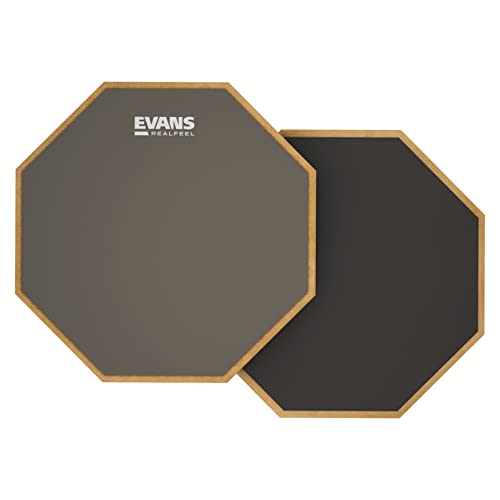 Evans RealFeel 12-Inch Practice Pad The standard practice pad, and the single most useful thing a drum student owns. Gum rubber on one side and neoprene on the other gives a realistic rebound and a harder workout surface. | Every drum student, without exception | 9.4/10 | $44.99View on Amazon #ad · price as of October 27, 2026 · how this is funded |
Scores are our own editorial fit rating from published specifications — the rubric is on our methodology page. They are not test results; we have not played these instruments.
The mistake almost everyone makes
A student sets the metronome to the tempo the piece is meant to be played at, attempts the passage, fails, and tries again faster because they are behind. The metronome becomes a thing that catches them out, and they stop using it.
The metronome is not a test. It is a tool for practicing something correctly, and correctly means slowly enough that it is easy.
The tempo ladder
- 1
Find the tempo where it is genuinely easy
Set the metronome slow enough that you can play the passage perfectly, with no hesitation and no wrong notes, three times in a row. This will feel embarrassingly slow. That is correct and it is the point.
- 2
Play it three times cleanly
Three consecutive perfect repetitions. If one has a mistake, the count restarts. This is stricter than it sounds and it is the mechanism that makes the method work.
- 3
Raise the tempo by a small step
Four to eight beats per minute. Small enough that the change is barely noticeable, which is exactly why it works — the hands never encounter a jump they cannot handle.
- 4
If it breaks down, go back two steps
Not one. Dropping back further than the failure point rebuilds confidence and reveals whether the problem started earlier than it appeared.
- 5
Stop before it degrades
End the session at a tempo where the passage is still clean. Finishing on a failure means the last thing practiced was the mistake, and the last repetition is the one that consolidates overnight.
Why slow practice actually works
Playing something fast and badly practices playing it badly. The hands do not know they are meant to be aiming at a correct version — they repeat what they are given, and repetition is what builds the pattern.
Playing something slowly and perfectly practices playing it perfectly. Speed is then a matter of gradually compressing a correct movement, which is a much smaller problem than fixing an incorrect one at speed.
When to introduce it
Around month two or three, once the student has a passage they can already play but play unevenly. Introducing a metronome earlier adds pressure to something the student cannot yet do at all, which teaches exactly the panic response the tool is meant to remove.
Drummers are the exception. Percussion students should be on a metronome from the first week, because timing is the instrument rather than an attribute of it.
Ways to use it beyond the ladder
- Subdivisions. Set the metronome to click eighth notes rather than quarters. It shows exactly where the notes between the beats fall, and it is unforgiving in a useful way.
- On beats two and four. Set it to half the tempo and treat the clicks as the backbeat rather than the downbeat. This is considerably harder and it builds a genuine internal pulse rather than a following one.
- Every other bar. Some metronomes can mute bars. Playing through the silence and arriving in time with the next click is the clearest possible test of internal timing.
None of those is for a first-year student. They are worth knowing about because they are what the metronome becomes useful for once the ladder is habitual.
When not to use a metronome
Not everything should be practiced in strict time. Music with rubato — deliberate flexibility of tempo — is distorted by a click, and a student who plays everything metronomically produces technically accurate and musically flat performances.
Use it for building technical passages and for fixing uneven playing. Turn it off for working on phrasing, tone and expression. Both are practice; they are different exercises.
The picks, in full
Every card below is written from the published specification and the manufacturer’s own documentation. We have not played these instruments — see how we work for exactly what that means and what we do instead.
Our top pick · The default student metronome
Korg MA-2 Digital Metronome
The metronome most band and orchestra teachers hand out. Long battery life, a headphone socket, and a display that shows the beat as well as sounding it.
What works
- Battery life measured in hundreds of hours
- Headphone output for practice with an instrument that is already loud
- Visual beat display helps when the click gets buried
What to know
- Built-in speaker is quiet against a drum kit or a trumpet
- Plastic body will not survive being sat on
- Type
- Digital
- Tempo range
- 30-252 bpm
- Headphone out
- Yes
#ad · price as of October 27, 2026 · how this is funded
Specs read from the manufacturer or retailer listing on 2026-09-07. Our fit score: 9.2/10.
Pick 2 · Drummers and subdivision practice
Boss DB-30 Dr. Beat
A pocket metronome with rhythm subdivision patterns and reference tones. The subdivision patterns are the reason drummers and advancing students choose it over a plain click.
What works
- Programmable subdivisions, not just a beat
- Reference pitch tones for tuning as well as timing
- Genuinely pocket-sized
What to know
- Menu system takes a session to learn
- Small speaker struggles against a drum kit
- Type
- Digital
- Tempo range
- 30-250 bpm
- Subdivisions
- Yes
#ad · price as of October 27, 2026 · how this is funded
Specs read from the manufacturer or retailer listing on 2026-09-07. Our fit score: 8.8/10.
Pick 3 · Every drum student, without exception
Evans RealFeel 12-Inch Practice Pad
The standard practice pad, and the single most useful thing a drum student owns. Gum rubber on one side and neoprene on the other gives a realistic rebound and a harder workout surface.
What works
- Two surfaces: realistic rebound on one side, harder practice on the other
- Genuinely quiet enough for a shared room
- Effectively indestructible
What to know
- Needs a stand or a lap to be used properly
- Only teaches hands — nothing about feet or coordination
- Diameter
- 12 in
- Surfaces
- Gum rubber and neoprene
#ad · price as of October 27, 2026 · how this is funded
Specs read from the manufacturer or retailer listing on 2026-09-07. Our fit score: 9.4/10.
Questions people actually ask
How do you use a metronome for practice?
Set it slow enough that you can play the passage perfectly three times in a row, then raise the tempo by four to eight beats per minute. If it breaks down, drop back two steps rather than one, and always finish the session at a tempo where the passage is still clean.
Why should I practice slowly with a metronome?
Because playing something fast and badly practices playing it badly — the hands repeat what they are given. Playing it slowly and perfectly practices the correct movement, and speed then becomes a matter of gradually compressing something already right.
When should a beginner start using a metronome?
Around month two or three, once there is a passage they can already play but play unevenly. Earlier than that it adds pressure to something they cannot yet do. Drummers are the exception and should use one from the first week.
Should you always practice with a metronome?
No. Use it for technical passages and uneven playing, and turn it off for phrasing, tone and expression. Music with deliberate tempo flexibility is distorted by a click, and a student who plays everything metronomically sounds accurate and flat.