The best beginner violins for adults
Adults get a straightforward instrument decision — full size, no sizing sequence — and the hardest learning curve on this site. Both are worth knowing up front.
By Stephen V. · Writes Reed & Rosin · last verified
The short answer
Adults should buy a full-size 4/4 student outfit with a solid carved top and ebony fittings, and buy rather than rent, since there is no sizing risk. The Cremona SV-175 and Stentor Conservatoire II are both suitable; the bow is the component most worth upgrading.
Some links on this page earn us a commission at no extra cost to you. It does not change which instrument we recommend, and it does not change the order. We also earn nothing when the honest answer is “rent it” — and we still say so. Full disclosure.
Quick picks
| # | Product | Best for | Score | Price |
|---|---|---|---|---|
| 1 |  Stentor 1560A Conservatoire II 4/4 Stentor is the brand most school string programs actually stock, which matters: a teacher who already knows the instrument can diagnose a problem in seconds rather than blaming the student. | Matching what school programs already use | 9.1/10 | $759.99View on Amazon #ad · price as of October 27, 2026 · how this is funded |
| 2 |  Cremona SV-175 Premier Student Outfit Solid spruce top, maple back and ebony fittings at student-outfit money. Ebony pegs and fingerboard are the specification that separates a workable student violin from a decoration. | The student violin a teacher will accept | 9.0/10 | $299.99View on Amazon #ad · price as of October 27, 2026 · how this is funded |
| 3 | 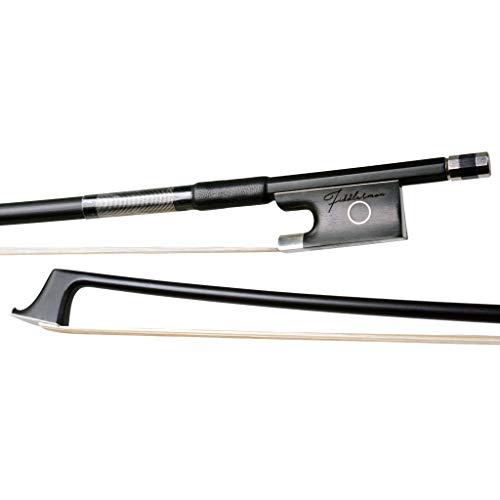 Fiddlerman Carbon Fiber Violin Bow 4/4 Carbon fiber is straighter, stronger and far more humidity-stable than a cheap wooden bow, and it does not warp when a student leaves the case in a car. The best single upgrade to a budget outfit. | Replacing the bow that came in the box | 9.0/10 | $68.79View on Amazon #ad · price as of October 27, 2026 · how this is funded |
| 4 |  Kun Original Shoulder Rest 4/4 The shoulder rest teachers name by default. Both height and angle adjust, which is the difference between a rest that fits the player and one the player fights. | The shoulder rest a teacher will recognize | 9.2/10 | $27.95View on Amazon #ad · price as of October 27, 2026 · how this is funded |
Scores are our own editorial fit rating from published specifications — the rubric is on our methodology page. They are not test results; we have not played these instruments.
Buying this as a gift? Our gift guides re-explain these picks for the gifter. Wondering whether to wait for November? The Black Friday hub has the sourced record of what discounted last year and what did not.
The instrument decision is simple
Adults take a 4/4 full-size violin. There is no sizing sequence, no growth to plan for, and no exchange program to consider. That also means the rent-versus-buy calculation resolves cleanly in favor of buying: roughly a year of rent at typical rates covers a budget student outfit outright.
What to look for is identical to any student violin: a solid carved spruce top, genuine ebony fittings, and a setup before first use.
The honest account of the learning curve
The violin has the widest gap on this site between “playing the right notes” and “sounding good”. Two things cause it, and neither can be shortcut by an adult’s reading ability or understanding.
There are no frets. Every note’s pitch is decided by exactly where the finger lands, to within a couple of millimeters. That is a physical memory built over months, and it is why beginners sound out of tune even when they know what note they want.
The bow is a separate skill. Bow speed, pressure and the contact point between bridge and fingerboard all decide the tone, and all three have to be controlled simultaneously with the left hand doing something entirely different. The scratchy first weeks are the bow, not the fingers.
Adults absolutely learn the violin, and plenty play well. It takes more months before it sounds acceptable than any other instrument here, and being told that in advance is a kindness rather than a discouragement.
What actually helps in the first six months
A teacher, even occasionally. The violin is the instrument where self-teaching goes wrong most quickly, because bow hold and left-hand frame are almost impossible to self-diagnose. Even monthly lessons catch problems before they become habits.
A tuner running while you play. Intonation is built by feedback, and a beginner cannot yet hear their own errors reliably. A clip-on tuner left running gives that feedback in real time.
A shoulder rest that actually fits. Without one, most adults clamp the instrument between jaw and shoulder, and the resulting tension shows up in everything.
What to upgrade, and in what order
| Priority | Item | Why |
|---|---|---|
| 1 | A setup, if the instrument has not had one | Decides how hard the strings are to press and whether the bridge is in the right place |
| 2 | The bow | The weakest part of nearly every outfit; a carbon fiber bow is straighter, stronger and humidity-proof |
| 3 | A shoulder rest that fits your neck and shoulders | Removes the clamping tension that limits everything else |
| 4 | Strings | Budget outfits often ship with unbranded strings that sound harsh and go false quickly |
| 5 | The violin itself | Genuinely last. The first four cost a fraction of a new instrument and produce a larger improvement |
Practice, realistically
Fifteen to twenty minutes daily beats an hour twice a week, and on the violin the difference is starker than elsewhere because intonation is built by frequent repetition rather than by duration.
Expect the first two to three months to sound bad, expect that to be normal, and expect it to improve suddenly rather than gradually. The violin is a plateau instrument: progress arrives in steps after periods where nothing seems to be happening.
The picks, in full
Every card below is written from the published specification and the manufacturer’s own documentation. We have not played these instruments — see how we work for exactly what that means and what we do instead.
Our top pick · Matching what school programs already use
Stentor 1560A Conservatoire II 4/4
Stentor is the brand most school string programs actually stock, which matters: a teacher who already knows the instrument can diagnose a problem in seconds rather than blaming the student.
What works
- Widely used in school string programs, so teachers know it
- Solid carved top and back with ebony fittings
- Holds resale value better than unbranded outfits
What to know
- Costs more than the generic online outfits
- Bow and case are basic for the price
- Size
- 4/4 (full)
- Top
- Solid carved spruce
- Fittings
- Ebony
#ad · price as of October 27, 2026 · how this is funded
Specs read from the manufacturer or retailer listing on 2026-09-07. Our fit score: 9.1/10.
Pick 2 · The student violin a teacher will accept
Cremona SV-175 Premier Student Outfit
Solid spruce top, maple back and ebony fittings at student-outfit money. Ebony pegs and fingerboard are the specification that separates a workable student violin from a decoration.
What works
- Solid spruce top rather than laminate or painted plywood
- Ebony fingerboard and pegs — ebonized softwood warps and slips
- Sold as a complete outfit with case and bow
What to know
- Still needs a shop setup: bridge fitting and a proper string height are not guaranteed
- The included bow is serviceable rather than good
- Top
- Solid spruce
- Back and sides
- Maple
- Fittings
- Ebony
- Outfit
- Case and bow included
#ad · price as of October 27, 2026 · how this is funded
Specs read from the manufacturer or retailer listing on 2026-09-07. Our fit score: 9.0/10.
Pick 3 · Replacing the bow that came in the box
Fiddlerman Carbon Fiber Violin Bow 4/4
Carbon fiber is straighter, stronger and far more humidity-stable than a cheap wooden bow, and it does not warp when a student leaves the case in a car. The best single upgrade to a budget outfit.
What works
- Does not warp with humidity, which cheap brazilwood reliably does
- Consistent weight and balance unit to unit
- Survives student handling that would break a wooden stick
What to know
- Costs a meaningful fraction of a budget outfit
- Tone is even but less colorful than good wood at the same weight
- Size
- 4/4
- Stick
- Carbon fiber
- Hair
- Mongolian horsehair (per listing)
#ad · price as of October 27, 2026 · how this is funded
Specs read from the manufacturer or retailer listing on 2026-09-07. Our fit score: 9.0/10.
Pick 4 · The shoulder rest a teacher will recognize
Kun Original Shoulder Rest 4/4
The shoulder rest teachers name by default. Both height and angle adjust, which is the difference between a rest that fits the player and one the player fights.
What works
- Height and tilt both adjust, unlike the fixed foam block in budget outfits
- Spare parts are widely available
What to know
- Feet are fixed, not collapsible — Kun makes a separate Collapsible model for a slim case
- Feet can mark a soft violin varnish if left clamped for long periods
- Costs more than the generic clones it inspired
- Size
- 4/4
- Adjustable
- Height and tilt
#ad · price as of October 27, 2026 · how this is funded
Specs read from the manufacturer or retailer listing on 2026-09-16. Our fit score: 9.2/10.
Questions people actually ask
Can an adult learn violin from scratch?
Yes, and plenty do. It takes longer to sound good than any other instrument covered here, because intonation with no frets and bow control are both physical skills that cannot be shortcut by an adult's reading ability or understanding.
What size violin does an adult need?
A 4/4 full size, essentially always. The exception is a very small-framed adult whose arm length measures under about 23 inches from neck to palm, who may be more comfortable on a 3/4.
Should an adult rent or buy a beginner violin?
Buy. There is no sizing risk for an adult, so the break-even arithmetic applies straightforwardly: roughly a year of rent at typical published rates covers a budget student outfit outright.
How long before a beginner violinist sounds good?
Expect the first two to three months to sound rough, and that is normal rather than a sign of anything. Steady daily practice produces something pleasant within six months to a year, and progress tends to arrive in steps rather than smoothly.
Sources
We have not played these instruments, so citation is our evidence. Everything above traces back to one of these, on the date shown.