Guitar strings for beginners
String gauge affects how hard a beginner has to press more than any other cheap variable, and almost nobody explains what the numbers mean.
By Stephen V. · Writes Reed & Rosin · last verified
The short answer
Beginners should use light gauge strings: 12-53 on acoustic, 9-42 or 10-46 on electric. Lighter strings need less finger pressure, which matters enormously in the first weeks. Coated strings cost several times more and last several times longer, which suits students who never remember to change them.
Some links on this page earn us a commission at no extra cost to you. It does not change which instrument we recommend, and it does not change the order. We also earn nothing when the honest answer is “rent it” — and we still say so. Full disclosure.
Quick picks
| # | Product | Best for | Score | Price |
|---|---|---|---|---|
| 1 | 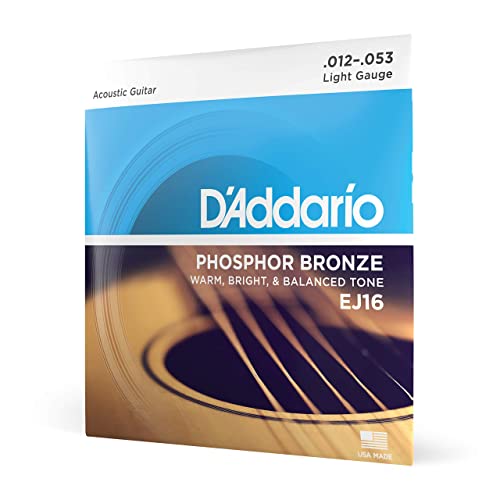 D'Addario EJ16 Phosphor Bronze Light The default acoustic string for a reason: 12-53 light gauge is the balance point between tone and finger comfort, and phosphor bronze is the standard warm acoustic voice. | The standard acoustic restring | 9.0/10 | $9.99View on Amazon #ad · price as of October 27, 2026 · how this is funded |
| 2 |  Ernie Ball Regular Slinky 10-46 The most common electric gauge in the world, in a three-pack that lasts a student most of a year. If a guitar shipped with 10-46, replacing like for like avoids any setup change. | The standard electric restring | 8.9/10 | $19.99View on Amazon #ad · price as of October 27, 2026 · how this is funded |
| 3 | 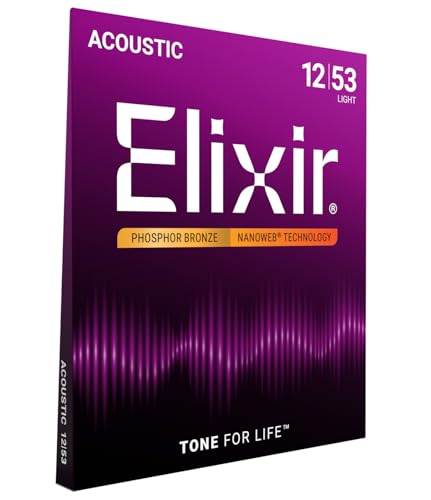 Elixir Nanoweb Phosphor Bronze 12-53 Coated strings cost several times more per set and last several times longer. For a student who forgets to wash their hands and forgets to change strings, that trade is straightforwardly worth it. | Players who never remember to change strings | 8.8/10 | $21.99View on Amazon #ad · price as of October 27, 2026 · how this is funded |
| 4 |  D'Addario EJ27N Student Nylon Nylon strings for a classical guitar, sold three sets to a pack. If a young child is struggling with steel strings, moving to a nylon-string guitar is usually the fix rather than more practice. | Classical guitars and sore fingertips | 8.5/10 | $21.99View on Amazon #ad · price as of October 27, 2026 · how this is funded |
Scores are our own editorial fit rating from published specifications — the rubric is on our methodology page. They are not test results; we have not played these instruments.
What the numbers mean
A set described as “12-53” gives the thickness of the thinnest and thickest strings in thousandths of an inch. The thin end is what you notice: a 12 is meaningfully harder to press and bend than a 10.
Heavier strings produce more volume and a fuller tone because they move more air, and they are harder to play. Lighter strings are easier and slightly thinner-sounding. For a beginner, playability wins without argument — nobody ever quit because their guitar was not loud enough.
| Type | Common beginner gauge | Feels | Notes |
|---|---|---|---|
| Acoustic steel | 12-53 (light) | Firm but manageable | The default. Extra-light 11-52 is easier still if fingers are struggling |
| Electric | 9-42 or 10-46 | Light and easy to bend | Most beginner electrics ship with 9s or 10s; match what is on it to avoid a setup |
| Classical nylon | Normal tension | Very soft | Only for a classical guitar. Never fit nylon to a steel-string body |
| Bass | 45-105 (medium) | Heavy by any guitar standard | Bass strings are always a serious stretch; there is no light option worth the tone loss |
Coated strings: worth it or not
Coated strings have a microscopically thin polymer layer over the winding that keeps skin oil and sweat out of the grooves. They cost several times as much and last several times as long.
For a student, that trade is straightforwardly good, and the reason has little to do with money. Uncoated strings go dull within a few weeks and dull strings sound bad, but a beginner does not notice the decline — they just gradually enjoy the guitar less without knowing why. Coated strings hold their tone long enough that the guitar keeps sounding like it did when it arrived.
Changing gauge can require a setup
Strings pull on the neck. Moving from 10s to 12s increases that pull noticeably, the neck bows slightly further forward, and the action rises. Moving the other way slackens the neck and can cause buzzing.
One step of gauge change is usually fine. A larger jump means the truss rod should be adjusted, and possibly the nut slots. Replacing like for like avoids the question entirely, which is why we suggest matching what the guitar came with for a first change.
Bronze types on acoustic
Acoustic strings come in two common materials. 80/20 bronze is brighter and more brilliant when new, and dulls faster. Phosphor bronze is slightly warmer and holds its brightness noticeably longer, which is why it is the more common student recommendation.
There is no wrong answer here and the difference is small compared with the difference between fresh strings and dead ones.
How many sets to buy
Buy at least two, and three if they are sold in multipacks. Beginners break strings — usually the thin E, usually while tuning, usually the evening before a lesson. A guitar with a broken string and no spare is a guitar that stays broken for a week, and a week off at the beginning is how habits die.
A fresh set also needs stretching in, which is why a newly strung guitar will not hold pitch for the first day or two. How to tune a guitar covers that, and the order to do it in.
The picks, in full
Every card below is written from the published specification and the manufacturer’s own documentation. We have not played these instruments — see how we work for exactly what that means and what we do instead.
Our top pick · The standard acoustic restring
D'Addario EJ16 Phosphor Bronze Light
The default acoustic string for a reason: 12-53 light gauge is the balance point between tone and finger comfort, and phosphor bronze is the standard warm acoustic voice.
What works
- Light 12-53 gauge is easier on new fingertips than mediums
- Phosphor bronze holds its brightness longer than 80/20 bronze
- Cheap enough to change on schedule rather than when they sound dead
What to know
- Uncoated, so they dull faster than a treated string in humid hands
- Gauge
- 12-53 (light)
- Material
- Phosphor bronze
- Coating
- None
#ad · price as of October 27, 2026 · how this is funded
Specs read from the manufacturer or retailer listing on 2026-09-07. Our fit score: 9.0/10.
Pick 2 · The standard electric restring
Ernie Ball Regular Slinky 10-46
The most common electric gauge in the world, in a three-pack that lasts a student most of a year. If a guitar shipped with 10-46, replacing like for like avoids any setup change.
What works
- 10-46 matches the factory gauge on most beginner electrics, so no setup change
- Three-pack cost per set is very low
What to know
- Uncoated nickel wound — expect a few weeks of brightness, not months
- Gauge
- 10-46 (regular)
- Material
- Nickel wound
- Quantity
- 3 sets
#ad · price as of October 27, 2026 · how this is funded
Specs read from the manufacturer or retailer listing on 2026-09-07. Our fit score: 8.9/10.
Pick 3 · Players who never remember to change strings
Elixir Nanoweb Phosphor Bronze 12-53
Coated strings cost several times more per set and last several times longer. For a student who forgets to wash their hands and forgets to change strings, that trade is straightforwardly worth it.
What works
- The Nanoweb coating keeps sweat and skin oil out of the windings
- Materially longer usable life than an uncoated set
- Slicker feel reduces finger squeak
What to know
- Several times the price of an uncoated set
- Slightly less bright and less lively than bare phosphor bronze
- Gauge
- 12-53 (light)
- Material
- Phosphor bronze, Nanoweb coated
#ad · price as of October 27, 2026 · how this is funded
Specs read from the manufacturer or retailer listing on 2026-09-07. Our fit score: 8.8/10.
Pick 4 · Classical guitars and sore fingertips
D'Addario EJ27N Student Nylon
Nylon strings for a classical guitar, sold three sets to a pack. If a young child is struggling with steel strings, moving to a nylon-string guitar is usually the fix rather than more practice.
What works
- Far gentler on untoughened fingertips than steel
- Three-set pack lowers the cost of restringing on a schedule
What to know
- Only fits a classical guitar — never fit nylon strings to a steel-string body
- Nylon needs several days of repeated stretching before it holds pitch
- Tension
- Normal
- Fits
- Classical / nylon-string guitar only
- Quantity
- 3 sets
#ad · price as of October 27, 2026 · how this is funded
Specs read from the manufacturer or retailer listing on 2026-09-07. Our fit score: 8.5/10.
Questions people actually ask
What gauge guitar strings should a beginner use?
Light gauge: 12-53 on an acoustic, 9-42 or 10-46 on an electric. Lighter strings take less finger pressure, which matters most in the first weeks when fingertips are still soft and chord shapes are unfamiliar.
Are coated guitar strings worth it for beginners?
Usually yes, for a reason that is not about money. Uncoated strings go dull within a few weeks and a beginner does not notice the decline — they simply enjoy the guitar less. Coated strings keep sounding the way they did when the guitar arrived.
Can I put nylon strings on a steel-string guitar?
No. The two are built for completely different string tensions, and a steel-string guitar with nylon fitted will have far too little tension to drive the top, producing almost no sound. Classical strings belong on classical guitars only.
Does changing string gauge require a setup?
One step either way is usually fine. A larger jump changes the pull on the neck enough to alter the action and may need a truss rod adjustment. Replacing like for like avoids the question, which is the simplest approach for a first string change.
Sources
We have not played these instruments, so citation is our evidence. Everything above traces back to one of these, on the date shown.