Ukulele strings for beginners
The single highest-return purchase in this whole section, and the one most people do not know they need.
By Stephen V. · Writes Reed & Rosin · last verified
The short answer
Replacing the factory strings on an inexpensive ukulele produces a larger improvement than moving up an entire price bracket on the instrument. Aquila Nylgut is the standard replacement — a synthetic developed to imitate gut. Expect several days of repeated retuning while new strings stretch.
Some links on this page earn us a commission at no extra cost to you. It does not change which instrument we recommend, and it does not change the order. We also earn nothing when the honest answer is “rent it” — and we still say so. Full disclosure.
Quick picks
| # | Product | Best for | Score | Price |
|---|---|---|---|---|
| 1 | 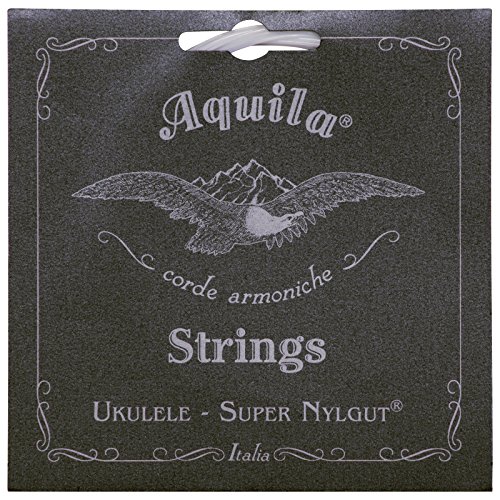 Aquila Super Nylgut AQ-100 Soprano The single cheapest upgrade to a budget ukulele. Nylgut is a synthetic developed to imitate gut, and swapping factory strings for a set is usually a bigger improvement than the next instrument up. | Making a cheap ukulele sound like a real one | 9.1/10 | $11.23View on Amazon #ad · price as of October 27, 2026 · how this is funded |
| 2 |  Kala KA-15S Soprano Bundle The reference beginner soprano. Mahogany body, geared tuners that actually hold pitch, and a bundle that includes the tuner and bag most first buyers forget to order. | The default first ukulele | 9.3/10 | $99.99View on Amazon #ad · price as of October 27, 2026 · how this is funded |
Scores are our own editorial fit rating from published specifications — the rubric is on our methodology page. They are not test results; we have not played these instruments.
Why factory strings undersell the instrument
Ukuleles are manufactured to hit price points, and strings are one of the few components a maker can cut without it showing in a photograph. The result is that a large proportion of inexpensive ukuleles ship with strings that are duller, less consistent and less stable than the instrument deserves.
Swapping them is the single highest-return purchase covered anywhere on this site: a fraction of the ukulele’s price for an improvement larger than the next price bracket up would deliver.
What Nylgut actually is
Historically, ukulele and classical guitar strings were made from gut. Gut sounds warm and complex, and it is unstable, expensive and unpleasant to manufacture. Nylon replaced it and was more stable but thinner-sounding.
Nylgut is a synthetic developed specifically to imitate gut’s density and warmth while staying stable. It has become the default replacement string for ukuleles, and it is what most people mean when they say a ukulele “sounds like a real ukulele”.
| Material | Sound | Notes |
|---|---|---|
| Standard nylon | Bright, slightly thin, quiet | What most budget ukuleles ship with. Functional, unremarkable |
| Nylgut and similar synthetics | Warmer, denser, more volume | The default replacement. Stable once stretched in |
| Fluorocarbon | Clear, bright, focused, with good sustain | Thinner physical diameter for the same pitch; some players prefer the feel |
| Wound low-G | Adds a genuine bass note | Replaces the re-entrant high G. Do this later, not on a first set |
Match the set to the size
Ukulele strings are sold per size — soprano, concert, tenor, baritone — because each needs a different tension to reach the same pitch across a different scale length. Fitting a soprano set to a tenor gives floppy, buzzing strings; the reverse gives excessive tension.
Soprano and concert sets are sometimes sold as a combined “soprano/concert” pack, which is legitimate because the scale difference is small. Tenor and baritone are always separate.
New ukulele strings take days to settle
This surprises people and prompts a lot of “my new strings are faulty” complaints. Synthetic strings stretch considerably, and a freshly strung ukulele will go flat repeatedly for two to four days before it stabilizes.
Speed it up by gently pulling each string away from the fretboard along its length after tuning, then retuning — several passes over a couple of days. Do not change strings the night before a performance.
How often to change them
Far less often than guitar strings. Nylon and Nylgut do not corrode the way steel does, so they last a great deal longer — typically around a year of regular playing before the tone flattens noticeably.
The signs are the same as on any instrument: dull tone with no ring, visible flat spots or grooves where the strings meet the frets, and intonation that has drifted so the ukulele plays in tune open and out of tune higher up the neck.
The picks, in full
Every card below is written from the published specification and the manufacturer’s own documentation. We have not played these instruments — see how we work for exactly what that means and what we do instead.
Our top pick · Making a cheap ukulele sound like a real one
Aquila Super Nylgut AQ-100 Soprano
The single cheapest upgrade to a budget ukulele. Nylgut is a synthetic developed to imitate gut, and swapping factory strings for a set is usually a bigger improvement than the next instrument up.
What works
- Transforms the tone of an entry-level ukulele for a small fraction of its price
- High-G tuning as supplied — the standard, cheerful ukulele sound
- Holds pitch better than generic nylon after the initial stretch
What to know
- Needs several days of repeated retuning before it settles
- Soprano set only — check the size before ordering for a concert or tenor
- Fits
- Soprano ukulele
- Tuning
- High G
- Material
- Super Nylgut synthetic
#ad · price as of October 27, 2026 · how this is funded
Specs read from the manufacturer or retailer listing on 2026-09-07. Our fit score: 9.1/10.
Pick 2 · The default first ukulele
Kala KA-15S Soprano Bundle
The reference beginner soprano. Mahogany body, geared tuners that actually hold pitch, and a bundle that includes the tuner and bag most first buyers forget to order.
What works
- Geared tuners rather than friction pegs — the single biggest predictor of whether a cheap ukulele stays in tune
- Satin mahogany gives a warmer voice than the laminate-and-gloss competition
- Bundle covers the gig bag, tuner and strap
What to know
- Soprano is small: adult hands with wide fingers will crowd the frets
- Factory strings are worth replacing before the instrument is judged
- Size
- Soprano (approx. 21 in)
- Scale length
- 13.6 in (345 mm)
- Body
- Mahogany
- Tuners
- Geared
#ad · price as of October 27, 2026 · how this is funded
Specs read from the manufacturer or retailer listing on 2026-09-07. Our fit score: 9.3/10.
Questions people actually ask
What are the best ukulele strings for a beginner?
A Nylgut or similar synthetic set matched to the instrument's size. Aquila Nylgut is the reference: it imitates gut's warmth and density while staying stable, and it transforms an inexpensive ukulele for a fraction of the instrument's price.
How often should I change ukulele strings?
About once a year with regular playing, which is far less often than guitar strings because nylon does not corrode the way steel does. Change them when the tone goes dull, when you can see grooves where the strings meet the frets, or when intonation drifts up the neck.
Why does my new ukulele not stay in tune?
Usually one of two things: friction pegs slipping, which is a hardware problem, or new synthetic strings still stretching, which resolves in two to four days. If a ukulele with geared tuners is still drifting after a week of daily retuning, the strings are the issue.
What is the difference between high G and low G ukulele tuning?
High G is standard: the fourth string is pitched above the third, giving the ukulele its distinctive jangly sound, and every method book assumes it. Low G adds a genuine bass note and a fuller range, and is a worthwhile experiment once the basics are in place.
Sources
We have not played these instruments, so citation is our evidence. Everything above traces back to one of these, on the date shown.