The best beginner bass amp, and why a guitar amp will not do
A bass is the one beginner instrument that is almost unusable without an amplifier, and the amp it needs is not the one the guitar player in the house already owns.
By Stephen V. · Writes Reed & Rosin · last verified
The short answer
For a first bass, buy a 15 to 25 watt combo with an 8-inch speaker, a headphone output and an aux input. Those two sockets decide whether the bass actually gets practiced. A guitar amp is not a substitute: the speaker is too small and the low notes can damage it.
Some links on this page earn us a commission at no extra cost to you. It does not change which instrument we recommend, and it does not change the order. We also earn nothing when the honest answer is “rent it” — and we still say so. Full disclosure.
Quick picks
| # | Product | Best for | Score | Price |
|---|---|---|---|---|
| 1 |  Fender Rumble 25 (V3) Bass Combo Amplifier The default first bass amp, and it earns the position on the feature list rather than the name: 25 watts through an 8-inch speaker, a headphone output for late practice, an aux input for playing along, and a switchable overdrive so a student can hear what a driven bass sounds like without buying a pedal. | Almost every first bass, in almost every house | 9.2/10 | $149.99View on Amazon #ad · price as of October 31, 2026 · how this is funded |
| 2 |  Fender Rumble 15 (V3) Bass Combo Amplifier The same 8-inch speaker and the same two critical sockets as the Rumble 25, with ten fewer watts and a three-band EQ instead of the contour switches. For a student practicing alone in a bedroom it is genuinely enough, and it is the cheapest amp here we would call a real bass amp. | Bedroom practice on the smallest sensible budget | 8.6/10 | $99.99View on Amazon #ad · price as of October 31, 2026 · how this is funded |
| 3 |  Blackstar amPlug 2 Fly Bass Headphone Amp Not a combo amp at all — a plug that goes straight into the bass and drives headphones. If the real constraint is that nobody in the building can tolerate a bass being practiced, this is the honest purchase, and it costs a fraction of any amp on this page. | An apartment, a late practice slot, or a shared bedroom wall | 8.1/10 | $57.99View on Amazon #ad · price as of October 31, 2026 · how this is funded |
| 4 |  Fender Rumble LT25 Bass Amplifier The same 25 watts as the standard Rumble with built-in amp models and effects on a color screen. Worth the premium for a self-directed teenager who will dig through presets; wasted on a student who wants to plug in and play the piece their teacher set. | A teenager who will explore sounds on their own | 8.3/10 | $249.99View on Amazon #ad · price as of October 31, 2026 · how this is funded |
| 5 | 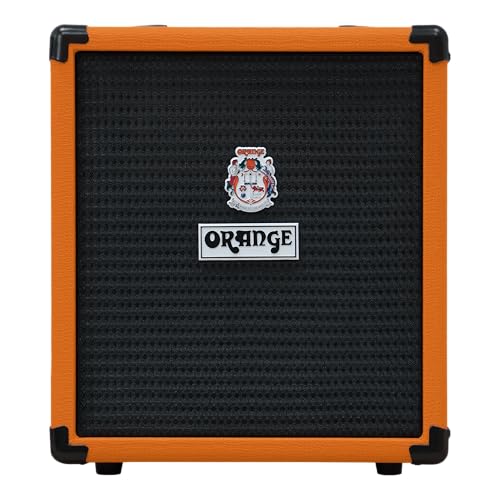 Orange Crush Bass 25 Combo Amplifier Same class as our top pick — 25 watts, 8-inch speaker — from a brand with a louder, grittier reputation and a build students tend to treat with more respect. Pick it over the Fender if the student plays rock and has heard the name; there is no case for paying the difference otherwise. | A rock-leaning student who wants grit | 8.0/10 | $249.00View on Amazon #ad · price as of October 31, 2026 · how this is funded |
Scores are our own editorial fit rating from published specifications — the rubric is on our methodology page. They are not test results; we have not played these instruments.
Buying this as a gift? Our gift guides re-explain these picks for the gifter. Wondering whether to wait for November? The Black Friday hub has the sourced record of what discounted last year and what did not.
The bass is the instrument that needs the amp
An unamplified electric guitar is quiet but perfectly practicable: the strings make enough sound for a beginner to hear their own fingers. An unamplified bass is not. The strings are thick and slack, they move a lot of air and very little of it reaches a human ear, and what the player hears is mostly a dull thud. A student practicing an unamplified bass cannot tell a clean note from a buzzing one, which is the single most important thing a beginner bass player has to learn.
So the amp is not an upgrade on this instrument. It is part of the instrument, and it should be in the budget from the start. Our beginner bass roundup says the same thing and sends readers here for the amp itself.
Why a guitar amp will not do
This is the first question every family asks, usually because there is already a small practice amp in the house from a guitar. The answer is no, and the reason is physical rather than a matter of taste.
A bass’s lowest string vibrates at roughly 41 Hz. Reproducing a note that low requires moving a lot of air, which requires a large speaker cone and the amplifier power to drive it. A guitar practice amp has neither: a 6-inch speaker and a few watts, voiced to make a guitar’s midrange sound good. Put a bass through it and two things happen. The sound is thin and unconvincing, because the fundamental note is simply not being produced. And the speaker is being asked to make excursions it was not built for, which over time loosens or tears the cone.
| Guitar practice amp | Bass practice amp | |
|---|---|---|
| Typical speaker | 6" to 8", voiced for midrange | 8" and up, built for cone excursion |
| Lowest note it must reproduce | About 82 Hz on a standard-tuned guitar | About 41 Hz on a standard-tuned bass — one octave lower |
| What happens with the wrong instrument | A bass sounds thin and can damage the speaker over time | A guitar sounds flat and dull, but nothing is harmed |
| Power needed for the same loudness | Less | More. Low frequencies need far more power to be heard at the same level |
The reverse is safe: a guitar through a bass amp is uninspiring but harmless. That is worth knowing in a household with both instruments and one amp — put the bass amp in the shared room.
If it is the guitar amp you are actually shopping for, we have a separate page for that: beginner guitar amps. Nothing on this page is a sensible guitar purchase.
How we chose these
We have not built a rig around each of these amps, and we say so on every page — see how we research these picks. The criteria below come from published specifications, applied in this order.
| Criterion | What we required | Why it decides anything |
|---|---|---|
| Headphone output | A published headphone socket | It is the difference between a bass practiced after 8pm and a bass not practiced after 8pm. No other feature changes practice hours this much |
| Aux or line input | A published input for a phone or music player | Playing along with records is how bass players learn. An amp without this makes the student choose between hearing the song and hearing themselves |
| Speaker size | 8" or larger | Below that the low strings are not reproduced, which is the whole reason the amp exists |
| Power in the practice range | 15 to 25 watts for a first amp | Enough to hear clearly in a bedroom. More watts is not better here; it is heavier and dearer |
| Published EQ or voicing | At least a usable tone control | A student has to learn the bass-middle-treble vocabulary somewhere, and it should be on their own amp |
| Live availability | A real price and a purchasable state on the dated read | A recommendation you cannot buy is not a recommendation |
Fit scores on the cards are editorial judgments from these published criteria. They are not test results and we never emit them as rating data. Two amps we researched were dropped for failing the availability check — the detail is recorded in our catalog notes.
How many watts does a beginner actually need?
Less than the internet suggests, and the reason the internet suggests more is that most of the advice is written for people playing with a drummer. A student in a bedroom is not.
| Power | What it does | Who it is for |
|---|---|---|
| Headphone amp (no speaker) | Silent practice, nothing in the room | Apartments, shared bedrooms, late practice. A genuine answer, not a compromise |
| 15 watts | Clearly audible in a bedroom; runs out of headroom when pushed | A student practicing alone, on the smallest sensible budget |
| 25 watts | Comfortable in any room of a house, with headroom left over | Nearly every first bass. This is the sweet spot |
| 40 to 50 watts | Keeps up with an acoustic guitar and a quiet drummer | A student already playing with other people, or one who will inside a year |
| 100 watts and up | Rehearsal rooms and small stages | Not a beginner purchase. It is heavy, expensive, and no louder in a bedroom |
Watts do not translate directly to loudness: doubling the power is a modest increase in perceived volume, and speaker size matters as much. This is why a 25-watt bass combo is not 'half' of a 50-watt one in any way a student would notice at home.
The two sockets that matter more than the amp
If you remember one thing from this page, make it this. The headphone output and the aux input are worth more to a beginner than any difference in tone between the amps here.
The headphone output is what makes the bass practicable in a house with other people in it. Low frequencies travel through walls and floors far better than high ones, which is why a bass is the instrument neighbors complain about first. An amp with a headphone socket can be played silently at eleven at night; an amp without one cannot be played at all after the household goes to bed. For the wider version of this problem, see our guide to instruments for apartments.
The aux input is how bass players learn. The instrument is accompaniment: its job is to lock in with a drummer and outline the harmony, and neither of those can be practiced in silence. An aux socket lets a student put a song into the same speaker as their bass, at a balance they control. Doing it with a phone speaker across the room does not work, because the bass drowns the phone every time.
A warning about headphones and low frequencies
Bass through headphones is deceptively easy to play too loud, because low frequencies do not sound painful at volumes that still damage hearing. Set the level with the amp quiet and come up slowly, and if the student is young, agree on a cap. Our note on hearing protection for young musicians covers the same ground for a drummer, and the physics are no kinder to a bass player in headphones.
What a cheap bass amp does without
Below the amps here there is a tier of unbranded combos at roughly half the price, and it is worth knowing what the saving buys. Usually three things go: the published power figure becomes vague or optimistic, the speaker shrinks to 6 inches, and the warranty disappears. The last matters more than it sounds, because a practice amp lives on a bedroom floor and gets kicked.
The named amps on this page all publish wattage and speaker size, and two of them publish a two-year warranty on the listing. That is not a guarantee of better tone; it is a guarantee that the figures can be checked and the thing can be replaced. For a first instrument we think that is worth the difference. A student who outgrows a Rumble 15 can also sell it, which is not true of a nameless combo.
Which amp for which situation
| If this is you | Buy | Because |
|---|---|---|
| A first bass in a normal house | The Fender Rumble 25 | Headphone out, aux in, 8-inch speaker and two voicings. It is the default for good reasons |
| The same, on the tightest budget | The Fender Rumble 15 | The same two critical sockets and the same speaker size, ten watts down. Genuinely enough for a bedroom |
| An apartment, or a sleeping household | The Blackstar amPlug 2 Fly Bass | No speaker at all. It is the honest purchase when volume is the real constraint, at a fraction of any combo |
| A self-directed teenager | The Fender Rumble LT25 | Built-in models and effects to explore. A cost in focus for a younger student, a benefit for an older one |
| A rock-leaning player who knows the name | The Orange Crush Bass 25 | Same power class as our top pick with a grittier reputation. Pay the premium only if the student cares |
| Already rehearsing with a drummer | None of these | You need 40 watts and up. Everything on this page is a practice amp and will be buried by a drum kit |
Reading the controls, so the first hour is not wasted
A bass amp sounds bad out of the box more often than it sounds good, and a student who concludes the amp is cheap is usually looking at a tone control set to a factory position nobody chose. The controls are the same on every amp here, and they do three different jobs.
| Control | What it changes | Where to start |
|---|---|---|
| Gain or drive | How hard the amp is being pushed, which adds grit rather than volume | Low. On a bass this is a flavor, not a loudness control, and a beginner needs to hear the note cleanly |
| Master or volume | How loud the room is | Wherever the room allows. This is the only control that should be used to get louder |
| Bass | The lowest frequencies, which are also the ones that travel through walls | Flat, or lower than flat. Almost every complaint about a bass amp being boomy is this control turned up |
| Middle | Where the note is actually audible, and where a bass sits in a mix | Flat or slightly up. Cutting the middle is why a bass disappears when anything else plays |
| Treble | String noise, fret clack and the attack of the note | Flat. Turn it up only to hear whether a note is clean, then back |
| Contour or scoop switch | A preset cut in the middle, for a thicker modern sound | Off while learning. It hides the middle, which is the part a student needs to hear |
Set every tone control flat, play, then move one at a time. A student who learns what one knob does is better equipped than one handed a preset.
One thing worth telling a bass student early: the low notes sound bigger the closer the amp sits to a wall or a corner, because the room reinforces them. A practice amp pushed into a corner can sound impressively deep and make it impossible to hear whether a note is clean. Pull it out and lift it off the floor onto a chair, and the amp that seemed thin is the one telling the truth.
What else is in the basket
Three things get forgotten and all three stop the bass working on day one. A cable, because almost no amp includes one and a bass without a cable is silent. Headphones, if the plan depends on the headphone socket — any closed-back pair will do, and the ones in a drawer are fine to start. Somewhere for the bass to live, because a bass left leaning against a wall falls over, and a bass that has fallen over needs a setup. A bag with backpack straps and a stand are the two purchases that follow; our guitar case and gig bag guide covers the bass-specific bag, which is longer than a guitar bag for a reason.
Buying a bass amp used
A practice amp is one of the better used purchases in music, and one of the few places we would actively point a reader away from a new one. There is very little inside a small solid-state combo to fail, the market is full of them because most are sold on when a player either quits or joins a band, and the models here hold a recognizable name that makes a listing easy to value. A used Rumble at half price is a better purchase than a new no-name amp at the same money.
Four checks cover almost everything that goes wrong, and all four can be done in a driveway with the seller watching. Plug in and play every note on the lowest string slowly, listening for a rattle or a crackle that follows the note rather than the room — that is a damaged speaker, and it is the one fault that makes an amp not worth buying. Turn each tone control through its full travel and listen for scratching, which means dirty pots; it is usually cleanable but it is a bargaining point. Plug headphones in, because a dead headphone socket is common on an amp that has lived on a bedroom floor and it is the socket this page says matters most. And wiggle the input jack with a cable in it: a loose jack is a cheap repair and a sign of how the amp has been treated.
Two things not to worry about. Cosmetic damage — torn covering, a dented grille — has no bearing on how a practice amp sounds, and it is most of why used prices are low. And a missing footswitch or manual matters not at all on an amp this simple. What we would avoid is anything with a modeling screen that has gone dim or dead, because on an amp like the LT25 the presets are not reachable without it.
A five-minute check before you order
Confirm the amp publishes a headphone output if anyone in the building sleeps. Confirm there is an aux or line input, because practice without play-along is practice without a reference. Decide whether the student will be playing with other people inside a year — if yes, skip to 40 watts and buy once. And add a cable to the basket, because the amp will not come with one and nothing works without it.
The picks, in full
Every card below is written from the published specification and the manufacturer’s own documentation. We have not played these instruments — see how we work for exactly what that means and what we do instead.
Our top pick · Almost every first bass, in almost every house
Fender Rumble 25 (V3) Bass Combo Amplifier
The default first bass amp, and it earns the position on the feature list rather than the name: 25 watts through an 8-inch speaker, a headphone output for late practice, an aux input for playing along, and a switchable overdrive so a student can hear what a driven bass sounds like without buying a pedal.
What works
- Headphone output and aux input — the two sockets that decide whether a bass gets practiced in a shared house
- Switchable overdrive and a mid-scoop contour button, so the amp has two usable voices out of the box
- 25 watts through an 8-inch speaker is enough to hear the low strings clearly, which a smaller amp is not
What to know
- No built-in tuner, so a clip-on tuner is a separate purchase
- Not loud enough to play with an unamplified drum kit — that needs a far bigger cabinet
- No effects beyond the overdrive; a student who wants modeling should look at the LT25 instead
- Power
- 25 W
- Speaker
- 8"
- Headphone out
- Yes
- Aux in
- Yes
- Voicing
- Switchable overdrive, mid-scoop contour
- Weight
- Not published
#ad · price as of October 31, 2026 · how this is funded
Specs read from the manufacturer or retailer listing on 2026-10-30. Our fit score: 9.2/10.
Pick 2 · Bedroom practice on the smallest sensible budget
Fender Rumble 15 (V3) Bass Combo Amplifier
The same 8-inch speaker and the same two critical sockets as the Rumble 25, with ten fewer watts and a three-band EQ instead of the contour switches. For a student practicing alone in a bedroom it is genuinely enough, and it is the cheapest amp here we would call a real bass amp.
What works
- Headphone output and aux input, the features that matter most at this level, are both present
- Three-band EQ gives a student the vocabulary — bass, middle, treble — that every amp afterwards uses
- Two-year warranty stated on the listing, which no-name amps at this price do not offer
What to know
- 15 watts runs out of headroom quickly; played hard it compresses rather than getting louder
- No overdrive or contour voicing — one clean sound, EQ'd
- A student who joins a band inside a year will need to replace it, where the Rumble 25 might survive
- Power
- 15 W
- Speaker
- 8"
- Headphone out
- Yes
- Aux in
- Yes
- EQ
- 3-band
- Warranty
- 2 years, per the listing
#ad · price as of October 31, 2026 · how this is funded
Specs read from the manufacturer or retailer listing on 2026-10-30. Our fit score: 8.6/10.
Pick 3 · An apartment, a late practice slot, or a shared bedroom wall
Blackstar amPlug 2 Fly Bass Headphone Amp
Not a combo amp at all — a plug that goes straight into the bass and drives headphones. If the real constraint is that nobody in the building can tolerate a bass being practiced, this is the honest purchase, and it costs a fraction of any amp on this page.
What works
- Cheapest route to a practicable bass by a wide margin — no cabinet, no stand, no floor space
- Plugs directly into the instrument jack, so there is no cable to buy or trip over
- Headphones mean a student can practice at 11pm, which is when teenagers actually practice
What to know
- You never hear the bass in the room, and a bass player has to learn to feel low frequencies through the air eventually
- Runs on batteries, which die mid-practice and are a recurring cost
- No speaker means it cannot be used with anyone else — no jamming, no lessons in person
- Type
- Headphone amplifier, plugs into instrument jack
- For
- Bass guitar
- Speaker
- None
- Power
- Not published
#ad · price as of October 31, 2026 · how this is funded
Specs read from the manufacturer or retailer listing on 2026-10-30. Our fit score: 8.1/10.
Pick 4 · A teenager who will explore sounds on their own
Fender Rumble LT25 Bass Amplifier
The same 25 watts as the standard Rumble with built-in amp models and effects on a color screen. Worth the premium for a self-directed teenager who will dig through presets; wasted on a student who wants to plug in and play the piece their teacher set.
What works
- Built-in amp models and effects, so a student can hear a dozen bass tones without buying pedals
- Same 25-watt practice-amp power class as our top pick, so nothing is given up on volume
- Two-year warranty stated on the listing
What to know
- Costs substantially more than the standard Rumble 25 for features a first-year student rarely uses
- Preset menus are a distraction from practice for a younger player — this is a real pedagogical cost
- More to go wrong: a screen and an encoder are failure points a simple amp does not have
- Power
- 25 W
- Models and effects
- Built in, per the listing
- Speaker
- Not published
- Warranty
- 2 years, per the listing
#ad · price as of October 31, 2026 · how this is funded
Specs read from the manufacturer or retailer listing on 2026-10-30. Our fit score: 8.3/10.
Pick 5 · A rock-leaning student who wants grit
Orange Crush Bass 25 Combo Amplifier
Same class as our top pick — 25 watts, 8-inch speaker — from a brand with a louder, grittier reputation and a build students tend to treat with more respect. Pick it over the Fender if the student plays rock and has heard the name; there is no case for paying the difference otherwise.
What works
- 25 watts through an 8-inch speaker, the same practical class as the Rumble 25
- Rugged cabinet and a distinctive look, which sounds trivial and genuinely affects how a teenager treats gear
- The Orange name carries resale value in the used market a student will eventually sell into
What to know
- Priced well above the Fender Rumble 25 for no extra power
- The listing does not publish the headphone or aux sockets, so we cannot promise them — check the current listing before relying on either
- Fewer units in stock than the Fender on our dated read, so availability can move
- Power
- 25 W
- Speaker
- 8"
- Headphone out
- Not published
- Aux in
- Not published
#ad · price as of October 31, 2026 · how this is funded
Specs read from the manufacturer or retailer listing on 2026-10-30. Our fit score: 8.0/10.
Questions people actually ask
Can I use a guitar amp for a bass?
Not well, and not safely over time. A bass's lowest note is an octave below a guitar's, and reproducing it needs a larger speaker and more power than a guitar practice amp has. The sound is thin because the fundamental is missing, and the speaker is being asked for excursions it was not built for.
How many watts should a beginner bass amp be?
15 to 25 watts with an 8-inch speaker is right for practicing alone at home, and 25 watts is the sweet spot. Step up to 40 to 50 watts only if the student is playing with a drummer, because that is the point where a practice amp gets buried rather than simply sounding quiet.
Does a beginner bass amp need a headphone socket?
It is the single most useful feature on a first bass amp. Low frequencies carry through walls and floors better than any other sound, so a bass is the instrument a household notices first. A headphone output is what makes late practice possible instead of forbidden.
Is a headphone amp enough instead of a combo?
For an apartment or a shared bedroom, genuinely yes — it is the honest answer rather than a compromise, and it costs a fraction of a combo. The trade is real though: the student never hears the bass in a room, cannot play with anyone else, and feeds it batteries.
What else do I need besides the amp?
An instrument cable, which almost no amp includes and without which the bass is silent. Headphones, if the plan relies on the headphone socket. And a stand or a bag, because a bass leaned against a wall eventually falls over and needs a setup afterwards.
Sources
We have not played these instruments, so citation is our evidence. Everything above traces back to one of these, on the date shown.