The best beginner guitar amps
A practice amp has one job: make an electric guitar sound good enough at low volume that the player wants to pick it up again tomorrow.
By Stephen V. · Writes Reed & Rosin · last verified
The short answer
For home practice, choose an amp with a headphone socket and usable tones over one with more watts. The Boss Katana Mini offers three genuinely different amp voicings and real analog delay in a battery-powered box, and sounding good at low volume is what keeps a beginner practicing.
Some links on this page earn us a commission at no extra cost to you. It does not change which instrument we recommend, and it does not change the order. We also earn nothing when the honest answer is “rent it” — and we still say so. Full disclosure.
Quick picks
| # | Product | Best for | Score | Price |
|---|---|---|---|---|
| 1 | 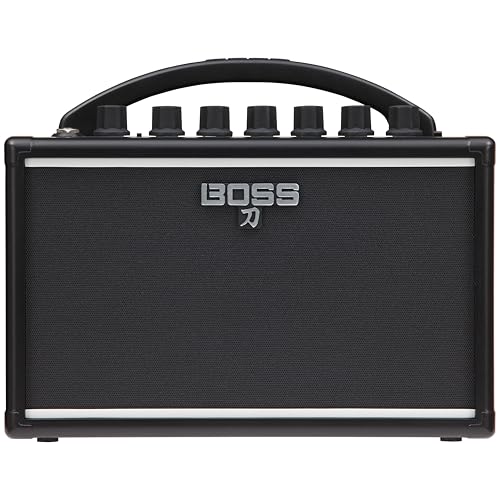 Boss Katana Mini Battery power, three genuinely usable amp voicings and a real analog delay. This is the amp that makes practicing feel good, which is the only feature that reliably keeps a beginner practicing. | Making practice sound good enough to repeat | 8.7/10 | $114.99View on Amazon #ad · price as of October 27, 2026 · how this is funded |
| 2 |  Positive Grid Spark GO Tiny, rechargeable, and it doubles as a Bluetooth speaker with app-driven tones and backing tracks. For a beginner who learns from YouTube and apps, that integration is the point. | App-and-video learners | 8.2/10 | |
| 3 |  Fender Frontman 10G Ten watts, two channels, a headphone socket and an aux input. It is the amp inside most starter packs, and on its own it is the cheapest thing that makes an electric guitar work at home. | The absolute cheapest working practice amp | 7.6/10 | $89.99View on Amazon #ad · price as of October 27, 2026 · how this is funded |
Scores are our own editorial fit rating from published specifications — the rubric is on our methodology page. They are not test results; we have not played these instruments.
Buying this as a gift? Our gift guides re-explain these picks for the gifter. Wondering whether to wait for November? The Black Friday hub has the sourced record of what discounted last year and what did not.
Wattage is the wrong spec to shop on
Amplifier power ratings describe how loud an amp can go before it distorts, which is a stage concern. In a bedroom, a 10-watt amp and a 100-watt amp are both used at a fraction of their capability, and the large one usually sounds worse there because it was voiced to be heard across a room full of people.
The specs that actually matter for home practice are, in order: whether it has a headphone socket, whether it sounds good at low volume, whether it has an aux input for playing along with music, and whether it is small enough to be left set up.
The headphone socket is not optional
Silent practice is the entire practical advantage an electric guitar has over an acoustic in a shared home. It is what makes practicing at 10pm possible, which for a teenager is when practice actually happens.
Check this before buying, because it is not universal. Some otherwise excellent small amps — including the Katana Mini — omit a headphone output entirely. That is a genuine trade rather than an oversight, and it means the amp suits a house rather than an apartment.
| Feature | Why it matters | Priority |
|---|---|---|
| Headphone output | The whole point of an electric guitar in a shared home | Essential in an apartment |
| Aux or Bluetooth input | Playing along with recordings is the most motivating practice there is | High |
| Sounds good quietly | A beginner practices at low volume; an amp that only wakes up loud is useless | High |
| Two or more voicings | One clean, one dirty covers almost everything a beginner wants | Medium |
| Three-band EQ | More useful than a single tone knob for taming a harsh room | Medium |
| Wattage above 15 W | Only if the player will rehearse with a drummer | Low at home |
| Onboard effects | Reverb and delay make everything sound better; nothing else is needed early | Low |
Modeling amps and the app question
Modeling amps use digital processing to imitate several classic amplifiers, and app-connected ones like the Spark GO add backing tracks and tone presets. For a beginner learning from videos and apps, that integration is a real advantage rather than a gimmick — it lowers the friction between wanting to play along and playing along.
The honest caveat: much of the value is locked behind the app, which needs a phone or tablet nearby and an account. An amp whose good sounds require a companion app is an amp that is less pleasant to pick up for five minutes.
What we would buy
In a house: the Boss Katana Mini. Three genuinely distinct voicings, real analog delay, three-band EQ and battery power in a box that fits on a shelf. It sounds better at low volume than anything else near the price. No headphone socket, so check that against your living situation.
In an apartment, or for an app-led learner: the Spark GO. Small, rechargeable, doubles as a Bluetooth speaker, and the app provides play-along material.
On the tightest budget: the Fender Frontman 10G. Two channels, a headphone socket, an aux input. Nothing about it is exciting and it does the job.
The picks, in full
Every card below is written from the published specification and the manufacturer’s own documentation. We have not played these instruments — see how we work for exactly what that means and what we do instead.
Our top pick · Making practice sound good enough to repeat
Boss Katana Mini
Battery power, three genuinely usable amp voicings and a real analog delay. This is the amp that makes practicing feel good, which is the only feature that reliably keeps a beginner practicing.
What works
- Runs on AA batteries — practice moves to wherever the player actually is
- Three amp characters plus tape-style delay in a box this size is unusual
- Three-band EQ rather than a single tone knob
What to know
- No headphone output on this model — check before buying for apartment use
- Seven watts through a four-inch speaker is a practice amp, nothing more
- Power
- 7 W
- Speaker
- 4 in
- Power source
- 6 x AA or optional adapter
- Headphone out
- Not published
#ad · price as of October 27, 2026 · how this is funded
Specs read from the manufacturer or retailer listing on 2026-09-07. Our fit score: 8.7/10.
Pick 2 · App-and-video learners
Positive Grid Spark GO
Tiny, rechargeable, and it doubles as a Bluetooth speaker with app-driven tones and backing tracks. For a beginner who learns from YouTube and apps, that integration is the point.
What works
- Rechargeable and pocket-sized — practice is never blocked by setup
- Doubles as a Bluetooth speaker, so it earns shelf space between sessions
- App provides amp models and play-along tools
What to know
- 5 W and a small driver — quiet, and the low end is thin
- Most of its value is locked behind the app, which needs a phone or tablet
- Power
- 5 W
- Battery
- Rechargeable (per listing)
- Bluetooth
- Yes
Specs read from the manufacturer or retailer listing on 2026-09-07. Our fit score: 8.2/10.
Pick 3 · The absolute cheapest working practice amp
Fender Frontman 10G
Ten watts, two channels, a headphone socket and an aux input. It is the amp inside most starter packs, and on its own it is the cheapest thing that makes an electric guitar work at home.
What works
- Headphone output means practice at any hour without a household argument
- Aux input lets a beginner play along with a phone
What to know
- The overdrive channel is harsh and most players leave it off
- Ten watts will not survive a rehearsal with a drummer
- Power
- 10 W
- Speaker
- 6 in
- Headphone out
- Yes
- Aux in
- Yes
#ad · price as of October 27, 2026 · how this is funded
Specs read from the manufacturer or retailer listing on 2026-09-07. Our fit score: 7.6/10.
Questions people actually ask
How many watts does a beginner guitar amp need?
Ten watts is plenty for a bedroom and far more than most beginners ever use. Wattage only becomes relevant when playing with a drummer, at which point 30 watts is a realistic minimum. At home, sounding good quietly matters far more than power.
Do I need a headphone socket on a practice amp?
In an apartment or a shared home, yes — it is the whole practical advantage of an electric guitar. Check the specification carefully, because several well-regarded small amps including the Katana Mini omit it.
Are modeling amps good for beginners?
Yes. Several amp voicings in one box means a beginner can find a sound they like without buying more equipment, and built-in reverb makes everything more enjoyable to play. The caveat is app dependence: if the good sounds need a phone, the amp is less likely to be picked up casually.
Should I upgrade the amp that came with my starter pack?
Around month six, if the player is still going. Pack amps work but are voiced harshly and have little control. A better practice amp is one of the cheapest ways to make practicing more enjoyable, which is the only thing that reliably increases how much of it happens.
Sources
We have not played these instruments, so citation is our evidence. Everything above traces back to one of these, on the date shown.