Setting up a practice space
A good practice space is not about acoustics. It is about removing every excuse between a person and their instrument.
By Stephen V. · Writes Reed & Rosin · last verified
The short answer
The most effective practice space is one where the instrument is always set up, the music is already on a stand, and nothing needs assembling. Noise solutions differ sharply by instrument: some go silent on headphones, and violin, flute and acoustic piano have no silent option at all.
Some links on this page earn us a commission at no extra cost to you. It does not change which instrument we recommend, and it does not change the order. We also earn nothing when the honest answer is “rent it” — and we still say so. Full disclosure.
Quick picks
| # | Product | Best for | Score | Price |
|---|---|---|---|---|
| 1 |  Manhasset Model 48 Symphony Music Stand The stand in every school music room, and the reason is the friction-based Magic Finger clutch: it holds height without a wing nut to strip, and it survives decades of students. This is the standard single 48 Symphony, made in the USA, and it adjusts from 26 in up to 48 in — seated beginner to standing adult on one stand. | A stand that outlives the student | 9.3/10 | $65.99View on Amazon #ad · price as of October 27, 2026 · how this is funded |
| 2 |  Hercules GS414B Plus Auto-Grip Guitar Stand The auto-grip yoke closes around the neck as the guitar is set down, so a child cannot leave it balanced and half-seated. That is the whole argument, and in a house with pets it is decisive. | Households with children or pets | 9.2/10 | $49.95View on Amazon #ad · price as of October 27, 2026 · how this is funded |
| 3 |  Audio-Technica ATH-M20x Closed-back, wired, and flat enough that a student hears what they actually played rather than a flattered version of it. Wired matters: Bluetooth latency makes a digital piano unplayable. | Silent digital-piano practice | 9.0/10 | $59.00View on Amazon #ad · price as of October 27, 2026 · how this is funded |
| 4 | 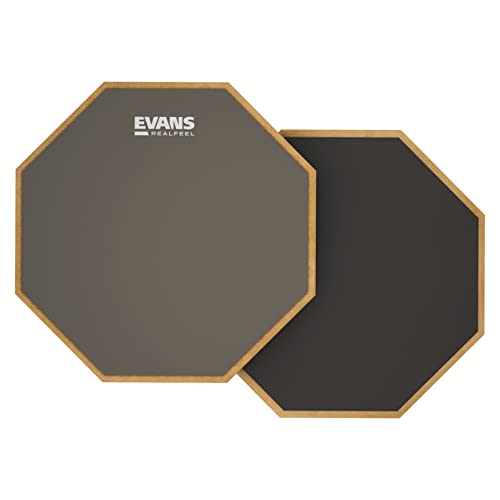 Evans RealFeel 12-Inch Practice Pad The standard practice pad, and the single most useful thing a drum student owns. Gum rubber on one side and neoprene on the other gives a realistic rebound and a harder workout surface. | Every drum student, without exception | 9.4/10 | $44.99View on Amazon #ad · price as of October 27, 2026 · how this is funded |
Scores are our own editorial fit rating from published specifications — the rubric is on our methodology page. They are not test results; we have not played these instruments.
Friction is the enemy
Every step between deciding to practice and producing the first note is a chance to not practice. Getting the instrument out. Finding the music. Setting up a stand. Finding somewhere to sit. Each is trivial, and together they are why a fifteen-minute session becomes a five-minute session and then no session.
A good practice space removes them all. The instrument is out, the music is on a stand, the seat is at the right height, and the whole setup takes zero seconds because it is already done.
The setup, in order of importance
- 1
A permanent home for the instrument
On a stand for guitar or violin, set up on its own stand for a keyboard. In a room the household uses rather than a bedroom corner. This one decision affects practice frequency more than everything else combined.
- 2
A music stand that stays there
With the current book open on it. A student who has to find the book each time practices less than one who sits down in front of it.
- 3
The right seat at the right height
An adjustable bench for keyboard players, and a firm armless chair for everyone else. A sofa is comfortable and produces bad posture and short sessions.
- 4
Light on the music, not in the eyes
A lamp behind and above the player's shoulder. Squinting at a badly lit page is a small, constant irritation that shortens sessions.
- 5
A tuner and a metronome within reach
In a small box or a drawer beside the stand. Not in the case, not in another room.
Noise, instrument by instrument
| Instrument | Silent option | How |
|---|---|---|
| Digital piano / keyboard | Yes, completely | Wired headphones |
| Electric guitar / bass | Yes, completely | Headphone amp or an amp with a headphone socket |
| Drums | Nearly | Mesh-head electronic kit on a riser, or a practice pad |
| Trumpet and brass | Substantially | Practice mute, or an electronic pickup mute system |
| Acoustic guitar / ukulele | No, and it is moderate | Nothing needed — quiet enough for most homes |
| Violin | No | A practice mute reduces volume somewhat and changes the tone |
| Flute, clarinet, saxophone | No | No silent option exists; agree hours instead |
| Acoustic piano | No | Unless it has a silent system fitted, which is a costly retrofit |
For the instruments with no silent option, the solution is scheduling rather than equipment. Agree when practice happens, tell the neighbors, and be consistent — predictable noise at a known time is tolerated far better than unpredictable noise.
The apartment conversation
Talk to the neighbors before the instrument arrives, not after the first complaint. Tell them what it is, what hours you intend to practice, and ask them to say if it becomes a problem.
This works far better than it sounds. Most people are tolerant of a child learning an instrument and intolerant of unexplained noise, and the conversation converts one into the other. It also means a complaint arrives as a conversation rather than a letter from a landlord.
What does not matter
- Acoustic treatment. Foam panels and bass traps are for recording studios. They do very little to stop sound leaving a room — that requires mass, not foam — and nothing at all for practice quality.
- A dedicated room. Nice if available, and entirely unnecessary. A corner of a living room with the instrument set up works better than a spare room the student has to go to.
- Perfect quiet. Learning to concentrate through household noise is a useful skill, and a student who can only practice in silence practices less.
The one thing worth doing for the neighbors
Move the instrument away from shared walls and floors where possible. Sound transmits far more through structure than through air, so a keyboard stand against a party wall transmits more than the same instrument in the middle of the room.
For drums specifically, a riser that decouples the kit from the floor matters more than anything else — see electronic drums for apartments.
If the instrument has not been chosen yet, the constraint can be solved at that stage instead of worked around afterwards. The best instruments to learn in an apartment ranks the families by whether the sound can be routed into headphones at all, which matters more in a shared building than how quiet an instrument is.
One thing a practice corner cannot fix is what arrives at a student’s ears in a band room. Our hearing protection page covers filtered plugs, child-sized muffs, and which situation needs which.
The picks, in full
Every card below is written from the published specification and the manufacturer’s own documentation. We have not played these instruments — see how we work for exactly what that means and what we do instead.
Our top pick · A stand that outlives the student
Manhasset Model 48 Symphony Music Stand
The stand in every school music room, and the reason is the friction-based Magic Finger clutch: it holds height without a wing nut to strip, and it survives decades of students. This is the standard single 48 Symphony, made in the USA, and it adjusts from 26 in up to 48 in — seated beginner to standing adult on one stand.
What works
- Aluminum desk measures 20 in wide by 12-3/4 in high, which holds a full open method book without sagging
- Magic Finger Clutch adjusts height and tilt with no wing nut to strip or lose
- Heavy-gauge all-steel welded base, and a powder-coated shaft built for years of wear
What to know
- Does not fold — it will not go in a bag or a small car boot
- Heavy at just under 7 lb, which is the trade for the stability
- Sold as a single stand, so a household with two players buys twice — the multi-stand listings are the cheaper route per stand for a music room
- Type
- Non-folding, solid desk
- Height adjustment
- Magic Finger Clutch (friction)
- Desk
- 20 in wide, 12-3/4 in high, 2-1/4 in ledge
- Height range
- 26 in to 48 in
- Weight
- 6.9 lb
- Portable
- No
#ad · price as of October 27, 2026 · how this is funded
Specs read from the manufacturer or retailer listing on 2026-10-26. Our fit score: 9.3/10.
Pick 2 · Households with children or pets
Hercules GS414B Plus Auto-Grip Guitar Stand
The auto-grip yoke closes around the neck as the guitar is set down, so a child cannot leave it balanced and half-seated. That is the whole argument, and in a house with pets it is decisive.
What works
- Auto-grip closes on its own — no way to leave the guitar insecure
- Adjustable height suits a 3/4 guitar as well as a full size
- Rubber contact surfaces are safe for nitrocellulose finishes
What to know
- Costs several times a basic A-frame stand
- Bulkier footprint than a folding stand
- Type
- Upright with auto-grip yoke
- Fits
- Acoustic, electric, 3/4 and full size
#ad · price as of October 27, 2026 · how this is funded
Specs read from the manufacturer or retailer listing on 2026-09-07. Our fit score: 9.2/10.
Pick 3 · Silent digital-piano practice
Audio-Technica ATH-M20x
Closed-back, wired, and flat enough that a student hears what they actually played rather than a flattered version of it. Wired matters: Bluetooth latency makes a digital piano unplayable.
What works
- Wired, so there is zero latency between key and sound
- Closed back keeps the practice inside the room
- Fairly neutral tuning — the piano sounds like the piano
What to know
- Fixed cable cannot be replaced when it fails
- Clamping force is firm for a small head at first
- Type
- Closed-back, over-ear
- Connection
- Wired, 3.5 mm with 6.3 mm adapter
- Detachable cable
- No
#ad · price as of October 27, 2026 · how this is funded
Specs read from the manufacturer or retailer listing on 2026-09-07. Our fit score: 9.0/10.
Pick 4 · Every drum student, without exception
Evans RealFeel 12-Inch Practice Pad
The standard practice pad, and the single most useful thing a drum student owns. Gum rubber on one side and neoprene on the other gives a realistic rebound and a harder workout surface.
What works
- Two surfaces: realistic rebound on one side, harder practice on the other
- Genuinely quiet enough for a shared room
- Effectively indestructible
What to know
- Needs a stand or a lap to be used properly
- Only teaches hands — nothing about feet or coordination
- Diameter
- 12 in
- Surfaces
- Gum rubber and neoprene
#ad · price as of October 27, 2026 · how this is funded
Specs read from the manufacturer or retailer listing on 2026-09-07. Our fit score: 9.4/10.
Questions people actually ask
How do I set up a practice space at home?
Give the instrument a permanent home on a stand in a room the household uses, keep a music stand there with the current book open, and provide a firm seat at the right height. The aim is that practice requires zero setup.
How can I practice an instrument in an apartment?
It depends entirely on the instrument. Digital pianos and electric guitars go completely silent on headphones, drums need mesh heads plus a riser, and brass needs a practice mute. Flute, violin, saxophone and acoustic piano have no silent option, so agree hours instead.
Does acoustic foam help with practice noise?
Almost not at all. Foam panels absorb reflections inside a room; stopping sound leaving a room requires mass rather than absorption. Acoustic treatment is for recording studios and does nothing useful for a neighbor.
Do I need a dedicated practice room?
No, and a corner of a room people already use is usually better. The deciding factor is whether the instrument is set up and visible, not whether the space is private. A spare room the student has to go to gets used less.
Sources
We have not played these instruments, so citation is our evidence. Everything above traces back to one of these, on the date shown.