Acoustic or electronic drums?
For most households this is decided by the building rather than by the music, and that is a legitimate way to decide it.
By Stephen V. · Writes Reed & Rosin · last verified
The short answer
Acoustic kits feel better and are far louder; electronic kits are quiet on headphones and never quite feel like drums. In a shared building the noise question decides it before anything else, and technique transfers between the two almost completely.
Some links on this page earn us a commission at no extra cost to you. It does not change which instrument we recommend, and it does not change the order. We also earn nothing when the honest answer is “rent it” — and we still say so. Full disclosure.
Quick picks
| # | Product | Best for | Score | Price |
|---|---|---|---|---|
| 1 |  Pearl Roadshow 5-Piece Complete Kit Pearl's entry kit ships with the hardware, cymbals, throne and pedal actually included, which is the trap in drum-kit pricing: a bare shell pack costs the same again once it is playable. | A complete first acoustic kit | 9.0/10 | $729.99View on Amazon #ad · price as of October 27, 2026 · how this is funded |
| 2 | 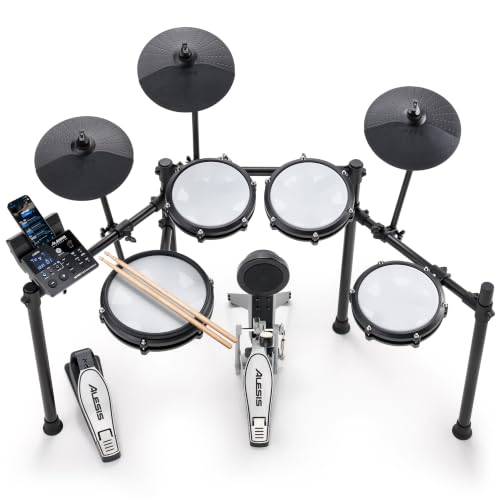 Alesis Nitro Max Electronic Kit Mesh heads on every pad at the bottom of the electronic market. Mesh is the spec that matters for apartments: rubber pads transmit a loud knock through the floor, mesh does not. | Apartments and shared walls | 9.1/10 | $449.00View on Amazon #ad · price as of October 27, 2026 · how this is funded |
| 3 |  Roland TD-02K V-Drums Roland's entry kit trades mesh heads for a far better sound module and coaching functions. If the student has a teacher and will practice rudiments, the module matters more than the pads. | Students with a drum teacher | 8.7/10 | |
| 4 | 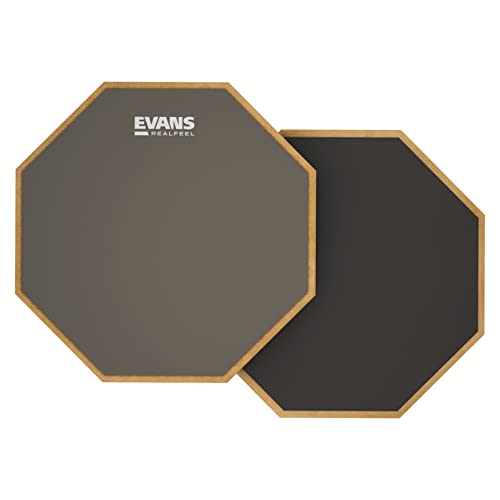 Evans RealFeel 12-Inch Practice Pad The standard practice pad, and the single most useful thing a drum student owns. Gum rubber on one side and neoprene on the other gives a realistic rebound and a harder workout surface. | Every drum student, without exception | 9.4/10 | $44.99View on Amazon #ad · price as of October 27, 2026 · how this is funded |
Scores are our own editorial fit rating from published specifications — the rubric is on our methodology page. They are not test results; we have not played these instruments.
Side by side
| Acoustic | Electronic | |
|---|---|---|
| Volume | Very loud, and not adjustable | Near-silent on headphones, except the kick |
| Feel | The reference — this is what drums feel like | Mesh comes close; rubber does not |
| Sounds | One kit, tuned however you tune it | Dozens of kits, plus play-along features |
| Space | Substantial footprint, permanently set up | Smaller, and some fold away |
| Recording | Needs microphones and a room | Plug straight in |
| Maintenance | Heads wear out, tuning drifts | Almost none |
| Cost of ownership | New heads and cymbals over time | Nothing recurring |
| Resale | Decent for known brands | Falls faster, as with most electronics |
The feel argument, honestly
Acoustic drums respond in ways electronic pads do not. A rim shot, a stick striking the edge of a cymbal, a ghost note played at a whisper — each produces a distinct sound on an acoustic drum, and on an electronic pad they are approximated or ignored.
The gap has narrowed a great deal with mesh heads and better modules, and it has not closed. A drummer who learns exclusively on an electronic kit will find an acoustic kit noticeably different: louder, more responsive, and considerably harder to control dynamically.
That is a real cost. It is also a smaller cost than not practicing at all, which is what happens when a kit is too loud for the house.
The noise argument, which usually wins
An acoustic kit is loud enough to be a genuine constraint on when it can be played — not evenings, not early mornings, not while anyone is sleeping, and in a shared building, arguably not at all.
Practice that can only happen in a narrow window happens less. That is the single strongest argument for an electronic kit in a house with neighbors: a mesh kit on headphones can be played at eleven at night, and eleven at night is when a teenager practices.
What transfers between them
Almost everything: rudiments, coordination between hands and feet, timing, reading, and the physical patterns of playing. A student who learns on one can play the other immediately.
What does not transfer is dynamic control — the fine gradation between a whisper and a strike — and the specific techniques that depend on how an acoustic drum and cymbal respond. Both are picked up within weeks of moving over.
The hybrid answer nobody mentions
A practice pad plus occasional access to a real kit is a genuinely strong combination and costs almost nothing.
A student develops hand technique on the pad at home — quietly, daily — and plays a real kit at their school music room, a rehearsal space, or a lesson. That gets the feel of an acoustic kit without the household consequences, and it is how many school percussionists actually work.
Our recommendation, by household
- Apartment or shared wall: electronic with mesh heads, on a riser. Not a compromise — the only option that results in practice actually happening.
- Detached house with an understanding family: acoustic. Better feel, better sound, and the noise is survivable.
- Uncertain whether the interest will last: a practice pad. It costs almost nothing, develops real technique, and the decision can wait six months.
- School percussionist: a pad, plus a bell kit if the program requires one. A drum set is a want rather than a need in year one.
The picks, in full
Every card below is written from the published specification and the manufacturer’s own documentation. We have not played these instruments — see how we work for exactly what that means and what we do instead.
Our top pick · A complete first acoustic kit
Pearl Roadshow 5-Piece Complete Kit
Pearl's entry kit ships with the hardware, cymbals, throne and pedal actually included, which is the trap in drum-kit pricing: a bare shell pack costs the same again once it is playable.
What works
- Genuinely complete — hardware, cymbals, throne and pedal are all in the box
- Pearl hardware is a real step above the no-name stands in cheaper kits
- Shells are usable enough that only the cymbals need upgrading
What to know
- The included cymbals are the weakest part and get replaced first
- An acoustic kit is loud in a way apartment dwellers underestimate
- Configuration
- 5-piece
- Includes
- Cymbals, hardware, throne, pedal
- Shells
- Poplar
#ad · price as of October 27, 2026 · how this is funded
Specs read from the manufacturer or retailer listing on 2026-09-07. Our fit score: 9.0/10.
Pick 2 · Apartments and shared walls
Alesis Nitro Max Electronic Kit
Mesh heads on every pad at the bottom of the electronic market. Mesh is the spec that matters for apartments: rubber pads transmit a loud knock through the floor, mesh does not.
What works
- Mesh heads on all pads, including the snare and toms
- Bluetooth audio for playing along without extra cables
- Practice silently on headphones at any hour
What to know
- The kick pedal still transmits vibration through the floor — a riser or mat is needed
- Cymbal pads are the weakest part of the kit
- Pads
- Mesh heads throughout
- Kick
- Pedal-operated pad
- Bluetooth
- Yes
#ad · price as of October 27, 2026 · how this is funded
Specs read from the manufacturer or retailer listing on 2026-09-07. Our fit score: 9.1/10.
Pick 3 · Students with a drum teacher
Roland TD-02K V-Drums
Roland's entry kit trades mesh heads for a far better sound module and coaching functions. If the student has a teacher and will practice rudiments, the module matters more than the pads.
What works
- Sound module and coaching functions are a clear step above the price bracket
- Compact frame fits a bedroom corner
- Roland build quality and long-term support
What to know
- Rubber pads rather than mesh on this model — louder acoustically and stiffer to play
- Fewer pads than similarly priced rivals
- Pads
- Rubber
- Module
- TD-02 with coach functions
- Kick
- Pedal-operated pad
Specs read from the manufacturer or retailer listing on 2026-09-07. Our fit score: 8.7/10.
Pick 4 · Every drum student, without exception
Evans RealFeel 12-Inch Practice Pad
The standard practice pad, and the single most useful thing a drum student owns. Gum rubber on one side and neoprene on the other gives a realistic rebound and a harder workout surface.
What works
- Two surfaces: realistic rebound on one side, harder practice on the other
- Genuinely quiet enough for a shared room
- Effectively indestructible
What to know
- Needs a stand or a lap to be used properly
- Only teaches hands — nothing about feet or coordination
- Diameter
- 12 in
- Surfaces
- Gum rubber and neoprene
#ad · price as of October 27, 2026 · how this is funded
Specs read from the manufacturer or retailer listing on 2026-09-07. Our fit score: 9.4/10.
Questions people actually ask
Are electronic drums good for beginners?
Yes, particularly in a shared building. Technique transfers almost completely between electronic and acoustic kits, and an electronic kit on headphones can be played at hours an acoustic kit cannot — which means practice actually happens.
Do electronic drums feel like real drums?
Mesh heads come close and rubber pads do not. The gap is in dynamic response — ghost notes, rim shots and cymbal edge strikes — and a drummer moving to an acoustic kit will find it louder and harder to control at first, though only for a few weeks.
Which is cheaper, acoustic or electronic drums?
Comparable to buy at the beginner level. Acoustic kits have ongoing costs in heads and cymbal replacements; electronic kits have essentially none but lose resale value faster.
Can you learn drums on a practice pad alone?
You can learn most of the hand technique, which is the majority of first-year drumming. Coordination between hands and feet needs a kit eventually, but a pad plus occasional access to a real kit is a genuinely strong and inexpensive combination.
Sources
We have not played these instruments, so citation is our evidence. Everything above traces back to one of these, on the date shown.