The best gifts for piano students
A piano student is one of the easiest people to buy for, because the things that improve their playing most are cheap and almost nobody thinks of them.
By Stephen V. · Writes Reed & Rosin · last verified
The short answer
Buy the bench if they do not have an adjustable one, the sustain pedal if their keyboard shipped with a plastic footswitch, and wired headphones if they share a house. All three cost little, remove a real limit, and do not require knowing anything about their lessons.
Some links on this page earn us a commission at no extra cost to you. It does not change which instrument we recommend, and it does not change the order. We also earn nothing when the honest answer is “rent it” — and we still say so. Full disclosure.
Quick picks
| # | Product | Best for | Score | Price |
|---|---|---|---|---|
| 1 | 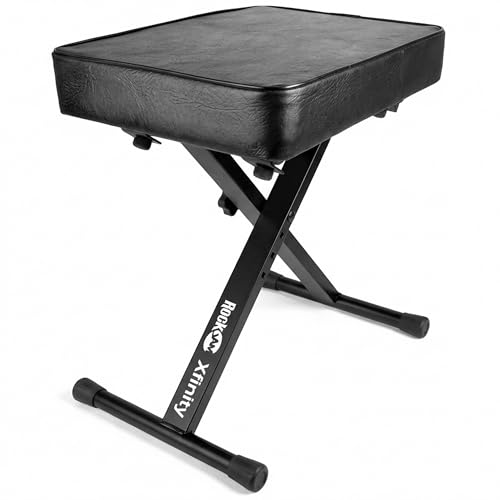 RockJam RJKBB100 Adjustable Bench Adjustable height is the entire point. A child at a fixed-height bench sits too low, drops their wrists, and builds a technique problem their teacher then spends months undoing. | Getting a child's wrists level | 8.2/10 | $39.99View on Amazon #ad · price as of October 5, 2026 · how this is funded |
| 2 |  M-Audio SP-2 Sustain Pedal A piano-style sustain pedal with a polarity switch, so it works with any keyboard. The plastic footswitch that ships with cheap keyboards slides across the floor and teaches bad pedal habits. | Replacing the plastic footswitch | 8.9/10 | $25.00View on Amazon #ad · price as of October 5, 2026 · how this is funded |
| 3 |  Audio-Technica ATH-M20x Closed-back, wired, and flat enough that a student hears what they actually played rather than a flattered version of it. Wired matters: Bluetooth latency makes a digital piano unplayable. | Silent digital-piano practice | 9.0/10 | $59.00View on Amazon #ad · price as of October 5, 2026 · how this is funded |
| 4 |  Sony MDR-7506 A studio standard for decades, and the parts are still available, which is why it outlives fashionable headphones. Bright rather than neutral, and that brightness makes fingering errors obvious. | Headphones that will outlast the keyboard | 8.8/10 | $113.00View on Amazon #ad · price as of October 5, 2026 · how this is funded |
| 5 |  Korg MA-2 Digital Metronome The metronome most band and orchestra teachers hand out. Long battery life, a headphone socket, and a display that shows the beat as well as sounding it. | The default student metronome | 9.2/10 | $18.99View on Amazon #ad · price as of October 5, 2026 · how this is funded |
| 6 |  Faber Piano Adventures Primer Lesson Book The other standard method, and the one more children enjoy. Faber starts with pre-reading on the black keys, which gets a five-year-old playing before they can read a note. | Children roughly 5-8, first year | 9.3/10 | $9.51View on Amazon #ad · price as of October 5, 2026 · how this is funded |
| 7 |  Alfred Basic Piano Library Lesson Book 1A One of the two methods almost every American piano teacher uses. Alfred introduces reading by interval from the start, which builds a reader rather than a memorizer. | Children roughly 7-10, with a teacher | 9.2/10 | $9.99View on Amazon #ad · price as of October 5, 2026 · how this is funded |
Scores are our own editorial fit rating from published specifications — the rubric is on our methodology page. They are not test results; we have not played these instruments.
The gift-buyer’s advantage with a piano student
With most hobbies, buying a gift means guessing at taste. With a piano student it means noticing a gap, and the gaps are consistent, visible from across a room and cheap to close. Almost every student under about three years in is missing at least two of the items on this page, and nobody has bought them because they are not the interesting part of the purchase.
The guides are ordered by how much difference each one makes, not by price. The first three change how the student plays. The next two change how they practise. The last two are the only ones where you have to know something about their lessons first, and the page says exactly what to check.
1. An adjustable bench, if they are sitting on a dining chair
This is the gift to buy if you only buy one, and the gap is visible from the doorway: a student perched on a kitchen chair or an office chair is sitting at the wrong height. Too high and the wrists drop, which is a technique problem a teacher then spends months undoing. Too low and the forearms angle up. A bench whose height adjusts also follows a growing child for years rather than being outgrown.
The correct height is a measurement rather than a preference — our bench height page has it, and it is worth reading before you buy so the gift arrives with the instruction that makes it useful.
2. A real sustain pedal, if theirs is a plastic footswitch
Look under the keyboard. If the pedal is a flat lightweight plastic box with a cable, it slides across the floor under a foot pressing on a sloped surface, and the student spends the piece chasing it. A piano-shaped pedal that stays put costs very little and is the single cheapest thing that makes playing feel like playing.
Buy one with a polarity switch, which is the detail that stops this being a risky gift: manufacturers do not agree on pedal polarity, so a pedal hard-wired for one brand can behave backwards on another. A switch means it works with whatever they own and whatever they own next. Our sustain pedal guide explains the rest, including the one case where a student genuinely does not need a pedal yet.
3. Wired headphones, if they share a house
Headphone practice is the structural advantage a digital piano has over an acoustic one, and a surprising number of students never get to use it because nobody bought the headphones. A student who can play at nine at night practises more, and more practice beats a better instrument every time.
One hard requirement: wired. Bluetooth headphones introduce a delay between pressing a key and hearing the note, which makes a digital piano genuinely unplayable, and it is the most common way this gift goes wrong. Both pairs below are wired. Our headphones for digital piano page compares them in full — the Audio-Technica is the default, the Sony is the one with replaceable parts that outlives the instrument.
4. A metronome, which is a better gift than it sounds
Students practise too fast. All of them, without exception, and the symptom is a passage that falls apart in the same place every time. A metronome fixes it, and a dedicated one beats a phone app for a reason that has nothing to do with sound quality: there are no notifications on it. For a young child a mechanical wind-up metronome is more fun and more likely to be used; for everyone else the small digital unit below is the student default. Our metronome roundup has both, and how to use a metronome is worth printing and putting in the box, because the device without the method is just a clicking noise.
5. A music stand, if they are reading off the keyboard lid
Many digital pianos ship with a small music rest that holds a thin book badly and a thick one not at all, and students end up reading from a book propped on the instrument or flat on a chair. Both teach a neck and posture problem. A folding stand goes to lessons; a heavy symphony stand outlives the student. Our music stands page compares them, and it is the cheapest item on this list that solves a daily irritation.
Two gifts to ask the teacher about first
A method book. Buying the wrong series is the most common waste in a first year of lessons, because a student working through one series does not need another one — and a teacher has usually chosen theirs deliberately. Ask which series and which level, then buy the next book in that sequence. Our piano method books page compares the two series American teachers use most, so you know what you are being told when you ask.
Anything attached to the instrument itself. Stands, covers and bench cushions are sized to a specific model, and a gift that does not fit is a return trip. If you cannot see the model number, the items earlier on this page all fit everything.
What not to buy
- Bluetooth headphones. Covered above, and worth repeating because they are the most likely mistake on this page.
- A second keyboard. A well-meant upgrade is a hard gift to get right, because the student’s next instrument depends on what their teacher is asking for. If the intention is genuinely an instrument, our step-up guide sets out the four signals that an upgrade is actually warranted — and the cheaper fixes that usually come first.
- Novelty sheet music for a level they have not reached. A beautiful book of pieces a student cannot yet play is a reminder of the gap rather than a gift. Ask the teacher what level they are at and buy one notch below it, not above.
For gifts across other instruments and other budgets, our music gifts under $50 and music gifts for kids re-frame the same registry of picks for different recipients, and the Black Friday hub records what actually discounted last year with sources rather than predicting what might.
The picks, in full
Every card below is written from the published specification and the manufacturer’s own documentation. We have not played these instruments — see how we work for exactly what that means and what we do instead.
Our top pick · Getting a child's wrists level
RockJam RJKBB100 Adjustable Bench
Adjustable height is the entire point. A child at a fixed-height bench sits too low, drops their wrists, and builds a technique problem their teacher then spends months undoing.
What works
- Height adjusts as the child grows, which a fixed bench cannot
- Padded top makes a 30-minute practice session bearable
What to know
- Adjustment mechanism is manual and slightly fiddly
- Not built for the weight of an adult using it daily for years
- Adjustable
- Yes
- Padded
- Yes
#ad · price as of October 5, 2026 · how this is funded
Specs read from the manufacturer or retailer listing on 2026-09-07. Our fit score: 8.2/10.
Pick 2 · Replacing the plastic footswitch
M-Audio SP-2 Sustain Pedal
A piano-style sustain pedal with a polarity switch, so it works with any keyboard. The plastic footswitch that ships with cheap keyboards slides across the floor and teaches bad pedal habits.
What works
- Piano-shaped and heavy enough to stay put under a foot
- Polarity switch means it behaves correctly with any brand
What to know
- On/off only — no half-pedaling, which advanced repertoire eventually wants
- Type
- Piano-style sustain pedal
- Polarity switch
- Yes
- Half-pedal support
- No
#ad · price as of October 5, 2026 · how this is funded
Specs read from the manufacturer or retailer listing on 2026-09-07. Our fit score: 8.9/10.
Pick 3 · Silent digital-piano practice
Audio-Technica ATH-M20x
Closed-back, wired, and flat enough that a student hears what they actually played rather than a flattered version of it. Wired matters: Bluetooth latency makes a digital piano unplayable.
What works
- Wired, so there is zero latency between key and sound
- Closed back keeps the practice inside the room
- Fairly neutral tuning — the piano sounds like the piano
What to know
- Fixed cable cannot be replaced when it fails
- Clamping force is firm for a small head at first
- Type
- Closed-back, over-ear
- Connection
- Wired, 3.5 mm with 6.3 mm adapter
- Detachable cable
- No
#ad · price as of October 5, 2026 · how this is funded
Specs read from the manufacturer or retailer listing on 2026-09-07. Our fit score: 9.0/10.
Pick 4 · Headphones that will outlast the keyboard
Sony MDR-7506
A studio standard for decades, and the parts are still available, which is why it outlives fashionable headphones. Bright rather than neutral, and that brightness makes fingering errors obvious.
What works
- Replaceable earpads and widely available spares
- Detail in the upper mids exposes uneven playing
- Folds flat for a school bag
What to know
- Long coiled cable is a nuisance at a small desk
- Bright treble is fatiguing over long sessions
- Type
- Closed-back, over-ear
- Connection
- Wired, coiled cable
- Replaceable pads
- Yes
#ad · price as of October 5, 2026 · how this is funded
Specs read from the manufacturer or retailer listing on 2026-09-07. Our fit score: 8.8/10.
Pick 5 · The default student metronome
Korg MA-2 Digital Metronome
The metronome most band and orchestra teachers hand out. Long battery life, a headphone socket, and a display that shows the beat as well as sounding it.
What works
- Battery life measured in hundreds of hours
- Headphone output for practice with an instrument that is already loud
- Visual beat display helps when the click gets buried
What to know
- Built-in speaker is quiet against a drum kit or a trumpet
- Plastic body will not survive being sat on
- Type
- Digital
- Tempo range
- 30-252 bpm
- Headphone out
- Yes
#ad · price as of October 5, 2026 · how this is funded
Specs read from the manufacturer or retailer listing on 2026-09-07. Our fit score: 9.2/10.
Pick 6 · Children roughly 5-8, first year
Faber Piano Adventures Primer Lesson Book
The other standard method, and the one more children enjoy. Faber starts with pre-reading on the black keys, which gets a five-year-old playing before they can read a note.
What works
- Pre-reading stage means a very young child succeeds immediately
- Illustrations and pacing hold a small child's attention
- The most widely used primer in US studios alongside Alfred
What to know
- The pre-reading stage delays formal note reading by a few months
- The full series requires several books per level, which adds up
- Level
- Primer
- Approach
- Pre-reading then interval reading
- Suggested ages
- Roughly 5-8
#ad · price as of October 5, 2026 · how this is funded
Specs read from the manufacturer or retailer listing on 2026-09-07. Our fit score: 9.3/10.
Pick 7 · Children roughly 7-10, with a teacher
Alfred Basic Piano Library Lesson Book 1A
One of the two methods almost every American piano teacher uses. Alfred introduces reading by interval from the start, which builds a reader rather than a memorizer.
What works
- Interval reading from page one produces genuine sight-readers
- Enormous supporting library — theory, technique and repertoire all align
- Nearly every teacher can pick it up mid-book
What to know
- Level 1A assumes a short pre-reading stage has already happened
- Presentation is plainer than the Faber alternative
- Level
- 1A (early elementary)
- Approach
- Interval reading
- Suggested ages
- Roughly 7-10
#ad · price as of October 5, 2026 · how this is funded
Specs read from the manufacturer or retailer listing on 2026-09-07. Our fit score: 9.2/10.
Questions people actually ask
What should I buy a piano student?
An adjustable bench if they are sitting on a dining chair, a real sustain pedal if theirs is a flat plastic footswitch, or wired headphones if they share a house. All three are inexpensive, remove a genuine limit on their playing, and need no knowledge of their lessons.
What is a good cheap gift for someone learning piano?
A metronome. Students universally practise too fast, and a dedicated metronome beats a phone app because it has no notifications on it. A folding music stand is the other low-cost gift that solves a daily irritation.
Should I buy a piano student a method book?
Only after asking which series and level their teacher uses. A student working through one series does not need another, and buying the wrong one is the most common waste in a first year of lessons. Then buy the next book in their existing sequence.
What headphones should I buy for a digital piano?
Wired ones. Bluetooth headphones add a delay between pressing a key and hearing the note, which makes a digital piano unplayable, and it is the most common way this gift goes wrong. Closed-back over-ear models also keep the practice inside the room.
Is a new keyboard a good gift for a piano student?
It is a hard gift to get right, because which instrument they should move to depends on what their teacher is asking for. Four specific signals indicate an upgrade is warranted; absent those, a pedal, headphones and a bench buy more progress for far less money.
Sources
We have not played these instruments, so citation is our evidence. Everything above traces back to one of these, on the date shown.