The best music gifts for kids
A child who has asked for an instrument is giving you the easiest gift decision on this site, as long as the size is right. This page is sorted by age and by what the child actually asked for.
By Stephen V. · Writes Reed & Rosin · last verified
The short answer
For a child who wants to play, size decides everything. Ages three to six: the Loog Mini or a Kala soprano ukulele. Roughly eight to eleven: the 3/4 Yamaha JR1 acoustic or the short-scale Squier Mini Strat. Any age: a touch-sensitive 61-key Yamaha keyboard. Measure the child before buying a guitar; never surprise-gift a violin.
Some links on this page earn us a commission at no extra cost to you. It does not change which instrument we recommend, and it does not change the order. We also earn nothing when the honest answer is “rent it” — and we still say so. Full disclosure.
Quick picks
| # | Product | Best for | Score | Price |
|---|---|---|---|---|
| 1 |  Kala KA-15S Soprano Bundle The reference beginner soprano. Mahogany body, geared tuners that actually hold pitch, and a bundle that includes the tuner and bag most first buyers forget to order. | The default first ukulele | 9.3/10 | $99.99View on Amazon #ad · price as of September 14, 2026 · how this is funded |
| 2 |  Loog Mini 3-String Three strings instead of six, tuned like the top three of a guitar, so a four-year-old plays a real chord in an afternoon. It is a bridge to a guitar, not a guitar — and it is honest about that. | Ages 3-6, before a real guitar fits | 8.6/10 | $119.00View on Amazon #ad · price as of September 14, 2026 · how this is funded |
| 3 |  Yamaha JR1 FG Junior A 3/4-scale guitar built to the same standard as Yamaha's adult line rather than a toy with a brand on it. The right first acoustic for roughly ages 8 to 11, and it holds resale value. | Ages 8-11 on a first steel-string | 9.0/10 | $189.99View on Amazon #ad · price as of September 14, 2026 · how this is funded |
| 4 |  Squier Mini Stratocaster A genuine short-scale Stratocaster rather than a shrunken novelty: real pickups, real hardware, real Fender-family neck. The default first electric for anyone under about twelve. | First electric, roughly ages 7-12 | 9.1/10 | $199.99View on Amazon #ad · price as of September 14, 2026 · how this is funded |
| 5 |  Yamaha 61-Key Touch-Sensitive Portable Keyboard Touch sensitivity is the spec that matters at this price: without it, pressing harder does nothing, and a child learning dynamics on a non-sensitive keyboard is learning a habit they will have to unlearn. | A first keyboard that teaches dynamics | 9.0/10 | $199.99View on Amazon #ad · price as of September 14, 2026 · how this is funded |
| 6 | 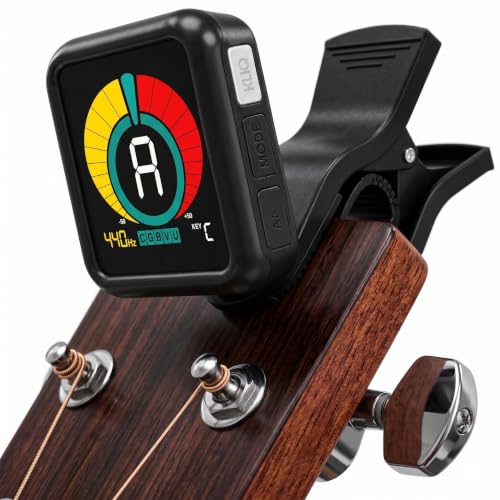 KLIQ UberTuner Clip-On A sturdier clip and a faster processor than the budget clip-ons, which matters mostly because the clip is what fails. Worth the small premium for an instrument handled by a child. | A clip-on that survives a school bag | 8.8/10 | $26.99View on Amazon #ad · price as of September 14, 2026 · how this is funded |
| 7 |  Alfred Kid's Guitar Course 1 Written for a child working with a parent rather than a teacher, which is the situation most first guitars actually land in. Large print, one idea per page, real songs early. | Ages 5-9 learning with a parent | 8.9/10 | $15.99View on Amazon #ad · price as of September 14, 2026 · how this is funded |
| 8 |  Faber Piano Adventures Primer Lesson Book The other standard method, and the one more children enjoy. Faber starts with pre-reading on the black keys, which gets a five-year-old playing before they can read a note. | Children roughly 5-8, first year | 9.3/10 | $9.99View on Amazon #ad · price as of September 14, 2026 · how this is funded |
Scores are our own editorial fit rating from published specifications — the rubric is on our methodology page. They are not test results; we have not played these instruments.
Size first, then the instrument
The one thing that separates a music gift a child plays from one that goes under a bed is fit. A guitar that is too big does not make a slow learner; it makes a child who concludes they are bad at guitar, and that is a much harder thing to fix than buying the right size. So before anything else on this page: if the child wants a guitar, get their height and age from a parent and put them through our guitar sizing chart. It takes a minute and it decides between three of the picks below.
The second rule is about what the child asked for. A child who asked for a guitar and receives a keyboard has received a well-meant no. If you do not know what they asked for, the ukulele and the keyboard are the two instruments a child of almost any age can succeed on without a sizing decision, and they are the two safe surprises here.
Instruments we would never give a child as a surprise
A violin, viola or cello. They come in fractional sizes chosen by arm length, a child moves through several of them, and a wrong size is not a smaller gift but a useless one. If a child is starting strings, the genuinely good gift is to cover a few months of a rental with size exchanges included — our violin rent-vs-buy page does the math, and we earn nothing on the rental. A band instrument is the same story for a different reason: the school may have a brand list, so ask the director first.
The picks, by age
Ages three to six: Loog Mini
Why it lands: three strings instead of six, so a preschooler plays a real chord on the first afternoon, and the chord shapes carry straight over to a six-string later. It is small and light enough to be held correctly, which a shrunken six-string is not. Who it suits: a child who is simply too small for a 3/4 guitar. What to check: the sizing chart. A tall five-year-old may already fit a 3/4 guitar, in which case the Yamaha below is the better buy. Tell the parents plainly that this is a bridge to a guitar and will be outgrown in a year or two.
Ages six and up: Kala KA-15S ukulele bundle
Why it lands: a real instrument with geared tuners that hold pitch, a warm mahogany voice, and a bundle that includes the tuner and bag. Four soft nylon strings, a chord with one finger, a recognizable song within the day. It is the easiest instrument on this site and the one with no sizing decision. Who it suits: almost any child from about six, and the right answer when you do not know what they asked for. What to check: nothing. Add the Hal Leonard ukulele book from our ukulele book page for a child over about eight.
Roughly eight to eleven, acoustic: Yamaha JR1
Why it lands: a 3/4-scale guitar built to the same standard as Yamaha’s adult line rather than a toy with a brand on it. It stays in tune, it takes a setup, it usually ships with a bag, and it holds resale value for when the child outgrows it. Who it suits: a child who asked for a guitar and measures into the 3/4 band on the chart. What to check: the measurement. A child who is tall for their age may already be a full-size player, and our guitar for a 10-year-old page walks through exactly that call. Add a clip-on tuner.
Roughly seven to twelve, electric: Squier Mini Stratocaster
Why it lands: a genuine short-scale Stratocaster with real pickups and a real Fender-family neck, not a novelty. The 22.75-inch scale is reachable for small hands and it holds tuning better than anything else at this size. Who it suits: a child under about twelve who specifically wants an electric guitar. What to check: the one thing that ruins this gift — there is no amplifier in the box. An electric guitar with no amp is a quiet disappointment on the morning. Our amp guide has the cheapest one that works, and the Boss Katana Mini on our under-$150 page is the one that makes practice sound good.
Any age: Yamaha 61-key touch-sensitive keyboard
Why it lands: touch sensitivity is the spec that matters at this price and the one the cheap boxed kits leave out. Without it, pressing harder does nothing, and a child learning dynamics on a non-sensitive keyboard learns a habit they will later have to unlearn. This one has it, 61 keys covers every beginner book, and it ships with the power adapter and music rest that are often missing. Who it suits: any child starting piano, with or without a teacher. What to check: whether the family already owns a stand and bench; they are usually separate, and our bench height page explains why a child’s wrists need to be level. A child with a piano teacher who is a year in may be ready for weighted keys instead — see our kids’ keyboard guide.
The stocking fillers: a tougher tuner and the right first book
The KLIQ UberTuner is a clip-on tuner with a noticeably stronger clip and hinge than the cheapest units, which matters because the clip is what breaks first on a tuner that lives in a school bag. It suits any child with a guitar, ukulele, bass or violin. The Alfred Kid’s Guitar Course is written for a child working with a parent rather than a teacher, which is where most first guitars land, with large print and real songs early; it suits roughly ages five to nine. The Faber Piano Adventures Primer is the piano book more children enjoy, starting on the black keys before any note reading. For both books, check which method the child’s teacher uses if they have one; series do not mix well mid-year.
What to expect after the gift
A first instrument is the start of a year, not the end of a shopping trip, and the family will be grateful to know what comes next. Our first-year checklist lists the small things that follow — the stand, the strings, the book — and our what instruments cost page gives the honest running cost per instrument. If the gift is for December, our Black Friday hub has the sourced record of which of these product classes actually discounted last year.
The picks, in full
Every card below is written from the published specification and the manufacturer’s own documentation. We have not played these instruments — see how we work for exactly what that means and what we do instead.
Our top pick · The default first ukulele
Kala KA-15S Soprano Bundle
The reference beginner soprano. Mahogany body, geared tuners that actually hold pitch, and a bundle that includes the tuner and bag most first buyers forget to order.
What works
- Geared tuners rather than friction pegs — the single biggest predictor of whether a cheap ukulele stays in tune
- Satin mahogany gives a warmer voice than the laminate-and-gloss competition
- Bundle covers the gig bag, tuner and strap
What to know
- Soprano is small: adult hands with wide fingers will crowd the frets
- Factory strings are worth replacing before the instrument is judged
- Size
- Soprano (approx. 21 in)
- Scale length
- 13.6 in (345 mm)
- Body
- Mahogany
- Tuners
- Geared
#ad · price as of September 14, 2026 · how this is funded
Specs read from the manufacturer or retailer listing on 2026-09-07. Our fit score: 9.3/10.
Pick 2 · Ages 3-6, before a real guitar fits
Loog Mini 3-String
Three strings instead of six, tuned like the top three of a guitar, so a four-year-old plays a real chord in an afternoon. It is a bridge to a guitar, not a guitar — and it is honest about that.
What works
- Three strings mean a recognisable chord on day one, which is what keeps a small child going
- Chord shapes transfer directly to a six-string later
- Small and light enough for a preschooler to hold correctly
What to know
- It is not a guitar; the player will need a real one within a year or two
- Limited range — no bass strings at all
- Strings
- Three (guitar strings 1-3)
- Suggested ages
- 3 and up (per listing)
- App and lessons
- Included (per listing)
#ad · price as of September 14, 2026 · how this is funded
Specs read from the manufacturer or retailer listing on 2026-09-07. Our fit score: 8.6/10.
Pick 3 · Ages 8-11 on a first steel-string
Yamaha JR1 FG Junior
A 3/4-scale guitar built to the same standard as Yamaha's adult line rather than a toy with a brand on it. The right first acoustic for roughly ages 8 to 11, and it holds resale value.
What works
- 3/4 scale puts the first-position chords inside a child's reach
- Built as a real guitar, so it stays in tune and takes a setup
- Comes with a gig bag on most listings
What to know
- Shorter scale means lower string tension and a thinner voice
- A child who is already tall for their age will outgrow it fast
- Scale
- 3/4 (approx. 21 in / 540 mm)
- Top
- Spruce
- Suggested ages
- Roughly 8-11, measure rather than assume
#ad · price as of September 14, 2026 · how this is funded
Specs read from the manufacturer or retailer listing on 2026-09-07. Our fit score: 9.0/10.
Pick 4 · First electric, roughly ages 7-12
Squier Mini Stratocaster
A genuine short-scale Stratocaster rather than a shrunken novelty: real pickups, real hardware, real Fender-family neck. The default first electric for anyone under about twelve.
What works
- 22.75 in short scale is reachable for small hands and light on tension
- Three single-coil pickups and a five-way switch — the full Strat vocabulary
- Holds tuning better than anything else at this size
What to know
- No amplifier included — an electric guitar with no amp is a quiet disappointment
- Short scale is limiting once a player's hands grow
- Scale length
- 22.75 in (578 mm)
- Pickups
- Three single-coil
- Fingerboard
- Laurel
- Amp included
- Not published
#ad · price as of September 14, 2026 · how this is funded
Specs read from the manufacturer or retailer listing on 2026-09-07. Our fit score: 9.1/10.
Pick 5 · A first keyboard that teaches dynamics
Yamaha 61-Key Touch-Sensitive Portable Keyboard
Touch sensitivity is the spec that matters at this price: without it, pressing harder does nothing, and a child learning dynamics on a non-sensitive keyboard is learning a habit they will have to unlearn.
What works
- Touch-sensitive keys, so playing harder is actually louder
- 61 keys covers everything in a beginner method book
- Ships with the power adapter and music rest — both commonly missing at this price
What to know
- Keys are unweighted; a player heading toward classical piano will need weighted keys eventually
- 61 keys runs out of room in intermediate repertoire
- Keys
- 61
- Touch sensitive
- Yes
- Weighted action
- No
- Included
- Power adapter, music rest (per listing)
#ad · price as of September 14, 2026 · how this is funded
Specs read from the manufacturer or retailer listing on 2026-09-07. Our fit score: 9.0/10.
Pick 6 · A clip-on that survives a school bag
KLIQ UberTuner Clip-On
A sturdier clip and a faster processor than the budget clip-ons, which matters mostly because the clip is what fails. Worth the small premium for an instrument handled by a child.
What works
- Noticeably stronger clip and hinge than the cheapest units
- Fast, stable readout that does not hunt around the note
- Wide instrument coverage including chromatic mode
What to know
- Costs slightly more than a Snark
- Display is smaller than the Snark's
- Type
- Clip-on, vibration sensing
- Chromatic
- Yes
#ad · price as of September 14, 2026 · how this is funded
Specs read from the manufacturer or retailer listing on 2026-09-07. Our fit score: 8.8/10.
Pick 7 · Ages 5-9 learning with a parent
Alfred Kid's Guitar Course 1
Written for a child working with a parent rather than a teacher, which is the situation most first guitars actually land in. Large print, one idea per page, real songs early.
What works
- Paced and illustrated for a young child's attention span
- Assumes a parent helper rather than a teacher
- Reaches a recognisable song quickly, which is what sustains a small child
What to know
- Too slow for a motivated teenager
- Covers less ground than the Hal Leonard method over the same page count
- Level
- Child beginner
- Suggested ages
- Roughly 5-9
- Audio
- Online access (per listing)
#ad · price as of September 14, 2026 · how this is funded
Specs read from the manufacturer or retailer listing on 2026-09-07. Our fit score: 8.9/10.
Pick 8 · Children roughly 5-8, first year
Faber Piano Adventures Primer Lesson Book
The other standard method, and the one more children enjoy. Faber starts with pre-reading on the black keys, which gets a five-year-old playing before they can read a note.
What works
- Pre-reading stage means a very young child succeeds immediately
- Illustrations and pacing hold a small child's attention
- The most widely used primer in US studios alongside Alfred
What to know
- The pre-reading stage delays formal note reading by a few months
- The full series requires several books per level, which adds up
- Level
- Primer
- Approach
- Pre-reading then interval reading
- Suggested ages
- Roughly 5-8
#ad · price as of September 14, 2026 · how this is funded
Specs read from the manufacturer or retailer listing on 2026-09-07. Our fit score: 9.3/10.
Questions people actually ask
What is the best first instrument to give a child?
If they asked for one, that one, in the right size. If you do not know, a ukulele for a child from about six or a touch-sensitive 61-key keyboard at any age — both succeed without a sizing decision. Never surprise-gift a violin; it comes in sizes a gifter cannot know.
What size guitar should I buy for a child?
Measure rather than assume: height and age together, on our guitar sizing chart. Roughly, a 3/4 guitar such as the Yamaha JR1 fits ages eight to eleven, a three-string Loog fits three to six, and a tall eleven-year-old may already be a full-size player.
Does a child's electric guitar come with an amplifier?
The Squier Mini Stratocaster does not, and an electric guitar with no amp is a quiet disappointment on the morning. Budget for a small practice amp alongside it, or buy a pack that includes one.
Is a cheap keyboard bundle a good gift for a child?
Usually not. The keyboard in a boxed stand-and-stool bundle is often not touch-sensitive, so pressing harder does nothing and the child learns dynamics wrong. A touch-sensitive 61-key board from Yamaha or Casio, with a separate stand, is the honest answer.
Sources
We have not played these instruments, so citation is our evidence. Everything above traces back to one of these, on the date shown.