Keyboard cases and gig bags: match the bag to the key count
A keyboard bag is bought in a hurry, usually the week before a recital, and almost always in the wrong size. One number decides the whole purchase and it is printed on the instrument.
By Stephen V. · Writes Reed & Rosin · last verified
The short answer
Buy the bag cut for your keyboard's key count - 61, 76 or 88 - and check the stated interior against the keyboard's own dimensions. A padded soft bag is right for a keyboard that travels to lessons; wheels, not thicker padding, are what an 88-key digital piano actually needs.
Some links on this page earn us a commission at no extra cost to you. It does not change which instrument we recommend, and it does not change the order. We also earn nothing when the honest answer is “rent it” — and we still say so. Full disclosure.
Quick picks
| # | Product | Best for | Score | Price |
|---|---|---|---|---|
| 1 |  Gator Cases GKB-61 Padded Keyboard Gig Bag, 61 Note The bag to buy if the 61-key keyboard leaves the house regularly and you want it to survive several years of that. Gator is a case specialist, the GKB number means the identical bag is reorderable, and the interior securing straps stop the keyboard sliding — which is the failure mode that breaks keys. | A 61-key keyboard that travels every week | 9.1/10 | |
| 2 |  SNIGJAT 61 Key Keyboard Case, 0.32 in cotton padding The honest budget pick, and the one we would buy at this price precisely because it publishes a padding figure. Just under a third of an inch of cotton padding is thin against a Gator bag, but it is a real number — and a bag that tells you what it has beats three that only list pockets. | A tight budget, or a keyboard that moves a few times a year | 8.0/10 | $39.99View on Amazon #ad · price as of November 7, 2026 · how this is funded |
| 3 |  Gator Cases GKB-76 Padded Keyboard Gig Bag, 76 Note The same bag in the size people forget exists. A 76-key keyboard will not fit a 61-key bag and swims in an 88-key one, and 76 is a common key count on step-up arranger keyboards — so this is the right bag for a specific and widely mis-ordered instrument. | A 76-key arranger or stage keyboard | 8.8/10 | $159.99View on Amazon #ad · price as of November 7, 2026 · how this is funded |
| 4 |  Gator Cases GKB-88 Padded Keyboard Gig Bag, 88 Note The bag for a full-size digital piano that has to move, and the point at which you should stop and ask whether it should. An 88-key slab in a soft bag is a two-person carry; this bag is well made, but the honest advice for most 88-key owners is that the instrument stays put. | An 88-key digital piano that genuinely travels | 8.6/10 | $169.99View on Amazon #ad · price as of November 7, 2026 · how this is funded |
| 5 |  ORKELS 88-Key Keyboard Case with Wheels, 10mm padding The under-known right answer for an 88-key digital piano that travels: put it on wheels. It publishes 10mm of padding, it has shoulder straps for stairs, and it costs less than a case-brand soft bag — for a parent moving a digital piano alone, the wheels matter more than the badge. | An 88-key digital piano carried by one person | 8.4/10 | $93.99View on Amazon #ad · price as of November 7, 2026 · how this is funded |
| 6 | 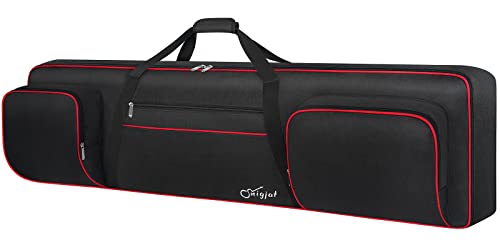 SNIGJAT 88 Key Keyboard Case, padded shoulder straps The budget answer for an 88-key keyboard, and a reasonable one if the instrument moves rarely. It is a dust and scrape cover with straps, not protection against impact — buy it to get a digital piano across town in a car, not to check it onto anything. | An 88-key keyboard that moves once or twice a year | 7.9/10 | |
| 7 |  Gator Cases GK-61 Lightweight Keyboard Case with Pull Handle and Wheels A rigid case, and the only thing on this page that genuinely protects a keyboard from being stacked, leaned on or loaded into a car with other gear. It is also the most expensive item here by a long way, and the honest answer for most beginners is that they do not need it. | A 61-key keyboard that travels with other equipment | 8.2/10 | $284.99View on Amazon #ad · price as of November 7, 2026 · how this is funded |
Scores are our own editorial fit rating from published specifications — the rubric is on our methodology page. They are not test results; we have not played these instruments.
Buying this as a gift? Our gift guides re-explain these picks for the gifter. Wondering whether to wait for November? The Black Friday hub has the sourced record of what discounted last year and what did not.
The purchase that gets made in a hurry
Almost nobody buys a keyboard bag with the keyboard. The bag gets bought the week a keyboard first has to leave the house — a recital, a school concert, a move to a dorm, a church service — and it gets bought under time pressure from a search result, which is why this is one of the highest-return categories on the internet.
The returns are almost all size. A keyboard bag is cut for a key count, those key counts are 61, 76 and 88, and a bag one size out is either impossible to close or lets a twenty-pound instrument slide the length of itself every time it is carried. The good news is that the number you need is printed on the instrument and takes no measuring to find.
If you have not bought the keyboard yet, our guide to key counts is the page to read first — and it is worth knowing before you buy that the bag market serves 61 and 88 well and 76 badly.
Key count is the entire fit decision
| If the keyboard has | Buy a bag for | What goes wrong otherwise |
|---|---|---|
| 61 keys | 61 notes | The best-served size. A 76-key bag leaves a 61-key keyboard sliding over a foot inside it |
| 76 keys | 76 notes specifically | The worst-served size. A 61 bag will not close and an 88 bag lets the instrument move. Budget makers mostly skip it |
| 88 keys | 88 notes | Fits, but weight becomes the real problem - this is where wheels start to matter more than padding |
| A slim-body controller | A slim or slim-line bag in the matching key count | A full-depth bag fits, but the keyboard rattles in the depth direction. Securing straps matter here |
| A furniture-style digital piano | Nothing on this page | Console pianos with a stand built in do not go in bags. They are moved disassembled or not at all |
Key count is necessary but not sufficient: two 88-key keyboards can differ by four inches in depth. Check the bag's stated interior dimensions against the keyboard's published dimensions before ordering, especially on budget bags that publish an interior figure.
Three types, and what each actually protects against
As with guitars, one word does three jobs. “Case” covers a thin fabric sleeve, a padded bag, a rolling bag and a rigid shell, and those are not alternatives to one another — they defend against different things.
| Type | What it is | Protects against | Fails at |
|---|---|---|---|
| Padded soft bag | Nylon shell with foam or cotton padding and shoulder straps | Dust, rain, scrapes, door frames, and a keyboard knocked off a stand | Impact and crushing. Nothing stacked on top of a soft bag is safe |
| Rolling padded bag | The same bag with wheels and usually a pull handle | The same things, plus the back of whoever carries it | Grit. The wheels are the first part to fail, and they add bulk in storage |
| Rigid or semi-rigid case | Molded or reinforced shell, often with a pull handle and wheels | Being stacked, leaned on, loaded in a car with other gear, and road use | Price and bulk. It can cost more than a beginner keyboard does |
There is a fourth thing sold as a keyboard case - an unpadded dust cover. It keeps dust off a keyboard on a stand and does nothing else. We have not included one; it is not a case, and a beginner who buys one thinks the keyboard is protected when it is not.
The practical reading is the same as it is for guitars: most keyboards that travel need a padded soft bag, an 88-key instrument that travels is usually better off on wheels, and almost no beginner needs a rigid case. The instruments that do need it are the ones that ride in a van with other equipment.
How we chose these
We have not carried every one of these bags for a year, and we say so on every page — see how we research these picks. The criteria below are ones a published specification can actually answer, applied in this order.
| Criterion | What we required | Why it decides anything |
|---|---|---|
| Published key count fit | A stated key count, or stated interior dimensions | A bag that says 'fits most keyboards' was not cut for any of them. Fit is the whole product |
| Padding depth or rigid construction | A published padding figure, or a named rigid shell | It is the only spec that correlates with protection. Everything else in a bag listing is pockets |
| Interior securing straps | Something that stops the keyboard moving inside the bag | A keyboard that slides inside its bag arrives keys-first against the end. Straps are what prevent it |
| Carry method matched to weight | Backpack or shoulder straps under about 25 pounds, wheels above it | An 88-key slab on one shoulder is how bags get dropped. Weight decides this, not price |
| Live availability | A real price and a purchasable state on the dated read | A recommendation you cannot buy is not a recommendation |
| Brand accountability | A case specialist, or a brand publishing a model number | A model number means the same bag is reorderable in two years. Generic bags change silently |
Fit scores on the cards are editorial judgments from these published criteria. They are not test results and we never emit them as rating data.
Padding depth, and who will tell you
There is an awkward split in this category. The budget makers publish padding depth — 10mm, 0.32 inch, 15mm — and the case-specialist brands largely do not, describing construction instead (“heavy-duty nylon,” “adjustable padded securing straps”). That means the one comparable number is published by the products that have the least of it.
We have not resolved that by guessing. Where a maker does not publish a figure, our cards say “Not published” rather than estimating one from the price. Here is the honest translation of the figures that do get published.
| Padding | What it survives | Buy it for |
|---|---|---|
| Under about a quarter inch (6mm) | Dust, fingerprints, light scuffs, a short car journey | A keyboard that lives on a stand and moves rooms once a year |
| About a third of an inch (8-10mm) | Weather, door frames, being set down hard, a careful car journey | A keyboard carried to weekly lessons or a monthly service. The useful range for most people |
| Half an inch and up, or a rigid shell | Being stacked, leaned on, loaded with other gear | A keyboard that travels with equipment, or an instrument worth real money |
Padding depth matters less on a keyboard than on a guitar and securing straps matter more. A keyboard is a rigid slab; the damage comes from the instrument moving inside the bag, not from the bag being thin.
Which one for which situation
| If this is you | Buy | Because |
|---|---|---|
| A 61-key keyboard carried to weekly lessons | The Gator GKB-61 | Case-specialist build with interior securing straps, and a model number you can reorder |
| A 61-key keyboard and a tight budget | The SNIGJAT 61-key bag | It publishes its padding depth, which almost nothing else in this bracket does |
| A 76-key arranger keyboard | The Gator GKB-76 | The size the budget market barely serves. Order it by model number |
| An 88-key digital piano that genuinely travels | The Gator GKB-88 | Properly cut for 88 notes with securing straps, where generic bags approximate the size |
| An 88-key digital piano carried by one person | The ORKELS rolling case | Wheels, 10mm of published padding, and a lower price than a case-brand soft bag |
| An 88-key keyboard that moves once a year | The SNIGJAT 88-key bag | Honest dust and scrape protection for a fraction of the price. Not impact protection |
| A 61-key keyboard that travels with other gear | The Gator GK-61 rigid case | The only genuine protection here against stacking and crushing. Expect to pay for it |
Wheels or straps: the honest answer is weight
The instinct is to spend more on padding. At keyboard weight the better spend is usually on how the thing is carried, because the commonest serious damage to a cased keyboard comes from the case being dropped, and cases get dropped because they are awkward.
A 61-key keyboard in a bag is a comfortable one-shoulder carry for an adult and a two-hand carry for a child. A 76 is heavy enough that straps stop being pleasant over any distance. An 88-key slab in a soft bag is genuinely awkward for one person — not impossible, but the kind of load where a curb or a staircase turns into a drop.
So: straps up to about 61 keys, straps-plus-wheels at 76 and above, and wheels first at 88 if one person is doing the carrying. The one caveat is stairs, which wheels do not help with at all. A bag with both — wheels for the parking lot and straps for the steps — is the configuration that actually matches a recital evening.
What actually gets damaged, and where
Keyboard damage is not evenly distributed, and knowing where it lands explains why securing straps matter more than padding thickness.
| Where | What happens | What prevents it |
|---|---|---|
| The end keys | The keyboard slides inside an oversized bag and stops against the end wall, key-edge first. Broken and sticking keys | A bag cut for the right key count, and interior securing straps. Padding does not help here |
| Pitch and mod wheels | The one part standing above the chassis. Snapped off or jammed by anything pressed against that end | A bag deep enough not to compress the top, and not stacking anything on the bag |
| The rear panel sockets | Pedal, power and audio jacks take the load when a bag is set down on its back edge | Setting the bag down on its base, not its back. No bag solves a habit |
| The control panel | Knobs and sliders snap when a soft bag is leaned against or sat on | Rigid or semi-rigid construction. This is the real argument for a hard case |
Note what is not on this list: the finish. Keyboards are plastic-bodied and cosmetically tough. The money here is in stopping the instrument moving and in keeping weight off the top panel.
Two habits save more keyboards than any upgrade. Carry the bag with the keys facing your body rather than facing out, so a knock lands on the back panel instead of the keybed. And never stand a bagged keyboard on one end and lean it against a wall: a soft bag has no structure, it slides, and it lands on whichever end was in the air.
The 76-key problem
It is worth saying plainly, because it catches people every year. The bag market is built around 61 and 88 keys. Budget makers list dozens of 61-key bags and dozens of 88-key bags and often nothing at all in between, which leaves 76-key owners choosing between a case-brand bag at several times the budget price and a bag that does not fit.
A 76-key keyboard is a real and popular configuration — it is the standard key count on step-up arranger keyboards, where the extra fifteen keys over a 61 buy range without the weight of an 88. The owner of one has effectively two options: buy the 76-note bag a case specialist makes and pay for it, or buy an 88-key bag and pack the free space. We would take the first. An 88 bag leaves roughly nine inches of travel, which is more than enough for the keybed to arrive against the end wall.
If the 88-key bag is already bought, the fix is unglamorous and works: pack the empty end firmly with something soft and bulky before zipping it, so the keyboard cannot move. A folded towel is not elegant and it solves the actual problem.
What fails on a bag, and whether to buy used
Keyboard bags do not wear out where buyers inspect. The padding is usually fine for a decade; the hardware is not. The zip fails first, almost always at a corner where the slider has been dragged around a tight radius, and a zip that has pulled away from the fabric cannot be repaired economically on a keyboard bag because the run is so long. Straps fail second, at the stitching rather than mid-strap. On a rolling bag it is the wheels, which pick up grit and seize.
That makes a used bag a better buy than a used instrument. There is nothing hidden inside a bag that cannot be seen: run the zip the full length twice, check the strap stitching at both anchor points, press the padding to feel whether it has compressed flat anywhere, and check the interior is dry. If all four pass, the bag has years left. This is also why a school- or church-owned bag is worth asking about before buying anything — institutions accumulate correctly sized bags for instruments they no longer own.
What else goes in the bag
A keyboard almost never travels alone, and this is where pocket capacity earns its place. The sustain pedal is the thing most frequently left behind, and a keyboard without its pedal at a recital is a genuine problem rather than an inconvenience — see our sustain pedal guide for why the bundled plastic switch is not a substitute.
So the useful test of a pocket is whether it takes a pedal, a power supply, a cable and a method book. One pocket that does is worth more than five that take picks and pencils. What does not go in the bag is the stand: keyboard stands are carried separately, and a bag advertising that it takes both is usually compromising the fit of the keyboard. Our keyboard stand guide covers which stands fold small enough to carry alongside.
When not to buy a case at all
Two situations, and we would rather say so than sell into them.
The keyboard never leaves the room. A keyboard on a stand in a bedroom gets played far more than one zipped into a bag, and that matters more in the first year than scratch protection does. A keyboard that stays put needs a stand, a bench at the right height and a dust cover — not a gig bag.
It is a console or furniture-style digital piano. Instruments with the stand built in do not go in bags at any price. They are moved disassembled, by more than one person, with blankets. If you are choosing between a slab keyboard and a console piano and portability is part of the decision, our beginner digital piano roundup publishes which form each pick is.
And one situation where the answer is a different bag: if the keyboard came with one. A surprising number of 61-key keyboards ship with a thin bag in the box. Press a thumb against the padding over where the pitch wheel sits — if you can feel the wheel through it, that bag is a dust cover and worth replacing. If you cannot, keep it and spend the money on the pedal instead.
A two-minute check before you order
Count the keys and write the number down. Find the keyboard’s published width and depth and compare them against the bag’s stated interior. Decide honestly whether this keyboard travels weekly, a few times a year, or never, because that answer picks the type. And if the instrument is 88 keys and one person carries it, look at wheels before you look at padding.
The picks, in full
Every card below is written from the published specification and the manufacturer’s own documentation. We have not played these instruments — see how we work for exactly what that means and what we do instead.
Our top pick · A 61-key keyboard that travels every week
Gator Cases GKB-61 Padded Keyboard Gig Bag, 61 Note
The bag to buy if the 61-key keyboard leaves the house regularly and you want it to survive several years of that. Gator is a case specialist, the GKB number means the identical bag is reorderable, and the interior securing straps stop the keyboard sliding — which is the failure mode that breaks keys.
What works
- Heavy-duty nylon with adjustable interior padded securing straps, so the keyboard does not move inside the bag
- Published model number means the same bag can be rebought identically in two years
- Exterior accessory pocket takes a sustain pedal and a method book, which is what actually travels with a keyboard
What to know
- Costs three to four times a generic padded bag, which is real money against a first keyboard
- Gator does not publish a padding depth figure for this bag, so protection cannot be compared on the number
- Fits full-depth 61-note keyboards; a slim-body controller will have room to move inside it
- Fits
- 61-note keyboards
- Type
- Padded soft gig bag
- Shell
- Heavy-duty nylon
- Interior
- Adjustable padded securing straps
- Padding depth
- Not published
Specs read from the manufacturer or retailer listing on 2026-11-06. Our fit score: 9.1/10.
Pick 2 · A tight budget, or a keyboard that moves a few times a year
SNIGJAT 61 Key Keyboard Case, 0.32 in cotton padding
The honest budget pick, and the one we would buy at this price precisely because it publishes a padding figure. Just under a third of an inch of cotton padding is thin against a Gator bag, but it is a real number — and a bag that tells you what it has beats three that only list pockets.
What works
- Publishes its padding depth, which almost nothing else in this bracket does
- Adjustable padded shoulder straps rather than a single handle
- Cheap enough to buy alongside the keyboard rather than instead of an accessory
What to know
- 0.32 inch of padding protects against scrapes, dust and weather — not against the bag being dropped or stacked
- No model number published, so the product can change silently between orders
- Generic brand with no case-specialist track record behind it
- Fits
- 61-key keyboards
- Type
- Soft padded gig bag
- Padding depth
- 0.32 in cotton
- Carry
- Adjustable padded shoulder straps
- Model number
- Not published
#ad · price as of November 7, 2026 · how this is funded
Specs read from the manufacturer or retailer listing on 2026-11-06. Our fit score: 8.0/10.
Pick 3 · A 76-key arranger or stage keyboard
Gator Cases GKB-76 Padded Keyboard Gig Bag, 76 Note
The same bag in the size people forget exists. A 76-key keyboard will not fit a 61-key bag and swims in an 88-key one, and 76 is a common key count on step-up arranger keyboards — so this is the right bag for a specific and widely mis-ordered instrument.
What works
- Cut for 76 notes, a size the budget bag market barely serves
- Same heavy-duty nylon and interior securing straps as the 61-note version
- Published model number, so the correct size can be ordered by code rather than by guesswork
What to know
- Among the more expensive bags here, and 76-key owners have fewer cheap alternatives to compare against
- No published padding depth figure
- A 76-key keyboard in a bag is heavy enough that shoulder straps stop being pleasant over distance
- Fits
- 76-note keyboards
- Type
- Padded soft gig bag
- Shell
- Heavy-duty nylon
- Interior
- Adjustable padded securing straps
- Padding depth
- Not published
#ad · price as of November 7, 2026 · how this is funded
Specs read from the manufacturer or retailer listing on 2026-11-06. Our fit score: 8.8/10.
Pick 4 · An 88-key digital piano that genuinely travels
Gator Cases GKB-88 Padded Keyboard Gig Bag, 88 Note
The bag for a full-size digital piano that has to move, and the point at which you should stop and ask whether it should. An 88-key slab in a soft bag is a two-person carry; this bag is well made, but the honest advice for most 88-key owners is that the instrument stays put.
What works
- Fits full 88-note instruments, which most generic bags approximate rather than fit
- Interior securing straps matter more at this size, because an 88-key slab has further to slide
- Case-specialist construction on the item most likely to be dropped on a staircase
What to know
- The most expensive soft bag here by a wide margin
- No published padding depth, and at this weight padding is what you are buying
- A loaded 88-key bag is awkward for one person regardless of how good the straps are
- Fits
- 88-note keyboards
- Type
- Padded soft gig bag
- Shell
- Heavy-duty nylon
- Interior
- Adjustable padded securing straps
- Padding depth
- Not published
#ad · price as of November 7, 2026 · how this is funded
Specs read from the manufacturer or retailer listing on 2026-11-06. Our fit score: 8.6/10.
Pick 5 · An 88-key digital piano carried by one person
ORKELS 88-Key Keyboard Case with Wheels, 10mm padding
The under-known right answer for an 88-key digital piano that travels: put it on wheels. It publishes 10mm of padding, it has shoulder straps for stairs, and it costs less than a case-brand soft bag — for a parent moving a digital piano alone, the wheels matter more than the badge.
What works
- Wheels, which is the single biggest practical difference at 88-key weight
- Publishes 10mm of padding — more than the budget soft bags, and a real number
- Adjustable shoulder straps as well as wheels, so stairs and curbs are both covered
What to know
- Heavier and bulkier than a plain soft bag, and it will not store as flat
- Wheels on a bag get dragged through grit and are the first part to fail
- No case-specialist track record, and no model number that survives a product refresh
- Fits
- 88-key keyboards
- Type
- Rolling padded gig bag
- Padding depth
- 10 mm
- Carry
- Wheels, shoulder straps, handles
- Pockets
- 4
#ad · price as of November 7, 2026 · how this is funded
Specs read from the manufacturer or retailer listing on 2026-11-06. Our fit score: 8.4/10.
Pick 6 · An 88-key keyboard that moves once or twice a year
SNIGJAT 88 Key Keyboard Case, padded shoulder straps
The budget answer for an 88-key keyboard, and a reasonable one if the instrument moves rarely. It is a dust and scrape cover with straps, not protection against impact — buy it to get a digital piano across town in a car, not to check it onto anything.
What works
- A fraction of the price of a case-brand 88-note bag
- Adjustable padded shoulder straps and three pockets, which covers pedal and cable storage
- Cheap enough to be worth owning even for a keyboard that mostly stays home
What to know
- Thin against a Gator bag: this is scrape and dust protection, not impact protection
- No published model number, so the specification can change between orders
- Generic sizing — check the keyboard's own dimensions against the stated interior before ordering
- Fits
- 88-key keyboards
- Type
- Soft padded gig bag
- Carry
- Adjustable padded shoulder straps
- Pockets
- 3
- Padding depth
- Not published
Specs read from the manufacturer or retailer listing on 2026-11-06. Our fit score: 7.9/10.
Pick 7 · A 61-key keyboard that travels with other equipment
Gator Cases GK-61 Lightweight Keyboard Case with Pull Handle and Wheels
A rigid case, and the only thing on this page that genuinely protects a keyboard from being stacked, leaned on or loaded into a car with other gear. It is also the most expensive item here by a long way, and the honest answer for most beginners is that they do not need it.
What works
- Rigid construction, which is a different category of protection from any soft bag
- Pull handle and wheels, so the weight of a hard case does not land on a shoulder
- Case-specialist build with a published model number
What to know
- Costs more than many beginner 61-key keyboards do, which makes it the wrong purchase for most readers here
- Bulky to store, and heavy before the keyboard goes in
- Fits standard-depth 61-note keyboards; the slim-body version is a separate model
- Fits
- Standard 61-note keyboards and electric pianos
- Type
- Lightweight rigid case
- Carry
- Pull handle and wheels
- Model
- GK-61
- Padding depth
- Not published
#ad · price as of November 7, 2026 · how this is funded
Specs read from the manufacturer or retailer listing on 2026-11-06. Our fit score: 8.2/10.
Questions people actually ask
What size keyboard bag do I need?
The one cut for your keyboard's key count - 61, 76 or 88. Then check the bag's stated interior dimensions against the keyboard's published width and depth, because two 88-key keyboards can differ by several inches in depth. A bag one size up is not a safe choice: it lets the instrument slide and arrive key-edge first against the end.
Will a 61-key keyboard fit in a 76-key bag?
It will go in, and that is the problem. A 61-key keyboard has over a foot of free space inside a 76-key bag and slides the whole distance every time the bag is carried, which is how end keys get broken. If you already own the larger bag, pack the empty space firmly with something soft rather than leaving the keyboard loose.
How much padding does a keyboard gig bag need?
Around a third of an inch - 8 to 10mm - is the useful range for a keyboard carried to lessons or a monthly service. Under a quarter inch is a dust cover. But padding matters less here than on a guitar: a keyboard is a rigid slab, and interior securing straps that stop it moving do more good than extra foam.
Do I need a hard case for a beginner keyboard?
Almost certainly not. A rigid case is for a keyboard that rides in a van with other gear or gets leaned on and stacked, and it can cost more than a beginner keyboard does. For a 61-key keyboard carried to weekly lessons, a padded soft bag with securing straps covers everything that realistically happens.
Are rolling keyboard bags worth it?
At 88 keys, usually yes - and more worthwhile than extra padding. Most serious damage to a cased keyboard happens when the case is dropped, and cases get dropped because they are awkward. Wheels do nothing on stairs, so the best configuration at that weight is a bag with both wheels and shoulder straps.
Sources
We have not played these instruments, so citation is our evidence. Everything above traces back to one of these, on the date shown.