Guitar humidifiers, and whether you need one
A cracked top is the one guitar failure that costs more to repair than a beginner guitar is worth, and the whole prevention budget is about the price of a set of strings.
By Stephen V. · Writes Reed & Rosin · last verified
The short answer
Buy a hygrometer before a humidifier — the MusicNomad HONE reads the humidity inside the case, which is the only number that decides anything. If the case sits below about 40% relative humidity, a two-way system like the D'Addario Humidipak is the one that works without a weekly routine.
Some links on this page earn us a commission at no extra cost to you. It does not change which instrument we recommend, and it does not change the order. We also earn nothing when the honest answer is “rent it” — and we still say so. Full disclosure.
Quick picks
| # | Product | Best for | Score | Price |
|---|---|---|---|---|
| 1 |  MusicNomad HONE Guitar Hygrometer (MN312) Buy this before buying a humidifier. It reads the humidity inside the case, which is the only number that decides whether a guitar needs humidifying at all — and in many homes, it does not. | Finding out whether you have a problem | 9.3/10 | $19.99View on Amazon #ad · price as of October 27, 2026 · how this is funded |
| 2 |  D'Addario Humidipak Maintain Two-Way Humidity Control Kit Two-way means the packs absorb moisture as well as release it, so there is nothing to judge and nothing to top up weekly — the version of this job that survives contact with a teenager's practice routine. | Anyone who will not check a sponge every week | 9.4/10 | |
| 3 | 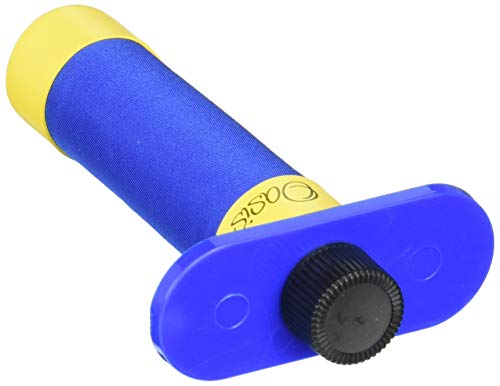 Oasis OH-1 Guitar Humidifier for Soundhole The one repair techs mention by name. The tube shrinks visibly as it dries out, which turns remembering to refill it from a chore into something you notice when you open the case. | A very dry climate, and a player who wants to see the level | 8.8/10 | $22.95View on Amazon #ad · price as of October 27, 2026 · how this is funded |
| 4 | 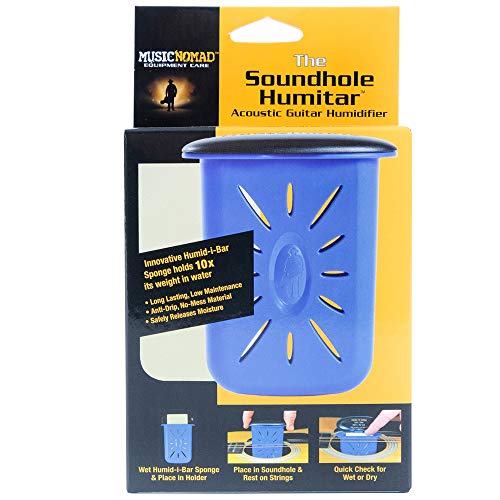 MusicNomad Humitar Acoustic Guitar Humidifier (MN300) The cheapest real soundhole humidifier, with a replaceable sponge rather than a sealed pack. It works if somebody remembers it; the sponge is the whole mechanism and the whole weakness. | A dry-climate guitar on a tight budget | 8.4/10 | $14.99View on Amazon #ad · price as of October 27, 2026 · how this is funded |
Scores are our own editorial fit rating from published specifications — the rubric is on our methodology page. They are not test results; we have not played these instruments.
What dry air actually does
An acoustic guitar is thin wood under tension. Wood gives up moisture to dry air and shrinks as it does, and the top — the thinnest, widest piece, glued at its edges and braced across its grain — cannot shrink freely. Something has to move. First the top sinks and the action drops until the strings buzz on the frets; then the frets start to feel sharp at the edges as the fingerboard shrinks across its width; and in the worst case the top splits along the grain, usually beside the bridge or the fingerboard.
The timing is seasonal and predictable. The dangerous period is the heating season: indoor air that was fine in September can fall to single-digit relative humidity in January in a heated home in a cold climate. That is also the period when a guitar bought as a Christmas present spends its first weeks in exactly the wrong conditions.
How much this matters depends on the guitar. A laminated top is far less prone to cracking than a solid one — it is plywood, and plywood is dimensionally stable, which is the one genuine advantage laminate has. If your beginner guitar is laminate, the honest answer is that you probably do not need any of these products. If it has a solid top, as the better picks on best beginner acoustic guitar do, keep reading.
Measure before you buy anything
This is the part most pages skip, and it is the part that decides whether any of the rest is money well spent. Humidity varies enormously by climate, season, heating type and even which room the case is in. A hygrometer that lives inside the case tells you the one number that matters, and it costs less than most humidifiers.
The widely published target range for a solid-wood acoustic is roughly 45 to 55 percent relative humidity, and the rule of thumb most repair shops use is that below about 40 percent you should be adding moisture and above about 60 percent you should be removing it. If the case reads inside the range all winter, the correct purchase is nothing at all.
| Product | Type | Direction | Routine | Best for |
|---|---|---|---|---|
| MusicNomad HONE (MN312) | Hygrometer | Measures only | None | Finding out whether you have a problem |
| D'Addario Humidipak Maintain | Two-way packs | Adds and removes | Replace packs a few times a year | Anyone who will not check weekly |
| Oasis OH-1 | Soundhole tube | Adds only | Refill with distilled water; tube shrinks as a cue | Very dry climates |
| MusicNomad Humitar (MN300) | Soundhole sponge | Adds only | Re-wet on a schedule | The cheapest way to add moisture |
One-way or two-way
A one-way humidifier — a sponge or a gel tube in the soundhole — adds moisture and cannot take any away. It works, and it is cheap, and it depends entirely on somebody remembering it. Forget it for a month and it is an empty sponge; over-soak it and water sits next to a lacquered finish. In a basement or a humid summer it can also push a case past the top of the range, which causes its own problems: a swollen top, a high action and glue joints under stress.
A two-way system uses packs that absorb moisture as well as release it, holding the case at a set range with no judgement required. There is nothing to fill, nothing to drip and no weekly decision to forget, which is why it is the recommendation for a teenager’s guitar. The trade is cost: the packs are a consumable and need replacing a few times a year, so over two years it costs more than a sponge. It is also the only type on this page that protects against the wrong direction.
What not to do
Do not put a damp cloth, a wet sponge in a bag, or a slice of anything in a guitar case. Direct contact between water and a finish or a glue joint causes a different and worse problem than dry air does. Do not store a guitar on a stand next to a radiator or a heat vent, which is the fastest way to dry one out — the case is the safe place in winter, which is a real argument for a case over a guitar stand during the heating season.
And do not trust a reading from a hygrometer sitting in the room. The case is a different micro-climate from the room it is in, and the case reading is the one that governs the guitar.
The seasonal routine, and rescuing a dry guitar
The calendar is the easy part. Check the case reading when the heating goes on for the first time, which in most of the country is October, because that is the week the indoor humidity falls. Through the winter the job is maintenance: top up a one-way humidifier on whatever schedule it needs, or replace two-way packs when they go hard. In spring, when the heating goes off, take a one-way humidifier out — leaving a sponge in a case through a humid summer causes the opposite problem, and a swollen top with a high action is just as unpleasant to play as a sunken one.
If a guitar has already dried out, re-humidify slowly. Put it in its case with a humidifier and leave it closed, checking the reading every few days rather than every few hours; wood that is brought back fast moves fast, and movement is what cracks a top. A sunken top and a low, buzzing action will often come back on their own over a fortnight of this. What will not come back is a crack, a lifted bridge or a loose brace, and all three are a repair technician’s job rather than a home one. On a beginner guitar, get a quote before committing to the repair: a crack can cost a real fraction of what the instrument cost, which is the whole argument for a twenty-dollar hygrometer in October.
The order to buy in
Hygrometer first, for a week. If the case stays inside roughly 45 to 55 percent, buy nothing. If it reads consistently dry, a two-way system is the one that survives a teenager’s routine; a soundhole humidifier is the cheaper option for someone who will genuinely check it.
The picks, in full
Every card below is written from the published specification and the manufacturer’s own documentation. We have not played these instruments — see how we work for exactly what that means and what we do instead.
Our top pick · Finding out whether you have a problem
MusicNomad HONE Guitar Hygrometer (MN312)
Buy this before buying a humidifier. It reads the humidity inside the case, which is the only number that decides whether a guitar needs humidifying at all — and in many homes, it does not.
What works
- Measures humidity and temperature in the case, where the guitar actually lives
- Costs less than the damage a single winter can do to a solid top
- Reusable forever; it is an instrument, not a consumable
What to know
- It only tells you — it does nothing about the reading
- Accuracy tolerance is not published on the listing
- Measures
- Relative humidity and temperature
- Placement
- Inside the instrument case
- Model
- MN312
- Accuracy
- Not published
#ad · price as of October 27, 2026 · how this is funded
Specs read from the manufacturer or retailer listing on 2026-10-17. Our fit score: 9.3/10.
Pick 2 · Anyone who will not check a sponge every week
D'Addario Humidipak Maintain Two-Way Humidity Control Kit
Two-way means the packs absorb moisture as well as release it, so there is nothing to judge and nothing to top up weekly — the version of this job that survives contact with a teenager's practice routine.
What works
- Two-way control, so it corrects a case that is too damp as well as too dry
- No filling, no dripping, no weekly decision to forget
- Packs are replaceable, so the holders are a one-time purchase
What to know
- The packs are a consumable and need replacing a few times a year
- Costs more over two years than a sponge humidifier
- Type
- Two-way humidity control
- Placement
- Soundhole and headstock holders in the case
- Refill
- Replaceable Maintain packets
- Target range
- Per maker's published Humidipak specification
Specs read from the manufacturer or retailer listing on 2026-10-17. Our fit score: 9.4/10.
Pick 3 · A very dry climate, and a player who wants to see the level
Oasis OH-1 Guitar Humidifier for Soundhole
The one repair techs mention by name. The tube shrinks visibly as it dries out, which turns remembering to refill it from a chore into something you notice when you open the case.
What works
- Shrinks as it empties, so the refill cue is visual instead of a diary note
- Gel-based rather than a wet sponge, which reduces drip risk near a finish
- Long-standing design that luthiers and repair shops stock
What to know
- One-way: cannot pull moisture out of a case that is too damp
- Still a consumable — the crystals need recharging with distilled water
- Type
- One-way soundhole humidifier
- Element
- Water-absorbing crystals in a fabric tube
- Refill cue
- Tube contracts as it dries
- Model
- OH-1
#ad · price as of October 27, 2026 · how this is funded
Specs read from the manufacturer or retailer listing on 2026-10-17. Our fit score: 8.8/10.
Pick 4 · A dry-climate guitar on a tight budget
MusicNomad Humitar Acoustic Guitar Humidifier (MN300)
The cheapest real soundhole humidifier, with a replaceable sponge rather than a sealed pack. It works if somebody remembers it; the sponge is the whole mechanism and the whole weakness.
What works
- Lowest cost way to put moisture in a case at all
- Replacement sponge is sold separately, so the unit lasts years
- Sits in the soundhole and takes no case space
What to know
- One-way: it adds moisture and cannot remove it, so it can overshoot
- Needs re-wetting on a schedule nobody keeps without a reminder
- Type
- One-way soundhole humidifier
- Element
- Replaceable Humid-i-Bar sponge
- Placement
- Soundhole
- Model
- MN300
#ad · price as of October 27, 2026 · how this is funded
Specs read from the manufacturer or retailer listing on 2026-10-17. Our fit score: 8.4/10.
Questions people actually ask
Does a beginner guitar need a humidifier?
Often not. Laminated tops are dimensionally stable and rarely crack from dry air, and many homes stay inside the safe range all year. Solid-top guitars in heated homes in cold climates are the real risk case — measure the case humidity before buying anything.
What humidity should a guitar be kept at?
The widely published range for a solid-wood acoustic is roughly 45 to 55 percent relative humidity, measured inside the case rather than in the room. Below about 40 percent, add moisture; above about 60 percent, remove it.
What is a two-way guitar humidifier?
A system whose packs absorb moisture as well as release it, holding the case in a set range without being filled or judged. It costs more over time than a sponge humidifier because the packs are a consumable, but it cannot overshoot in either direction.
What are the signs a guitar is too dry?
A sinking top and an action that drops until the strings buzz, fret ends that start to feel sharp as the fingerboard shrinks across its width, and in the worst case a split in the top along the grain near the bridge or fingerboard.
Sources
We have not played these instruments, so citation is our evidence. Everything above traces back to one of these, on the date shown.