The best electric guitars for kids
A child-sized electric guitar is not a cheaper electric guitar. It is a shorter one, and the number that tells you so is printed on every decent listing.
By Stephen V. · Writes Reed & Rosin · last verified
The short answer
For roughly ages seven to twelve, buy the Squier Mini Stratocaster — a genuine 22.75-inch short-scale Strat with real pickups, not a shrunken novelty. Add a small amp with a headphone socket, because an electric guitar with no amplifier is a silent disappointment.
Some links on this page earn us a commission at no extra cost to you. It does not change which instrument we recommend, and it does not change the order. We also earn nothing when the honest answer is “rent it” — and we still say so. Full disclosure.
Quick picks
| # | Product | Best for | Score | Price |
|---|---|---|---|---|
| 1 |  Squier Mini Stratocaster A genuine short-scale Stratocaster rather than a shrunken novelty: real pickups, real hardware, real Fender-family neck. The default first electric for anyone under about twelve. | First electric, roughly ages 7-12 | 9.1/10 | $199.99View on Amazon #ad · price as of October 5, 2026 · how this is funded |
| 2 |  Epiphone Les Paul Special II Two humbuckers and a fixed bridge, which is the friendliest possible combination for a beginner: thick tones and nothing that drifts out of tune when you bend a string. | Beginners who want a thicker rock sound | 8.3/10 | $219.00View on Amazon #ad · price as of October 5, 2026 · how this is funded |
| 3 |  Squier Sonic Stratocaster Pack Full-size Strat, 10-watt amp, gig bag, cable and strap in one box. Buying the pieces separately usually costs more and takes three deliveries, so the pack is the honest answer for a first electric. | A complete first electric setup in one box | 9.0/10 | $369.99View on Amazon #ad · price as of October 5, 2026 · how this is funded |
| 4 |  Loog Mini 3-String Three strings instead of six, tuned like the top three of a guitar, so a four-year-old plays a real chord in an afternoon. It is a bridge to a guitar, not a guitar — and it is honest about that. | Ages 3-6, before a real guitar fits | 8.6/10 | $119.00View on Amazon #ad · price as of October 5, 2026 · how this is funded |
| 5 | 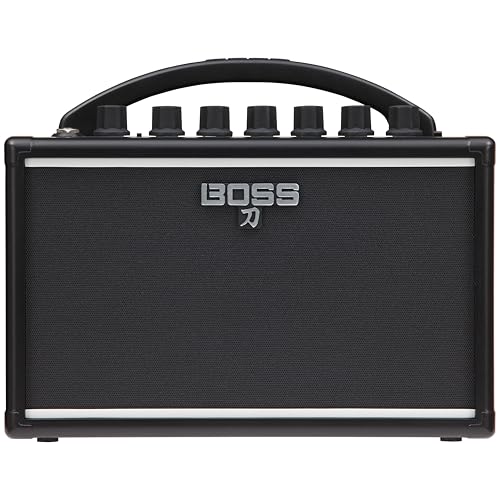 Boss Katana Mini Battery power, three genuinely usable amp voicings and a real analog delay. This is the amp that makes practicing feel good, which is the only feature that reliably keeps a beginner practicing. | Making practice sound good enough to repeat | 8.7/10 | $114.99View on Amazon #ad · price as of October 5, 2026 · how this is funded |
| 6 |  Fender Frontman 10G Ten watts, two channels, a headphone socket and an aux input. It is the amp inside most starter packs, and on its own it is the cheapest thing that makes an electric guitar work at home. | The absolute cheapest working practice amp | 7.6/10 | $89.99View on Amazon #ad · price as of October 5, 2026 · how this is funded |
Scores are our own editorial fit rating from published specifications — the rubric is on our methodology page. They are not test results; we have not played these instruments.
Buying this as a gift? Our gift guides re-explain these picks for the gifter. Wondering whether to wait for November? The Black Friday hub has the sourced record of what discounted last year and what did not.
The number that decides this, and where to find it
Scale length is the distance from the nut to the bridge saddle — the vibrating length of the string. It sets two things that matter enormously to a child and barely at all to an adult: how far apart the frets are, so whether small fingers can reach a chord shape at all, and how tight the strings feel under tension, so whether pressing one down hurts.
A standard electric guitar is 25.5 inches. A Les Paul-family guitar is 24.75. A short-scale student electric is around 22.75. Those three figures are the whole decision, and the good news is that reputable manufacturers publish them, which makes this one of the few beginner purchases that can be settled from a spec sheet rather than from a showroom visit.
What scale length does not tell you is quality. A short-scale guitar from a real brand has real pickups, real tuners and a real neck. The thing to avoid is not a small guitar, it is a toy pretending to be a small guitar — and those are identifiable because they publish nothing at all.
| Guitar | Scale length | Pickups | Roughly suits |
|---|---|---|---|
| Squier Mini Stratocaster | 22.75 in (578 mm) | Three single-coil | Ages about 7-12 |
| Epiphone Les Paul Special II | 24.75 in (628 mm) | Two humbuckers | Older children and smaller teens who want a thicker sound |
| Squier Sonic Stratocaster Pack | 25.5 in (648 mm) | Three single-coil | Teenagers and anyone close to adult size |
| Loog Mini (3-string) | Not published | Not applicable — acoustic | Ages 3-6, before a real guitar fits |
Scale lengths read from each manufacturer's published specification; the Loog Mini publishes a suggested age range rather than a scale length, and we write that rather than estimating a figure. Age bands are our editorial reading of those specifications, not a manufacturer claim.
The cost nobody budgets for
An electric guitar makes almost no sound on its own. That sentence is obvious written down and is still the single most common surprise in this purchase: the guitar arrives, the child plugs in nothing, and the excitement of the first afternoon goes into a cable that does not exist. You need an amplifier, a cable, and ideally a strap and a tuner.
There are two honest routes. Buy a pack, which puts the guitar, a 10-watt amp, a cable, a strap and a bag in one box — this is why the Squier Sonic pack is on this page even though it is full scale, because for a child close to adult size it removes the whole problem in one order. Or buy a short-scale guitar and choose the amp separately, which is the better route for a smaller child because no pack we could find bundles a genuinely short-scale guitar with a decent amp.
The amp specification that matters in a house
A headphone socket. It is the difference between a child who practises after dinner and a child who is told to stop. The Fender Frontman 10G below publishes a headphone output and an aux input, which is also how a beginner plays along with a song on a phone. The Boss Katana Mini sounds considerably better and runs on AA batteries, but its listing publishes no headphone output — we have flagged that on its card rather than letting you find out after it arrives. Our beginner amp roundup compares all three in full.
Single-coils or humbuckers: the one tonal choice worth making
Ask the child what music they want to play, then read this. Three single-coil pickups — the Stratocaster layout — are bright and clean, and cover pop, blues, country and most of what a beginner learns first. Two humbuckers — the Les Paul layout — are thicker and louder and are what a child imagining rock or metal is usually hearing in their head. Neither is better. Buying the wrong one means a guitar that never quite makes the sound the child was picturing, which is a motivation problem rather than a technical one.
One mechanical point in favour of the Les Paul layout for a beginner: a fixed bridge. A vibrato bridge invites a new player to pull the arm, which throws the guitar out of tune, which leads to a guitar that is never in tune, which leads to a guitar nobody picks up. A fixed bridge removes the temptation entirely. If the guitar does have a vibrato, our tuning guide covers the clip-on tuner that makes this a five-second job.
Under about seven, the answer is not an electric
A four-year-old cannot hold a guitar, reach a chord shape or press a string hard enough to make it sound. That is anatomy, not attitude, and the usual result of buying a small electric for a preschooler is a guitar that is briefly exciting and then never touched. The honest options are a three-string instrument built for that age, which is why the Loog Mini is on this page, or waiting a year or two — and our first instrument for a five-year-old page makes the case for a ukulele instead rather more strongly than it makes the case for any guitar.
For the sizing question in general, including acoustic guitars and the 3/4 and 1/2 body sizes that have no electric equivalent, our guitar size guide has the full chart. If the child is around ten and the acoustic-versus-electric question is still open, the best guitar for a ten-year-old compares both on the same page.
What we would do
A child roughly 7-12: the Squier Mini Stratocaster plus the Frontman 10G, or the Katana Mini if nobody needs silence.
A child who wants rock or metal: the Epiphone Les Paul Special II for the humbuckers and the fixed bridge.
A teenager or a tall eleven-year-old: the Squier Sonic pack. Full scale, and everything in one box.
Under about seven: the Loog Mini, understanding that it is a bridge to a guitar rather than a guitar.
The picks, in full
Every card below is written from the published specification and the manufacturer’s own documentation. We have not played these instruments — see how we work for exactly what that means and what we do instead.
Our top pick · First electric, roughly ages 7-12
Squier Mini Stratocaster
A genuine short-scale Stratocaster rather than a shrunken novelty: real pickups, real hardware, real Fender-family neck. The default first electric for anyone under about twelve.
What works
- 22.75 in short scale is reachable for small hands and light on tension
- Three single-coil pickups and a five-way switch — the full Strat vocabulary
- Holds tuning better than anything else at this size
What to know
- No amplifier included — an electric guitar with no amp is a quiet disappointment
- Short scale is limiting once a player's hands grow
- Scale length
- 22.75 in (578 mm)
- Pickups
- Three single-coil
- Fingerboard
- Laurel
- Amp included
- Not published
#ad · price as of October 5, 2026 · how this is funded
Specs read from the manufacturer or retailer listing on 2026-09-07. Our fit score: 9.1/10.
Pick 2 · Beginners who want a thicker rock sound
Epiphone Les Paul Special II
Two humbuckers and a fixed bridge, which is the friendliest possible combination for a beginner: thick tones and nothing that drifts out of tune when you bend a string.
What works
- Fixed bridge holds tuning far better than a beginner-operated vibrato
- Two humbuckers deliver the sound most new electric players are imagining
What to know
- Heavier than a Strat-style body; noticeable on a small frame after an hour
- Bolt-on neck and simplified hardware compared with the Les Pauls it references
- Pickups
- Two humbuckers
- Bridge
- Fixed (stopbar)
- Scale length
- 24.75 in (628 mm)
#ad · price as of October 5, 2026 · how this is funded
Specs read from the manufacturer or retailer listing on 2026-09-07. Our fit score: 8.3/10.
Pick 3 · A complete first electric setup in one box
Squier Sonic Stratocaster Pack
Full-size Strat, 10-watt amp, gig bag, cable and strap in one box. Buying the pieces separately usually costs more and takes three deliveries, so the pack is the honest answer for a first electric.
What works
- Everything needed to make a sound on day one, including the amp and cable
- Full-scale Stratocaster body and neck — no outgrowing it
- The 10G amp is small but a real amp, not a toy speaker
What to know
- The included amp has no effects worth speaking of; most players replace it within a year
- Full scale is too much guitar for a small child
- Scale length
- 25.5 in (648 mm)
- Pack contents
- Guitar, 10G amp, gig bag, cable, strap (per listing)
- Fingerboard
- Maple
#ad · price as of October 5, 2026 · how this is funded
Specs read from the manufacturer or retailer listing on 2026-09-07. Our fit score: 9.0/10.
Pick 4 · Ages 3-6, before a real guitar fits
Loog Mini 3-String
Three strings instead of six, tuned like the top three of a guitar, so a four-year-old plays a real chord in an afternoon. It is a bridge to a guitar, not a guitar — and it is honest about that.
What works
- Three strings mean a recognisable chord on day one, which is what keeps a small child going
- Chord shapes transfer directly to a six-string later
- Small and light enough for a preschooler to hold correctly
What to know
- It is not a guitar; the player will need a real one within a year or two
- Limited range — no bass strings at all
- Strings
- Three (guitar strings 1-3)
- Suggested ages
- 3 and up (per listing)
- App and lessons
- Included (per listing)
#ad · price as of October 5, 2026 · how this is funded
Specs read from the manufacturer or retailer listing on 2026-09-07. Our fit score: 8.6/10.
Pick 5 · Making practice sound good enough to repeat
Boss Katana Mini
Battery power, three genuinely usable amp voicings and a real analog delay. This is the amp that makes practicing feel good, which is the only feature that reliably keeps a beginner practicing.
What works
- Runs on AA batteries — practice moves to wherever the player actually is
- Three amp characters plus tape-style delay in a box this size is unusual
- Three-band EQ rather than a single tone knob
What to know
- No headphone output on this model — check before buying for apartment use
- Seven watts through a four-inch speaker is a practice amp, nothing more
- Power
- 7 W
- Speaker
- 4 in
- Power source
- 6 x AA or optional adapter
- Headphone out
- Not published
#ad · price as of October 5, 2026 · how this is funded
Specs read from the manufacturer or retailer listing on 2026-09-07. Our fit score: 8.7/10.
Pick 6 · The absolute cheapest working practice amp
Fender Frontman 10G
Ten watts, two channels, a headphone socket and an aux input. It is the amp inside most starter packs, and on its own it is the cheapest thing that makes an electric guitar work at home.
What works
- Headphone output means practice at any hour without a household argument
- Aux input lets a beginner play along with a phone
What to know
- The overdrive channel is harsh and most players leave it off
- Ten watts will not survive a rehearsal with a drummer
- Power
- 10 W
- Speaker
- 6 in
- Headphone out
- Yes
- Aux in
- Yes
#ad · price as of October 5, 2026 · how this is funded
Specs read from the manufacturer or retailer listing on 2026-09-07. Our fit score: 7.6/10.
Questions people actually ask
What is the best electric guitar for a kid?
The Squier Mini Stratocaster for roughly ages seven to twelve. It publishes a 22.75-inch short scale, which is the figure that decides whether small fingers can reach a chord shape, and it has three real single-coil pickups and a five-way switch rather than toy hardware.
What size electric guitar does a child need?
Read the scale length rather than the body size. A standard electric is 25.5 inches, a Les Paul-family guitar is 24.75, and a short-scale student electric is around 22.75. Under about twelve, the short scale is the one that fits; close to adult size, full scale is fine and lasts longer.
Does a kids electric guitar come with an amp?
Usually not. Short-scale electrics are typically sold as the guitar alone, so you need an amplifier and a cable as well. Starter packs do include an amp, but the packs we could verify bundle full-scale guitars, so a smaller child generally means buying the amp separately.
Should a child's first electric guitar have humbuckers or single-coils?
Ask what music they want to play. Three single-coils are bright and clean and cover pop, blues and country; two humbuckers are thicker and louder and are what a child imagining rock or metal is hearing. The humbucker guitars here also have a fixed bridge, which holds tuning better for a beginner.
What age can a child start electric guitar?
Around seven for a short-scale electric, as a rough guide, with hand size mattering more than birthdays. Below that a child usually cannot press a string hard enough to make it sound, and a three-string instrument built for preschoolers or a ukulele is the honest alternative.
Sources
We have not played these instruments, so citation is our evidence. Everything above traces back to one of these, on the date shown.