Violin cases for students
Instruments are damaged in transit far more often than in playing, and the soft case included with a budget outfit protects against dust.
By Stephen V. · Writes Reed & Rosin · last verified
The short answer
A rigid shell case is what protects a violin from real-world crushing in a locker or on a bus. A fiberglass shaped case offers the best protection; a lightweight shaped case is the right compromise when a young child carries it themselves.
Some links on this page earn us a commission at no extra cost to you. It does not change which instrument we recommend, and it does not change the order. We also earn nothing when the honest answer is “rent it” — and we still say so. Full disclosure.
Quick picks
| # | Product | Best for | Score | Price |
|---|---|---|---|---|
| 1 |  Crossrock Shaped Fiberglass Violin Case 4/4 A hard fiberglass shell is what actually stops a violin being crushed in a locker or a bus aisle. The soft case supplied with budget outfits protects against dust and nothing else. | Instruments that travel to school | 8.8/10 | $213.65View on Amazon #ad · price as of October 27, 2026 · how this is funded |
| 2 |  Protec MAX MX044MT Violin Case 4/4, Mint A lightweight shaped case that a small child can actually carry. Weight is not a vanity spec here: a case too heavy to carry is a case left at home, and an instrument left at home is not practiced. | Young players carrying their own instrument | 8.4/10 | $74.96View on Amazon #ad · price as of October 27, 2026 · how this is funded |
| 3 | 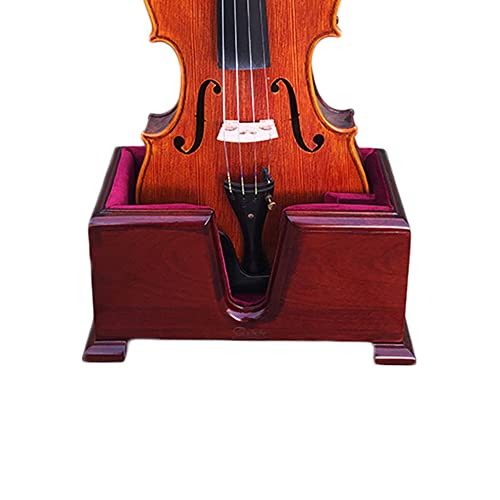 Paititi Premium Violin Stand and Bow Holder, Burgundy Solid Wood, 4/4 An instrument on a stand gets picked up; an instrument zipped in a case under a bed does not. This is a solid-wood floor stand with burgundy velvet cushions at the contact points and a bow holder, listed for a 4/4 violin and usable for smaller ones. | Making practice a five-second decision | 8.0/10 | $59.99View on Amazon #ad · price as of October 27, 2026 · how this is funded |
Scores are our own editorial fit rating from published specifications — the rubric is on our methodology page. They are not test results; we have not played these instruments.
Buying this as a gift? Our gift guides re-explain these picks for the gifter. Wondering whether to wait for November? The Black Friday hub has the sourced record of what discounted last year and what did not.
Why the bundled case is not enough
Student violin outfits include a case, and it is almost always a lightweight foam or fabric-covered shell. It keeps dust off the instrument and it will not survive a violin being at the bottom of a pile in a school locker, or a bag being dropped on it on a bus.
That is the actual risk profile. Violins are damaged in transit far more often than while being played, and almost all of that damage is compression — something heavy on top of the case.
Shaped or oblong
| Shaped | Oblong | |
|---|---|---|
| Footprint | Follows the violin outline; smaller and lighter | Rectangular; larger and heavier |
| Storage inside | Room for rosin, a shoulder rest and little else | Room for sheet music, a spare bow, a mute, more |
| Bow holders | Usually two | Usually two to four |
| Protection | Good, and the corners are less protected | Better — the rectangle absorbs impacts away from the instrument |
| Locker friendliness | Better | Awkward in a narrow locker |
| Suits | Young students carrying their own instrument | Older students with music and accessories to carry |
Shell materials
Fiberglass is the most protective of the common student options: genuinely rigid, resistant to crushing, and largely unaffected by moisture. It is also the heaviest.
Thermoplastic and molded composite shells are lighter and adequately rigid, and they represent the sensible middle of the market for most students.
Foam-and-fabric is what comes in most outfits. Lightest, cheapest, and it offers essentially no crush protection.
Carbon fiber is the professional answer — very light and very strong — and costs several times a student violin.
Weight matters more than the spec sheet suggests
A heavy case that a seven-year-old cannot carry is a case that a parent carries, and eventually a case that stays home. The instrument that does not come to school is not practiced at school.
For a young child, the lightest case with a genuinely rigid shell is the right answer even if a heavier one protects marginally better. As they grow, move to the heavier shell.
What to look for inside
- A suspension interior. The instrument is held clear of the shell on padded supports, so an impact on the outside does not transmit directly into the violin. This is the feature that matters most and it is not universal.
- A neck restraint. A strap or padded block that stops the instrument shifting when the case is carried on its side.
- A blanket. A cloth over the strings and top, protecting the varnish from the lid and from loose accessories.
- Enclosed accessory compartments. Loose rosin rolling around inside a case scratches varnish, and rosin dust gets everywhere.
Carrying options
Backpack straps are worth seeking out for a student who walks to school. Carrying a violin case by a single handle for twenty minutes is genuinely tiring for a child, and a case carried badly gets swung, and a case that gets swung gets knocked into door frames.
A subway or single shoulder strap is the middle option and is fine for shorter journeys.
Humidity, and whether to bother
Wooden instruments respond to humidity, and violins can develop open seams or cracks in very dry conditions. Case humidifiers are inexpensive and are standard for good instruments.
For a student outfit, this is optional in most climates and worth doing in a house with aggressive winter heating. The failure mode — an open seam — is a modest repair rather than a disaster, so this is not something to worry about excessively on a first violin.
This page is about bowed instruments, where the case has to protect a bow as well. The band-room equivalent — replacing a failed trumpet, clarinet or flute case, and the fit specifications that catch people out — is on our page on instrument cases for school band students.
The picks, in full
Every card below is written from the published specification and the manufacturer’s own documentation. We have not played these instruments — see how we work for exactly what that means and what we do instead.
Our top pick · Instruments that travel to school
Crossrock Shaped Fiberglass Violin Case 4/4
A hard fiberglass shell is what actually stops a violin being crushed in a locker or a bus aisle. The soft case supplied with budget outfits protects against dust and nothing else.
What works
- Rigid fiberglass shell resists real-world crushing
- TSA lock and backpack straps included
- Suspension interior keeps the instrument off the shell
What to know
- Heavier than a foam or lightweight case
- Costs a sizeable fraction of a budget violin
- Size
- 4/4
- Shell
- Fiberglass
- Lock
- TSA
#ad · price as of October 27, 2026 · how this is funded
Specs read from the manufacturer or retailer listing on 2026-09-07. Our fit score: 8.8/10.
Pick 2 · Young players carrying their own instrument
Protec MAX MX044MT Violin Case 4/4, Mint
A lightweight shaped case that a small child can actually carry. Weight is not a vanity spec here: a case too heavy to carry is a case left at home, and an instrument left at home is not practiced.
What works
- Light enough for a primary-age child to manage alone
- Shaped design takes less locker space than an oblong
What to know
- Less crush resistance than a fiberglass shell
- Shaped interior takes rosin and a shoulder rest; sheet music goes in the outside pocket or a bag
- Currently listed in colors like mint rather than plain black
- Size
- 4/4
- Shape
- Shaped, lightweight
- Frame
- Shock-absorbing foam frame, 600D nylon exterior
- Interior
- Suspension padding, two bow clips, accessory compartment
- Color
- Mint (model MX044MT)
#ad · price as of October 27, 2026 · how this is funded
Specs read from the manufacturer or retailer listing on 2026-10-15. Our fit score: 8.4/10.
Pick 3 · Making practice a five-second decision
Paititi Premium Violin Stand and Bow Holder, Burgundy Solid Wood, 4/4
An instrument on a stand gets picked up; an instrument zipped in a case under a bed does not. This is a solid-wood floor stand with burgundy velvet cushions at the contact points and a bow holder, listed for a 4/4 violin and usable for smaller ones.
What works
- Solid wood with burgundy velvet plush cushions where the instrument rests
- Holds the violin and the bow together, so neither gets put down loose
- Removes the friction that stops a ten-minute practice happening
What to know
- An instrument on a stand is exposed to knocks, pets and sunlight
- Not a substitute for a case when the instrument travels
- Listed for 4/4; the maker says a smaller violin will sit in it, but that is not the size it is built around
- Holds
- Violin and bow
- Material
- Solid wood
- Cushions
- Burgundy velvet plush
- Size
- 4/4 (smaller violins fit, per the listing)
- Color
- Burgundy
#ad · price as of October 27, 2026 · how this is funded
Specs read from the manufacturer or retailer listing on 2026-10-25. Our fit score: 8.0/10.
Questions people actually ask
What is the best violin case for a student?
A rigid shell case with a suspension interior. Fiberglass offers the best crush protection and is the heaviest; a lightweight shaped case is the right compromise when a young child carries the instrument themselves.
Is the case that comes with a violin outfit good enough?
For keeping dust off at home, yes. For a violin traveling to school it is not — bundled cases are foam and fabric with essentially no crush protection, and compression from something heavy on top is how most violins get damaged.
Should I get a shaped or oblong violin case?
Shaped for a younger student carrying their own instrument: smaller, lighter and easier in a locker. Oblong for an older student who also carries sheet music and accessories, and it offers slightly better corner protection.
Do I need a humidifier in my violin case?
For a student outfit it is optional in most climates and worth having in a house with aggressive winter heating. The failure mode is an open seam, which is a modest repair rather than a disaster on a first violin.
Sources
We have not played these instruments, so citation is our evidence. Everything above traces back to one of these, on the date shown.