The best tuners for beginners
An out-of-tune instrument teaches a beginner the wrong pitches, and the beginner cannot hear it happening. This is the cheapest fix on the site.
By Stephen V. · Writes Reed & Rosin · last verified
The short answer
A clip-on tuner reads vibration through the instrument body, so it works in a noisy band room where a microphone or phone app cannot. The Snark SN5X covers guitar, bass and violin; band and orchestra students are better served by a tuner-metronome that can transpose.
Some links on this page earn us a commission at no extra cost to you. It does not change which instrument we recommend, and it does not change the order. We also earn nothing when the honest answer is “rent it” — and we still say so. Full disclosure.
Quick picks
| # | Product | Best for | Score | Price |
|---|---|---|---|---|
| 1 |  Snark SN5X Clip-On Chromatic Tuner A vibration-sensing clip-on works in a noisy band room where a microphone tuner cannot. The SN5X covers guitar, bass and violin, which means one tuner for a household with two players. | Tuning in a noisy room | 8.9/10 | $21.99View on Amazon #ad · price as of October 27, 2026 · how this is funded |
| 2 | 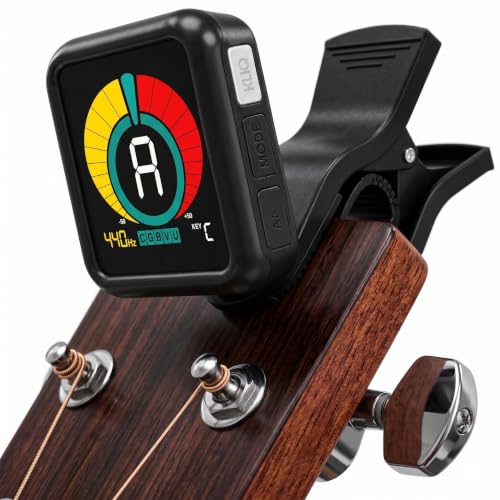 KLIQ UberTuner Clip-On A sturdier clip and a faster processor than the budget clip-ons, which matters mostly because the clip is what fails. Worth the small premium for an instrument handled by a child. | A clip-on that survives a school bag | 8.8/10 | $26.99View on Amazon #ad · price as of October 27, 2026 · how this is funded |
| 3 |  Korg TM-70T Tuner and Metronome A tuner and metronome in one unit, with transposition built in. For a band student that transposition matters: a Bb trumpet reading a concert-pitch tuner is a recipe for confusion. | Band and orchestra students, one device | 9.1/10 | $38.49View on Amazon #ad · price as of October 27, 2026 · how this is funded |
Scores are our own editorial fit rating from published specifications — the rubric is on our methodology page. They are not test results; we have not played these instruments.
Buying this as a gift? Our gift guides re-explain these picks for the gifter. Wondering whether to wait for November? The Black Friday hub has the sourced record of what discounted last year and what did not.
Why a tuner is not optional for a beginner
A beginner cannot hear that their instrument is out of tune. That is not a criticism — pitch discrimination is a learned skill and it develops over months. In the meantime, every practice session on an out-of-tune instrument teaches the ear slightly wrong pitches.
It also makes everything harder. A guitar with one string flat produces chords that sound wrong no matter how cleanly they are fretted, and a student who has just learned that chord concludes they are playing it badly.
Clip-on beats a phone app, and here is why
| Type | How it senses pitch | Works in a noisy room? | Suits |
|---|---|---|---|
| Clip-on | Vibration through the instrument body | Yes — ambient sound is essentially ignored | Guitar, bass, ukulele, violin. The default for students |
| Phone app | The phone microphone | No — confused by anyone else playing | Quiet rooms, occasional use, emergencies |
| Tuner-metronome unit | Built-in microphone, or a clip-on contact mic | Only with a contact mic attached | Band and orchestra students, because it transposes |
| Pedal tuner | The instrument's own signal through a cable | Yes | Electric guitarists playing live |
A band room during warm-up is the hardest tuning environment there is: thirty instruments playing at once. A microphone-based tuner is useless there and a clip-on works perfectly, which is the whole argument.
What chromatic means
A chromatic tuner recognizes all twelve notes and tells you which one you are nearest. A non-chromatic tuner only recognizes the six standard guitar strings.
Buy chromatic. It costs no more, it works for any instrument, and it handles alternate tunings and capos without confusion. A non-chromatic tuner on a badly out-of-tune string will confidently tell you the wrong target note.
Band and orchestra students need transposition
A Bb trumpet playing its written C sounds a concert Bb. A tuner showing concert pitch will therefore display “Bb” when the student plays the note they call C, and that mismatch is genuinely confusing for a beginner.
A tuner with a transpose function shows the written note instead. For a trumpet, clarinet, alto sax or French horn student this removes a whole layer of confusion, and it is why we recommend a tuner-metronome unit for band students rather than a clip-on.
How to use a tuner without becoming dependent on it
- 1
Tune up to the note, never down
Approach the target from below and tune upward. Strings and tuning pegs have slack in them, and coming down onto a note leaves the string free to drift flat as the slack takes up.
- 2
Play the note again after it reads correct
Pluck or bow it again and check. It will often have moved. Two or three passes is normal, especially on new strings.
- 3
Listen before you look
Play the note, decide whether it sounds sharp or flat, and then check the tuner. Getting this right is how pitch discrimination develops, and doing it the other way around is how a student becomes dependent on a screen.
- 4
Tune the whole instrument, then check the first string again
Changing tension on one string alters the pull on the neck slightly, so the first string is usually a little off by the time the last is done.
What we would buy
Guitar, bass, ukulele or violin: the Snark SN5X. It reads vibration, it covers all four instrument types, and the full-color display is readable across a room.
An instrument handled by a child: the KLIQ UberTuner. A noticeably stronger clip and hinge, which is the part that breaks first on every clip-on tuner.
Band or orchestra student: a Korg tuner-metronome. It transposes for Bb, Eb and F instruments, runs the tuner and metronome simultaneously for intonation practice, and has a speaker rather than only headphones.
The one thing that kills clip-on tuners
Leaving them clipped on and switched on. The battery drains, the clip hinge takes a permanent set, and the tuner is knocked off and stepped on. Take it off and put it in the case pocket — it is the whole maintenance requirement.
Owning a tuner and knowing how to use it are not the same thing. Our step-by-step on how to tune a guitar covers standard tuning, which way to turn the peg, and why a beginner should always arrive at the note from below.
Guitarists should expect the tuner to earn its keep twice: once for the open strings and again with a capo fitted, since clamping the strings stretches them slightly sharp. Our guitar capo guide covers which mechanisms let you adjust that clamping pressure.
The picks, in full
Every card below is written from the published specification and the manufacturer’s own documentation. We have not played these instruments — see how we work for exactly what that means and what we do instead.
Our top pick · Tuning in a noisy room
Snark SN5X Clip-On Chromatic Tuner
A vibration-sensing clip-on works in a noisy band room where a microphone tuner cannot. The SN5X covers guitar, bass and violin, which means one tuner for a household with two players.
What works
- Reads vibration through the instrument, so ambient noise does not confuse it
- Covers guitar, bass and violin in one unit
- Full-color display a child can read across a room
What to know
- The clip hinge is the failure point — it is the part that breaks first
- Battery drains if the tuner is left clipped on and switched on
- Type
- Clip-on, vibration sensing
- Instruments
- Guitar, bass, violin
- Chromatic
- Yes
#ad · price as of October 27, 2026 · how this is funded
Specs read from the manufacturer or retailer listing on 2026-09-07. Our fit score: 8.9/10.
Pick 2 · A clip-on that survives a school bag
KLIQ UberTuner Clip-On
A sturdier clip and a faster processor than the budget clip-ons, which matters mostly because the clip is what fails. Worth the small premium for an instrument handled by a child.
What works
- Noticeably stronger clip and hinge than the cheapest units
- Fast, stable readout that does not hunt around the note
- Wide instrument coverage including chromatic mode
What to know
- Costs slightly more than a Snark
- Display is smaller than the Snark's
- Type
- Clip-on, vibration sensing
- Chromatic
- Yes
#ad · price as of October 27, 2026 · how this is funded
Specs read from the manufacturer or retailer listing on 2026-09-07. Our fit score: 8.8/10.
Pick 3 · Band and orchestra students, one device
Korg TM-70T Tuner and Metronome
A tuner and metronome in one unit, with transposition built in. For a band student that transposition matters: a Bb trumpet reading a concert-pitch tuner is a recipe for confusion.
What works
- Transposes for Bb, Eb and F instruments so the display shows the written note
- Tuner and metronome run at the same time for intonation practice
- Includes a sound-out speaker, not just headphones
What to know
- More expensive than a clip-on tuner plus a basic metronome bought separately
- Needs a contact microphone in a loud room, sold separately
- Functions
- Tuner, metronome, sound out
- Transpose
- Yes
- Simultaneous use
- Yes
#ad · price as of October 27, 2026 · how this is funded
Specs read from the manufacturer or retailer listing on 2026-09-07. Our fit score: 9.1/10.
Questions people actually ask
What is the best tuner for a beginner?
A chromatic clip-on for guitar, bass, ukulele or violin — it reads vibration through the instrument so it works in a noisy band room. Band and orchestra students are better served by a tuner-metronome that can transpose to their instrument's key.
Are phone tuner apps good enough?
In a quiet room, yes. In a band room during warm-up, no — a phone microphone hears thirty instruments at once and cannot isolate yours. A clip-on senses vibration through the instrument body and ignores ambient sound entirely.
What does chromatic mean on a tuner?
That it recognizes all twelve notes rather than only the six standard guitar strings. Buy chromatic: it costs no more, works for any instrument, and handles alternate tunings without confidently naming the wrong target note.
Why does my tuner show a different note than my instrument?
Probably because your instrument transposes. A Bb trumpet playing its written C sounds a concert Bb, and a concert-pitch tuner shows that. A tuner with a transpose function displays the written note instead, which removes the confusion.
Sources
We have not played these instruments, so citation is our evidence. Everything above traces back to one of these, on the date shown.