The best violin strings for beginners
New strings are the cheapest change that makes a student violin sound better, and the one most households never make. The set that ships on a budget outfit is usually the worst part of the instrument.
By Stephen V. · Writes Reed & Rosin · last verified
The short answer
Buy D'Addario Prelude for a first restring: steel core, holds pitch immediately after fitting, and it is the set most teachers start students on. Move to D'Addario Ascente when the student's tone is worth improving, and to Pirastro Tonica if a private teacher has asked for a warmer sound. Red Label is the choice for a school instrument that lives in a locker.
Some links on this page earn us a commission at no extra cost to you. It does not change which instrument we recommend, and it does not change the order. We also earn nothing when the honest answer is “rent it” — and we still say so. Full disclosure.
Quick picks
| # | Product | Best for | Score | Price |
|---|---|---|---|---|
| 1 | 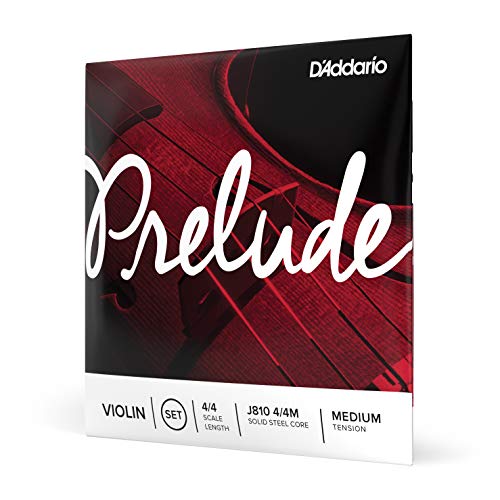 D'Addario Prelude Violin Set 4/4 Medium The standard student string: a solid steel core that holds pitch through a school day and survives being handled by a beginner. Not the warmest string made, and the most durable one at this price. | The default student restring | 9.0/10 | $25.99View on Amazon #ad · price as of October 11, 2026 · how this is funded |
| 2 |  D'Addario Ascenté Violin String Set, 4/4 Medium (A310 4/4M) D'Addario's synthetic-core student set, a tier above the steel strings most outfits ship with. Synthetic core is what stops a student violin sounding thin and glassy, and it is the single change that makes the most audible difference to a beginner's tone. | The first real upgrade from outfit strings | 9.0/10 | $28.70View on Amazon #ad · price as of October 11, 2026 · how this is funded |
| 3 |  Super Sensitive Red Label Violin String Set, 4/4 Medium (2107F) The school-orchestra string. Red Label is steel-core, nickel-wound and close to indestructible, which is why orchestra programs buy it by the box for instruments that live in lockers and get handled by eleven-year-olds. | School instruments that take abuse | 8.6/10 | $27.99View on Amazon #ad · price as of October 11, 2026 · how this is funded |
| 4 |  Pirastro Tonica Violin String Set, 4/4 Medium (412021) The step-up set a private teacher is most likely to name once a student's tone is worth improving. Flexible synthetic core, and a noticeably rounder sound than anything that ships on a student outfit. | A student whose playing has outgrown the strings | 9.1/10 |
Scores are our own editorial fit rating from published specifications — the rubric is on our methodology page. They are not test results; we have not played these instruments.
Why strings are the highest-value change on a student violin
A budget violin outfit has to hit a price, and strings are the easiest place to take money out: they are small, they are not in the photograph, and nobody compares them before buying. So the set that arrives on a first violin is frequently the cheapest steel the assembler could source — thin, bright, and hard to draw a warm sound from even with good bowing.
That makes strings the one upgrade with a genuinely large effect for a small amount of money. A new set costs a small fraction of the instrument and changes what the player hears every time they draw the bow, which matters more than it sounds: a beginner who dislikes the sound they are making practises less. If you only do one thing to a budget student violin, this and a bridge check at a violin shop are the two candidates.
Steel core or synthetic core: the only decision that matters
Ignore marketing language and gauge debates for a student instrument. There is one real decision, and it is the core material the strings are built around.
| Steel core | Synthetic core | |
|---|---|---|
| Tuning stability | Holds pitch almost immediately after fitting | Stretches for several days before it settles |
| Temperature and humidity | Very stable - a cold car does not detune it badly | Moves more with the room |
| Tone | Brighter, more direct, can sound thin | Warmer, rounder, more complex |
| Durability under a beginner | Excellent | Good, but less tolerant of over-tightening |
| Cost | Lower | Higher, and it is a recurring cost |
| Buy it for | A first restring, a school instrument, a young child | A student whose bowing has outgrown the sound |
Characteristics summarised from the four product listings cited below, each read on 11 October 2026.
The practical reading: start on steel, move to synthetic when the player’s bow arm can tell the difference. A synthetic set on a beginner who still saws across the strings is money spent on a quality nobody in the room can hear yet.
Which set for which player
D’Addario Prelude is the default student restring, and the set most teachers name. Solid steel core, medium tension, holds pitch quickly after fitting rather than stretching for a week, and it is widely enough stocked that a broken E can be replaced locally on a Saturday. It is not the warmest string made, and at this stage that is not the point.
Super Sensitive Red Label is the school-orchestra string: steel core, nickel wound, and close to indestructible. Buy it for an instrument that lives in a school locker, travels on a bus and is handled by eleven-year-olds. Programs stock it, so a replacement is usually on hand in the orchestra room.
D’Addario Ascenté is the first real step up: a synthetic core at a price a household will actually pay again in a year. This is the set to fit when the student has started to shape notes rather than simply find them, and the thin, glassy edge of the outfit strings has become the limit.
Pirastro Tonica is the set a private teacher is most likely to name once tone is worth working on. A flexible synthetic core and a noticeably rounder sound. The condition for buying it: the instrument must be one the student will keep. Fitting these to a violin that is about to be outgrown in size is throwing the money away.
One thing to check before you order
Order the right SIZE. A 4/4 set will not fit a 3/4 or 1/2 violin, and all four sets above are the full-size version. If you are not certain which size your child is playing, measure before ordering using our violin size chart. For a fractional size, check the listing’s size option rather than assuming.
Ball end or loop end, and other things not to worry about
The E string comes in two fittings: a ball end and a loop end. Student violins have fine tuners, and fine tuners take a ball end — so a ball-end E is what you want, and every set above is specified with one. That is the only fitting question that affects whether the strings go on.
Gauge or tension you can leave alone. All four sets above are the medium version, and medium is what a student instrument is set up for. Light and heavy gauges exist to solve problems a beginner does not have yet, and a heavy set on a budget violin puts load on a bridge and soundpost that were not fitted for it.
How often a student needs new strings
Strings are a consumable, and they die by going dull rather than by snapping. For a student practising most days, a year is a reasonable interval; for a school instrument shared between players, sooner. The signals to watch for — a string that will not hold pitch, visible wear under the fingers, a tone that has gone flat and lifeless — are listed in order on our page on when to change violin strings, along with the one-at-a-time method that keeps the bridge and soundpost where they belong.
Two other consumables ride along with this purchase. Rosin runs out and goes glassy — our violin rosin guide covers which cake and how often. And a bow that has been rehaired or replaced needs rosin applied from scratch before it will produce any sound at all, which catches out almost every household the first time.
The picks, in full
Every card below is written from the published specification and the manufacturer’s own documentation. We have not played these instruments — see how we work for exactly what that means and what we do instead.
Our top pick · The default student restring
D'Addario Prelude Violin Set 4/4 Medium
The standard student string: a solid steel core that holds pitch through a school day and survives being handled by a beginner. Not the warmest string made, and the most durable one at this price.
What works
- Steel core is far more stable in temperature and humidity swings than synthetic
- Holds pitch quickly after fitting rather than stretching for a week
- Widely stocked, so a broken E can be replaced locally
What to know
- Brighter and less complex than a synthetic-core string
- Advancing players will want to move on within a couple of years
- Size
- 4/4
- Core
- Solid steel
- Tension
- Medium
#ad · price as of October 11, 2026 · how this is funded
Specs read from the manufacturer or retailer listing on 2026-09-07. Our fit score: 9.0/10.
Pick 2 · The first real upgrade from outfit strings
D'Addario Ascenté Violin String Set, 4/4 Medium (A310 4/4M)
D'Addario's synthetic-core student set, a tier above the steel strings most outfits ship with. Synthetic core is what stops a student violin sounding thin and glassy, and it is the single change that makes the most audible difference to a beginner's tone.
What works
- Synthetic core rather than steel, which is warmer and far less shrill under a beginner's bow
- Ball-end E, so it fits the fine tuners every student violin has
- Sold as a full set, so all four strings age together
What to know
- Costs more than the Prelude set most teachers start students on
- Synthetic core needs a few days of re-tuning to settle after fitting
- Core
- Synthetic
- Size
- 4/4
- Tension
- Medium
- E string end
- Ball end
- Model
- A310 4/4M
#ad · price as of October 11, 2026 · how this is funded
Specs read from the manufacturer or retailer listing on 2026-10-11. Our fit score: 9.0/10.
Pick 3 · School instruments that take abuse
Super Sensitive Red Label Violin String Set, 4/4 Medium (2107F)
The school-orchestra string. Red Label is steel-core, nickel-wound and close to indestructible, which is why orchestra programs buy it by the box for instruments that live in lockers and get handled by eleven-year-olds.
What works
- Steel core holds pitch through temperature swings better than any synthetic
- The set school orchestra programs stock, so a replacement is usually on hand
- Cheapest full set here
What to know
- Brighter and harder-edged in tone than a synthetic-core set
- Steel does not reward a developing bow arm the way synthetic core does
- Core
- Steel
- Winding
- Nickel
- Size
- 4/4
- Gauge
- Medium
- Model
- 2107F
#ad · price as of October 11, 2026 · how this is funded
Specs read from the manufacturer or retailer listing on 2026-10-11. Our fit score: 8.6/10.
Pick 4 · A student whose playing has outgrown the strings
Pirastro Tonica Violin String Set, 4/4 Medium (412021)
The step-up set a private teacher is most likely to name once a student's tone is worth improving. Flexible synthetic core, and a noticeably rounder sound than anything that ships on a student outfit.
What works
- Flexible synthetic core, which is the characteristic teachers are asking for when they say a violin sounds harsh
- Ball-end E fits student fine tuners
- A standard reference set in the student-to-intermediate range
What to know
- Most expensive set here, and strings are a recurring cost
- Wasted on an instrument that is about to be outgrown in size
- Core
- Flexible synthetic
- Size
- 4/4
- Gauge
- Medium
- E string end
- Ball end
- Model
- 412021
Specs read from the manufacturer or retailer listing on 2026-10-11. Our fit score: 9.1/10.
Questions people actually ask
What are the best violin strings for a beginner?
D'Addario Prelude for a first restring. It is a solid steel core set at medium tension that holds pitch almost immediately after fitting, survives beginner handling, and is the set most teachers start students on.
Should a beginner use steel or synthetic core strings?
Steel, at first. Steel core holds pitch through temperature and humidity swings and tolerates being over-tightened, which is what a beginner does. Move to a synthetic core set such as D'Addario Ascente once the player's bowing can hear the difference.
Will new strings make a cheap violin sound better?
Usually yes, and more than any other change at the price. The strings fitted to budget outfits are typically the cheapest component, so replacing them is the highest-value upgrade available short of a shop setup.
Do I need ball end or loop end strings?
Ball end. Student violins have fine tuners on the tailpiece, and fine tuners take a ball-end E string. All four sets on this page are specified with a ball end.
How often should a student change violin strings?
About once a year for a student practising most days, and sooner for a school instrument shared between players. Strings go dull rather than breaking, so the signal is a dead-sounding tone or a string that will not hold pitch.
Sources
We have not played these instruments, so citation is our evidence. Everything above traces back to one of these, on the date shown.