When to upgrade from a student trumpet
An intermediate trumpet costs several times what a student horn costs, and two of the three things it changes can be bought separately for a fraction of the money.
By Stephen V. · Writes Reed & Rosin · last verified
The short answer
Upgrade when a band director says the horn is limiting the player, not when the student says it sounds dull. Try a mouthpiece and a service first. When a real horn is needed, the Jean Paul TR-430 is the realistic step up; the Yamaha YTR-4335GII is the one programs name.
Some links on this page earn us a commission at no extra cost to you. It does not change which instrument we recommend, and it does not change the order. We also earn nothing when the honest answer is “rent it” — and we still say so. Full disclosure.
Quick picks
| # | Product | Best for | Score | Price |
|---|---|---|---|---|
| 1 | 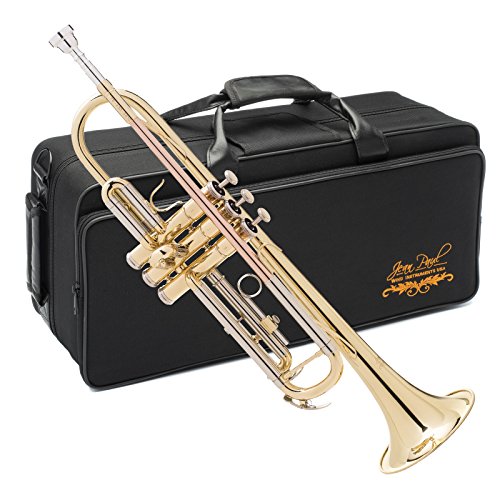 Jean Paul TR-430 Intermediate Bb Trumpet The realistic first step up: a 0.465-inch bore and a rose brass leadpipe for a few hundred dollars rather than a few thousand. The adjustable third-valve ring is the feature a growing player notices first. | A second or third year player outgrowing a student horn | 9.0/10 | $449.99View on Amazon #ad · price as of October 27, 2026 · how this is funded |
| 2 |  Yamaha YTR-4335GII Intermediate Bb Trumpet The horn band directors mean when they say intermediate, and the one a student can take all the way through high school. At this price, phone a local dealer and ask about their step-up program before buying online. | A committed student heading into high school band | 9.5/10 | $2,135.99View on Amazon #ad · price as of October 27, 2026 · how this is funded |
| 3 |  Bach 7C Trumpet Mouthpiece The default beginner trumpet mouthpiece and the size most method books assume. Medium cup depth and a medium rim: comfortable enough to build an embouchure on without limiting range early. | The standard beginner size | 9.2/10 | $69.50View on Amazon #ad · price as of October 27, 2026 · how this is funded |
| 4 |  Rubank Elementary Method - Cornet or Trumpet The private-lesson counterpart to a band method: denser, more technical, and organized for one student at a time rather than a room of thirty. | Private lessons alongside band | 8.8/10 | $8.99View on Amazon #ad · price as of October 27, 2026 · how this is funded |
Scores are our own editorial fit rating from published specifications — the rubric is on our methodology page. They are not test results; we have not played these instruments.
Fix the horn you own first
We earn a commission when somebody buys an instrument through this page, so the honest thing to put first is the advice that earns us least. A large share of “my trumpet sounds stuffy” complaints are not the trumpet’s grade. They are valves that have never been properly oiled, a tuning slide that has seized, felts and corks that have compressed, or a leadpipe that has two years of buildup in it. A service costs a small fraction of an intermediate horn and fixes most of that list.
The second cheapest upgrade is the mouthpiece. A trumpet mouthpiece changes the resistance a player feels, the comfort of the rim and the security of the upper register more than the horn below it does at student level, and it costs about one percent of an intermediate trumpet. If a student is struggling above the staff, this is the first experiment, not the last — the detail is on the trumpet mouthpiece guide.
Do both of those before shopping. If the horn has been serviced and a sensible mouthpiece tried and the student is still fighting it, the instrument is genuinely the limit and the rest of this page applies.
The signals that are real
The useful signals come from outside the student’s own ears. A band director saying the horn is holding the player back is the clearest one, and it is the reason asking the band director first is the standing advice on this site: a director hears sixty students a day and knows what a student horn sounds like at its ceiling. A second real signal is a student who plays somebody else’s instrument and immediately sounds different on it. A third is a chair audition or a regional ensemble where the repertoire now sits above the staff for long stretches.
Signals that are not real: a student who has had the horn three years and wants a new one, a parent comparing their child to a recording, and anything a shop says about tone in a room with no other players in it.
What an intermediate trumpet actually changes
Three specifications separate a student horn from an intermediate one, and they are published rather than mystical.
| Student horn | Intermediate horn | |
|---|---|---|
| Bore | Typically smaller, easier to fill | Larger — the Jean Paul TR-430 publishes 0.465 in |
| Leadpipe | Yellow brass | Often rose brass, as on the TR-430 |
| Third valve | Fixed ring | Adjustable ring on the TR-430 |
| Price | Entry | Several times a student horn |
| Resale | Low | Holds value, especially Yamaha |
A larger bore takes more air. That is the part nobody mentions: a twelve-year-old who has just grown into a student horn can soundworse on a bigger bore for the first month, because the horn is now asking for air they have not built yet. This is the single best argument for upgrading when a teacher says so rather than when a birthday arrives.
A rose brass leadpipe is the specification most often quoted as the step-up difference. It changes the response and the way the sound colors as it is pushed; it does not add range, and it will not survive a student who never cleans the horn. An adjustable third-valve ring is a comfort feature that quietly matters, because a growing left hand stops having to contort to reach a fixed ring.
Which to buy, and where not to buy it
The Jean Paul TR-430 is the realistic step up for most families: a published 0.465-inch bore, a rose brass leadpipe and an adjustable third-valve ring for a few hundred dollars rather than a few thousand. It is not a brand most school programs name, so check before buying it for an audition track.
The Yamaha YTR-4335GII is the horn directors mean when they say intermediate, and the one that will carry a student through high school and into college auditions without being replaced. At the price this listing shows, phone a local dealer before buying online: brass dealers run step-up programs that credit rental payments against an upgrade, and the rent-to-own arithmetic on rent versus buy for trumpet is the same calculation again at a bigger number. A used Yamaha from a school program is also a genuine option — buying a used instrument covers what to check.
What to do with the student horn
Do not sell it in the same week. A student who has just moved to a larger bore is going to spend a few weeks sounding worse before they sound better, and having the old horn in the house is the difference between a rough fortnight and a crisis — it lets a player get through a concert on the instrument they can control while they build the air for the new one. It is also the horn to take on a camping trip, to a marching season in bad weather, or to any situation where an expensive instrument should not be.
When it does go, there are three honest routes. A school program will sometimes buy a serviced student horn outright, which is the least money and the least hassle. A local dealer may take it in part-exchange against the step-up, which is worth asking about before buying anywhere else, because a trade-in quietly changes the arithmetic of the whole purchase. And a private sale makes the most, provided the horn has been serviced first: a student trumpet that plays cleanly sells for noticeably more than the same horn with sticky valves, and the service costs less than the difference. Whichever route, keep the original case — a horn without one sells for less than the case is worth.
The order that saves the most money
Service the horn. Try a mouthpiece. Add the intermediate method book if the student has outgrown the material rather than the trumpet. Only then buy a horn — and ask the director which brands the program accepts before you do.
The picks, in full
Every card below is written from the published specification and the manufacturer’s own documentation. We have not played these instruments — see how we work for exactly what that means and what we do instead.
Our top pick · A second or third year player outgrowing a student horn
Jean Paul TR-430 Intermediate Bb Trumpet
The realistic first step up: a 0.465-inch bore and a rose brass leadpipe for a few hundred dollars rather than a few thousand. The adjustable third-valve ring is the feature a growing player notices first.
What works
- 0.465-inch bore — a step up from a typical student bore, published on the listing
- Rose brass leadpipe, the specification most often quoted as the step-up difference
- Adjustable third-valve ring, so the left hand fits as it grows
- 7C mouthpiece and a semi-hard case are included
What to know
- Not a brand most school programs name, so check before an audition-track purchase
- A larger bore takes more air; a small player may sound worse on it at first
- Bore
- 0.465 in
- Leadpipe
- Rose brass
- Third valve
- Adjustable ring
- Included
- 7C mouthpiece, semi-hard case
- Checked
- U.S. play-tested (per listing)
#ad · price as of October 27, 2026 · how this is funded
Specs read from the manufacturer or retailer listing on 2026-10-17. Our fit score: 9.0/10.
Pick 2 · A committed student heading into high school band
Yamaha YTR-4335GII Intermediate Bb Trumpet
The horn band directors mean when they say intermediate, and the one a student can take all the way through high school. At this price, phone a local dealer and ask about their step-up program before buying online.
What works
- The intermediate horn most commonly named by school programs
- Yamaha's valve work and service network are the reason it holds resale value
- One purchase that does not need repeating before college auditions
What to know
- Many times the cost of a student trumpet — this is not a casual upgrade
- Online pricing on this model moves a lot; a dealer or a rental-credit program often beats it
- Key
- Bb
- Finish
- Gold lacquer
- Grade
- Intermediate
- Model
- YTR-4335GII
#ad · price as of October 27, 2026 · how this is funded
Specs read from the manufacturer or retailer listing on 2026-10-17. Our fit score: 9.5/10.
Pick 3 · The standard beginner size
Bach 7C Trumpet Mouthpiece
The default beginner trumpet mouthpiece and the size most method books assume. Medium cup depth and a medium rim: comfortable enough to build an embouchure on without limiting range early.
What works
- The reference size — a director saying 'a 7C' means this
- Medium cup balances comfort and range for a developing player
- Cheap enough to keep a spare in the case
What to know
- Not the right answer for every face; some players do better on a 5C or 3C
- Silver plating wears through with heavy use
- Size
- 7C
- Cup
- Medium
- Plating
- Silver
#ad · price as of October 27, 2026 · how this is funded
Specs read from the manufacturer or retailer listing on 2026-09-07. Our fit score: 9.2/10.
Pick 4 · Private lessons alongside band
Rubank Elementary Method - Cornet or Trumpet
The private-lesson counterpart to a band method: denser, more technical, and organized for one student at a time rather than a room of thirty.
What works
- Far more technical material per page than a classroom method
- Studies and etudes rather than simplified band tunes
- Has been in continuous use for decades — teachers know it cold
What to know
- Plain, unillustrated presentation that will not motivate a young child alone
- Not aligned to any band class, so it supplements rather than replaces
- Level
- Elementary
- Setting
- Private lesson
#ad · price as of October 27, 2026 · how this is funded
Specs read from the manufacturer or retailer listing on 2026-09-07. Our fit score: 8.8/10.
Questions people actually ask
When should a student upgrade from a beginner trumpet?
When a band director says the instrument is limiting the player, typically in the third or fourth year, and after a service and a mouthpiece change have been tried. A student's own sense that the horn sounds dull is usually a maintenance or mouthpiece issue.
What is the difference between a student and an intermediate trumpet?
A larger bore, often a rose brass leadpipe, and usually an adjustable third-valve ring. The larger bore takes more air, which is why a young player can briefly sound worse on an intermediate horn than on their student one.
Is a new mouthpiece a real upgrade?
Yes, and it is the cheapest one. A mouthpiece changes rim comfort, resistance and upper-register security at student level for roughly one percent of the cost of an intermediate trumpet.
Should you buy a step-up trumpet online or from a dealer?
Get a quote from a local brass dealer before buying an intermediate horn online. Dealers run step-up programs that credit rental payments toward the upgrade, and a horn at this price is worth having checked over by a technician before it is played.
Sources
We have not played these instruments, so citation is our evidence. Everything above traces back to one of these, on the date shown.